


The true value of Yemeni nectar isn't found on a price tag, but in the untouched wadis where ancient traditions survive. At Balqees Honey, we believe the choice between varieties is rarely a matter of cost, but of purpose. Yet, many seekers of liquid gold find themselves paralyzed by the vast price gap and the uncertainty of what lies beneath the lid. Is the legendary reputation of Sidr truly superior to the vibrant complexity of a mountain bloom? Understanding the nuances of Yemeni Sidr vs Wildflower honey is the first step in moving from a casual consumer to a true connoisseur.
We agree that the search for authentic, raw honey should be a journey of discovery rather than a gamble. This guide promises to strip away the mystery, offering a deep dive into the botanical heritage and sensory profiles of these rare nectars. You'll learn the profound differences in medicinal potency and sensory character that define each variety. We will provide a clear framework for matching the right honey to your personal rituals, ensuring you can choose your next jar with absolute confidence in its purity and Yemeni origin.
Key Takeaways
- Learn to distinguish between the sacred, monofloral origin of the Sidr tree and the vibrant, high-altitude polyfloral diversity of Yemeni wildflowers.
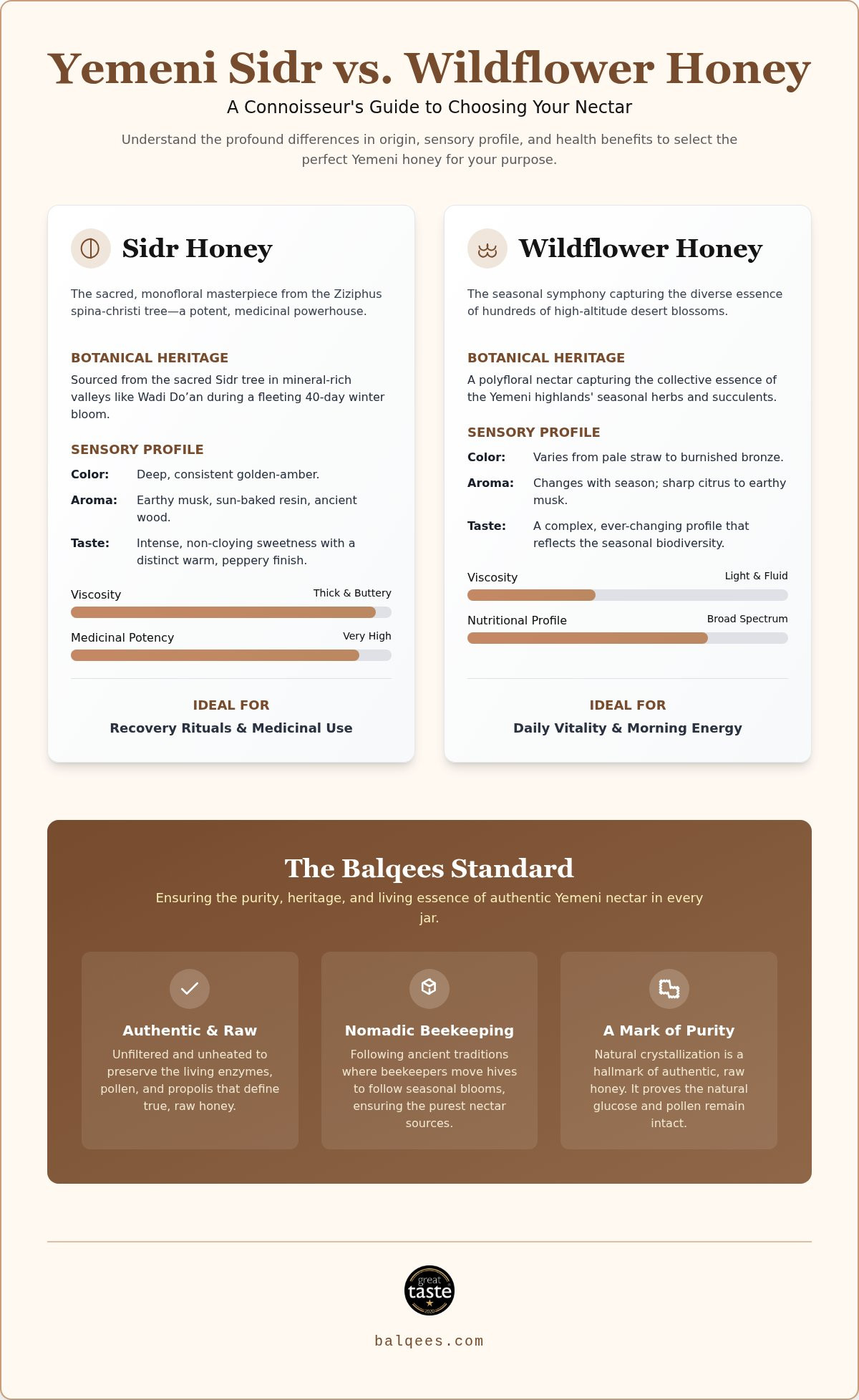
- Master the art of sensory decoding by comparing the buttery, thick viscosity of gold-amber Sidr against the lighter, more fluid character of seasonal wildflower harvests.
- Understand the specific medicinal applications of Yemeni Sidr vs Wildflower honey, contrasting the intense antimicrobial power of the former with the daily antioxidant vitality of the latter.
- Discover a practical framework for incorporating these nectars into your lifestyle; match potent Sidr to recovery rituals and Wildflower to your morning energy.
- Gain the knowledge to identify authentic, raw, and unfiltered Yemeni nectar that preserves the living enzymes and heritage of traditional nomadic beekeeping.
The Botanical Heritage: Wadi vs. High-Altitude Blooms
The Yemeni terroir is a prehistoric landscape where ancient soil and minimal rainfall concentrate the nectars into potent elixirs. Here, beekeeping is an act of nomadic devotion. Traditional beekeepers move their hives through rugged valleys and over sun-scorched mountains, following the pulse of the seasons with an instinct passed down through centuries. This commitment to sustainable beekeeping honey ensures the bees find the most vibrant nectar sources available, untouched by modern industrial farming. While both varieties share this harsh, beautiful origin, the botanical profiles of Yemeni Sidr vs Wildflower honey represent two distinct philosophies of nature. One is a singular, focused whisper of a sacred tree; the other is a loud, diverse chorus of the mountainside.
The Sacred Sidr: A Monofloral Masterpiece
The Sidr tree, known botanically as Ziziphus spina-christi, stands as a sacred pillar in Yemeni heritage. It's the source of Raw Yemeni Sidr Do’ani Honey, arguably the most coveted nectar on the planet. This tree doesn't yield its treasures easily. It blooms for a fleeting window of about 40 days during the winter, demanding perfect conditions to produce its potent resin. In the deep, limestone valleys of Wadi Do’an, the soil's mineral wealth infuses the nectar with an intensity rarely found elsewhere. Traditionally, the Sidr tree is revered for its medicinal properties; every part of the plant, from its leaves to its bark, has been used in ancient healing rituals for thousands of years. This monofloral focus results in a honey of unparalleled purity and targeted potency that feels more like a clinical tonic than a simple sweetener.
Wildflower: The Multi-Floral Seasonal Symphony
If Sidr is the clinical specialist, Yemeni Wild Flower Honey is the seasonal generalist. It doesn't rely on a single tree but instead captures the collective essence of hundreds of desert blossoms and high-altitude flora. This polyfloral nature means the honey acts as a liquid record of a specific moment in time. Each harvest tells a unique story. One season might lean toward the sharp, citrusy notes of mountain herbs, while another is dominated by the earthy, musky depth of desert succulents. This diversity provides a broad-spectrum nutritional profile. It offers a rich variety of polyphenols and enzymes gathered from a vast botanical range. It’s a vibrant, ever-changing symphony that mirrors the rugged, untouched biodiversity of the Yemeni highlands, making it an essential daily companion for those seeking a holistic connection to the land.
Sensory Decoding: Texture, Aroma, and Color Profiles
To the untrained eye, honey is simply a golden liquid. To the connoisseur, it is a map of the landscape. When comparing Yemeni Sidr vs Wildflower honey, the visual differences are immediately apparent. Raw Yemeni Sidr Do’ani Honey presents a consistent, deep golden-amber hue that glows with a regal weight. It is steady and unchanging. In contrast, Yemeni Wild Flower Honey is a visual chameleon. Depending on the rainfall and the specific mountain blooms of the season, its color can range from a pale, sun-bleached straw to a rich, burnished bronze. These shifting hues are the first clue to the diversity contained within the jar.
The mouthfeel of these nectars offers another layer of distinction. Sidr is celebrated for its thick, buttery viscosity. It coats the palate with a luxurious, liquid velvet texture that feels substantial and slow. Wildflower honey possesses a lighter, more fluid nature. It dances across the tongue with an effortless grace. You might also notice fine grains in your jar over time. This crystallization is a hallmark of raw, unfiltered honey. It occurs because the natural glucose and pollen remain intact. For the connoisseur, these crystals are a certificate of purity; they prove the honey hasn't been heat-treated or stripped of its living soul.
The Sidr Experience: Rich, Bold, and Persistent
Authentic Sidr honey is defined by a non-cloying sweetness. It's intense yet balanced, avoiding the sugary sharpness found in mass-produced varieties. The aroma is deeply evocative, carrying a medicinal, earthy musk that speaks of sun-baked resin and ancient wood. One of its most distinctive traits is the peppery finish. High-potency Yemeni Sidr often leaves a subtle, warm tingle at the back of the throat. This persistent aftertaste lingers, inviting a moment of quiet reflection after every spoonful.
The Wildflower Experience: Bright, Varied, and Fresh
Every jar of wildflower nectar is a seasonal surprise. Because the bees forage across a vast botanical range, one harvest might hint at wild lavender while another suggests the rugged scent of desert scrub. This bright, herbaceous profile makes it incredibly versatile. It's refreshing enough to be enjoyed on its own, yet complex enough to elevate a morning ritual. If you're beginning your journey into these nectars, exploring a jar of Yemeni Wild Flower Honey offers a beautiful introduction to the ephemeral blossoms of the high-altitude terrain.
Health Potency: Medicinal Powerhouse vs. Daily Vitality
The true value of raw honey lies in its living soul. Unlike heat-treated commercial products, Yemeni nectars are cold-pressed to preserve a delicate balance of enzymes, antioxidants, and minerals. These enzymes act as a natural catalyst for health, providing the honey with its unique bioactive strength. When analyzing Yemeni Sidr vs Wildflower honey, the distinction lies in the concentration and variety of these compounds. One offers a focused, high-intensity medicinal profile; the other provides a broad spectrum of nutritional support. Both are essential, but they serve different roles in your wellness ritual.
Sidr Honey for Targeted Wellness
Raw Yemeni Sidr Do’ani Honey is often described as nature’s most potent antibiotic. Its antimicrobial and anti-inflammatory properties are legendary, rooted in ancient healing traditions and supported by modern perspectives on gut health. For centuries, healers in the region have turned to this specific nectar for digestive support and topical wound healing. It's a high-energy tonic that boosts vitality during periods of fatigue. Because it is a monofloral honey, its bioactive compounds are highly concentrated. You can explore these authentic Sidr honey benefits to understand why this nectar remains a staple in the traditional Yemeni pharmacopeia.
Wildflower Honey for Daily Maintenance
It’s a mistake to view Yemeni Wild Flower Honey as a secondary option. While Sidr offers targeted potency, Wildflower honey captures the diverse defensive properties of the entire mountain landscape. Because it is a polyfloral nectar, it contains a wide array of pollens. This makes it an exceptional choice for seasonal allergy support, helping the body acclimate to the local environment. High-altitude desert blossoms produce high levels of antioxidants to survive the harsh sun. These protective compounds are passed directly into the honey, creating a mineral-rich sweetener that supports the immune system through daily consistency.
While Sidr is the clinical specialist for acute needs, Wildflower honey is the daily guardian of long-term vitality.
Choosing between these two isn't about finding which is "better." It's about recognizing the unique health goals you wish to achieve. Whether you seek the intense recovery power of Sidr or the gentle, consistent support of Wildflower, both represent the pinnacle of raw, untouched nutrition. Each jar serves as a bridge between ancient wisdom and your modern lifestyle.
The Selection Framework: Matching Honey to Your Ritual
Choosing between these liquid treasures is an exercise in listening to your body. It's about matching the vibration of the honey to your current state of being. The debate of Yemeni Sidr vs Wildflower honey isn't a competition of quality; it's a question of purpose. One serves as a focused, high-intensity tonic for recovery, while the other acts as a vibrant, daily companion. By creating a deliberate ritual around these nectars, you transform a simple sweetener into a functional tool for well-being. Think of your pantry as a curated apothecary where each jar has its specific hour.
Is the prestige pricing of Sidr justified for everyone? For the connoisseur, the answer lies in the sheer labor of its creation. Sourcing Raw Yemeni Sidr Do’ani Honey requires nomadic beekeepers to navigate high-risk terrain during a fleeting winter bloom. This scarcity, combined with its monofloral purity, creates a value that transcends the kitchen. However, for those seeking a broad-spectrum nutritional profile for the whole family, Wildflower honey offers exceptional value without compromising on the Yemeni heritage of raw, unfiltered quality.
When to Choose Yemeni Sidr
Reach for the Sidr jar when your body demands intensive support. It is the ultimate choice for recovery after illness or as a potent immune-boosting shield during seasonal shifts. We recommend the 'spoonful a day' ritual: take one teaspoon on an empty stomach every morning. This allows the bioactive enzymes to be absorbed without interference from other foods. Its bold, peppery profile also makes it a cornerstone for specialized functional honey blends. If you're searching for a prestigious gift that carries the weight of ancient tradition, Sidr remains the gold standard.
When to Choose Yemeni Wildflower
Yemeni Wild Flower Honey is your versatile, daily guardian. Its lighter, more fluid texture makes it the best honey for tea pairings, as it complements rather than overpowers delicate herbal notes. It’s also the perfect introduction for those new to rare honey varieties. Use it creatively in your kitchen: drizzle it over Greek yogurt, whisk it into dressings, or enjoy it as a clean, mineral-rich energy source before a workout. Because of its multi-floral complexity, it provides a gentle, consistent vitality that suits the entire family’s needs.
Ready to begin your own tasting journey? Explore our full collection of raw Yemeni honey and find the nectar that resonates with your lifestyle today.
The Balqees Standard: Ensuring Purity and Heritage
Purity isn't just a label; it's a commitment to the living essence of the nectar. When you see 'Raw' and 'Unfiltered' on a jar of Balqees Honey, you're looking at a product that's never been heated or stripped of its biological wealth. This is the only way to preserve the enzymes and pollens that define the character of Yemeni Sidr vs Wildflower honey. Most industrial syrups found on supermarket shelves are biologically dead. In 2026, investigations by the European Commission found that 147 out of 320 tested honey samples were adulterated. Choosing artisanal nectar is an act of rebellion against this dilution of nature.
We stand as guardians of a craft that dates back millennia. Our commitment to sustainable beekeeping honey ensures that the nomadic traditions of Yemen continue to thrive. By choosing Balqees Honey, you aren't just a consumer; you're a patron of an ancient heritage. You're supporting beekeepers who follow blooms across rugged wadis and high-altitude peaks, maintaining a balance that respects the bees and the earth alike. This choice directly impacts the survival of these specialized ecosystems.
The Journey from Wadi to Jar
The handling of our honey is a meticulous process. We use cold-pressing techniques to ensure that the heat of industrial processing never touches the nectar. This maintains the integrity of the Raw Yemeni Sidr Do’ani Honey and its delicate medicinal compounds. Transparency is the bedrock of the Balqees Honey sourcing model. We track every jar back to the wadis where it was gathered. This level of care separates a heritage craft from a mass-produced commodity. It requires patience and a deep respect for the slow pace of the natural world.
Your First Step into the World of Balqees Honey
If you're still exploring the nuances of these nectars, a tasting set is a perfect introduction. It allows you to experience the bold, peppery finish of Sidr alongside the bright, herbaceous surprises of Wildflower. For those seeking guaranteed authenticity and the highest standards of purity, you can buy raw honey online UAE directly from our collection. Elevate your daily ritual today with the liquid gold of Yemen. It's more than honey; it's a visceral connection to the prehistoric soul of the earth.
Cultivate Your Own Heritage Ritual
Finding the perfect nectar is a journey that connects your modern wellness goals with the prehistoric soul of the earth. We've explored the profound landscape of Yemeni Sidr vs Wildflower honey, revealing that the choice isn't about which is "better," but which resonates with your body's current needs. Whether you seek the targeted, peppery potency of Sidr for recovery or the bright, herbaceous diversity of Wildflower for daily vitality, you're participating in a story that nomadic beekeepers have told for millennia.
Since 2013, Balqees has acted as a guardian of this artisanal Yemeni heritage. Every jar we offer is cold-pressed and unfiltered to ensure maximum enzyme activity stays intact. This meticulous care is why we're trusted by honey connoisseurs across the UAE who refuse to settle for supermarket syrups. Your pantry is your apothecary. It's time to stock it with the purest elixirs nature can provide.
Ready to experience the difference for yourself? Explore the Balqees Collection of Raw Yemeni Honey and begin your sensory journey today. The liquid gold of Yemen is waiting to transform your daily ritual into something truly sacred.
Frequently Asked Questions
Why is Yemeni Sidr honey significantly more expensive than Wildflower honey?
The price of Sidr reflects its status as a rare monofloral harvest. While Wildflower honey is gathered from a variety of blossoms, Sidr requires bees to forage exclusively from the Ziziphus spina-christi tree during a fleeting window. This requires significant nomadic infrastructure and expertise. When comparing Yemeni Sidr vs Wildflower honey, the cost of Sidr accounts for this logistical intensity and the concentrated medicinal potency that only a pure, untouched Wadi harvest can provide.
Can I use Yemeni Wildflower honey for medicinal purposes?
Yemeni Wildflower honey is an exceptional choice for daily medicinal support. It offers a polyfloral synergy that Sidr doesn't, containing a wide array of pollens that assist with seasonal allergy resilience. This nectar is dense with antioxidants gathered from high-altitude mountain flora. It acts as a broad-spectrum nutritional tool, supporting overall immune health and providing a rich mineral profile that balances the more targeted, high-intensity antibacterial power of the Sidr variety.
How can I tell if my Yemeni honey is authentic and raw?
Authenticity starts with a commitment to transparency. At Balqees Honey, we ensure every jar remains raw and unfiltered, preserving the living soul of the nectar. You can identify genuine Yemeni honey by its complex aroma and the presence of natural crystallization over time. Avoid nectars that appear suspiciously clear or lack deep sensory character. True honey should reflect the ruggedness of its origin, carrying the specific peppery or herbaceous notes we have explored.
Which honey is better for soothing a sore throat: Sidr or Wildflower?
Sidr is the preferred choice for acute relief due to its thick, buttery viscosity and intense antimicrobial properties. It creates a persistent, protective coating on the throat. However, Wildflower honey is also effective, especially when you need a lighter, more refreshing soothing agent. Both varieties work best when taken straight or mixed into lukewarm liquids. The choice depends on whether you require the clinical strength of Sidr or the gentle, daily support of Wildflower.
Does Yemeni honey expire or lose its potency over time?
Pure honey never truly expires, but its biological potency is not infinite. While the honey remains safe for consumption for decades, the living enzymes we prioritize at Balqees Honey are most active within the first few years. Over time, these delicate compounds may gradually diminish. To enjoy the maximum health benefits and the full sensory profile of our Yemeni nectars, we recommend finishing your jar within two to three years of the harvest date.
Is it safe to give raw Yemeni honey to children?
It's safe and highly beneficial to give raw honey to children once they've reached twelve months of age. It serves as a mineral-rich alternative to processed sugars and supports their growing immune systems. However, you must never give any raw honey to infants under one year old. Their digestive systems aren't yet mature enough to handle the natural spores occasionally found in raw nectar. For toddlers and older children, it's a vitalizing daily tonic.
What is the best way to store premium raw honey to preserve its enzymes?
Preserving the integrity of raw honey requires a cool, dark environment. Keep your jar away from direct sunlight and heat sources, as high temperatures can neutralize the beneficial enzymes. We provide our nectars in glass jars at Balqees Honey because glass is non-reactive and preserves the honey's complex aromatic profile. Always ensure the lid is tightly sealed after use to prevent the honey from absorbing moisture from the air, which can affect its stability.
Can I use Sidr honey in hot tea without destroying its benefits?
You can use Sidr honey in tea, but you must wait for the liquid to cool. Adding raw honey to boiling water will destroy the heat-sensitive enzymes and antioxidants that provide its medicinal value. Aim for a temperature below 40°C before stirring it in. This ensures you retain the full potency of the nectar. When comparing Yemeni Sidr vs Wildflower honey for beverages, the lighter Wildflower variety often dissolves more easily into warm, soothing herbal infusions.


