


Have you ever ruined a delicate cup of Oolong by adding a spoonful of honey that felt heavy and cloying? It’s a common frustration for the modern tea lover. Choosing the best honey for tea isn’t just about adding sweetness; it’s about finding a botanical partner that respects the integrity of the leaf. Most commercial options are over-processed and stripped of the character your tea deserves, leaving you with a cup that feels one-dimensional.
We understand the hesitation. You want the health benefits of raw honey without masking the nuanced notes of your brew. You might even worry that the heat of your kettle is destroying the precious enzymes within. This guide is your invitation to a more refined ritual. We’ll show you how to match the earthy depth of Raw Yemeni Sidr Do'ani Honey or the floral elegance of White Mountain Honey with your favorite leaves. You’ll learn the precise art of temperature and the secrets of monofloral pairing to transform your daily cup into a true sensory journey. Let's explore how to harmonize these two ancient traditions for a more luxurious experience.
Key Takeaways
- Understand why raw, artisanal honey acts as a botanical partner rather than a simple sweetener; it preserves the delicate layers of your tea rather than masking them.
- Master the art of pairing by learning how to match specific floral profiles with light, medium, or bold teas to find the best honey for tea in your collection.
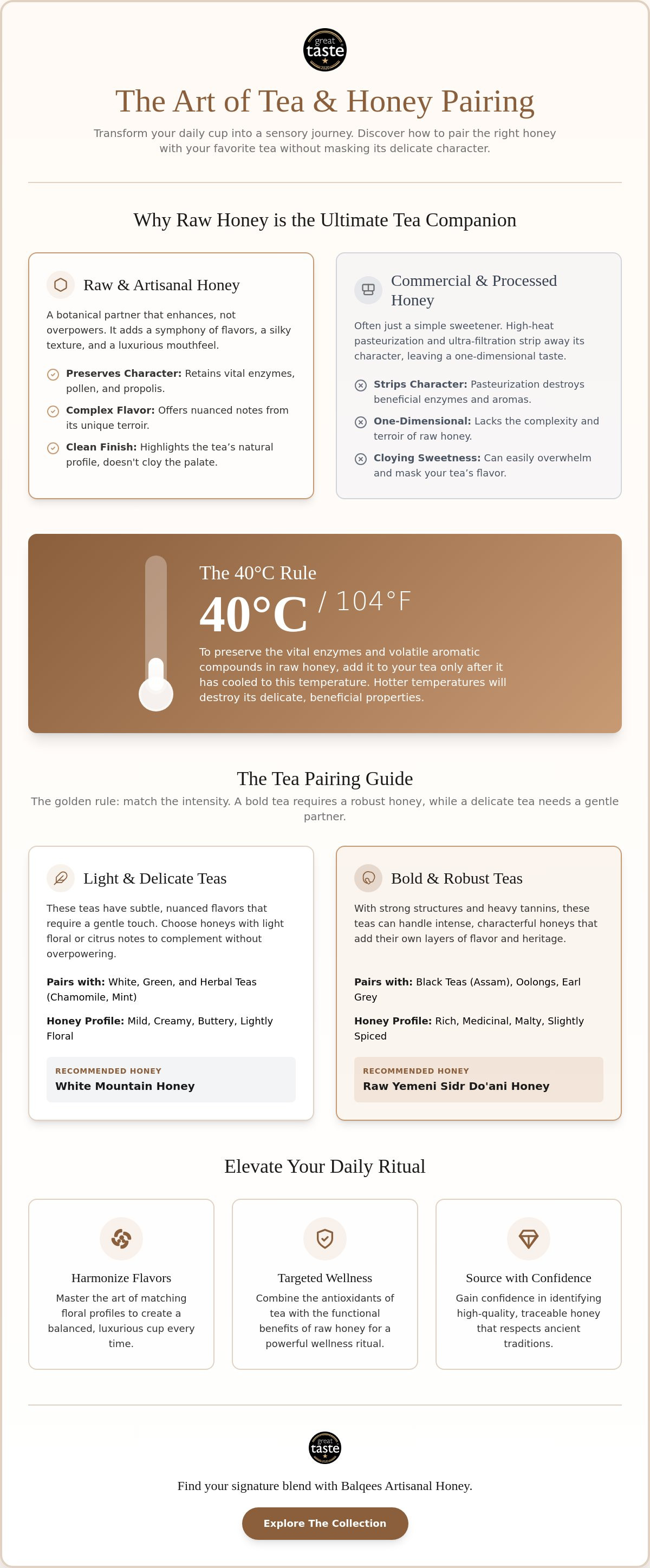
- Discover the "40°C rule" to ensure you never compromise the vital enzymes or volatile aromatic compounds found in premium raw honey.
- Learn how to elevate your daily cup into a targeted wellness ritual by combining the antioxidants of tea with functional honey infusions.
- Gain confidence in identifying high-quality, traceable honey that respects ancient traditions and ensures a truly luxurious sensory experience.
The Art of Sweetening: Why Raw Honey is the Ultimate Tea Companion
The marriage of tea and honey is a dialogue between two distinct landscapes. It is a union of sun-drenched leaves and the liquid essence of a thousand blossoms. For those seeking the best honey for tea, the choice is never merely about sweetness. It's about depth. While white sugar offers a sharp, singular note of sweetness, raw honey provides a symphony. It adds a silky viscosity that coats the palate, extending the finish of the tea and allowing the delicate aromatics to linger. Connoisseurs understand that honey doesn't just change the flavor; it transforms the texture. It creates a weighted, luxurious mouthfeel that turns a simple infusion into a complete sensory experience.
A comprehensive overview of honey reveals a chemical complexity that simple syrups cannot match. Raw honey contains trace minerals, enzymes, and volatile aromatic compounds that interact with the tannins and polyphenols in tea. This interaction is where the magic happens. A refined sweetener is a blunt instrument. Raw honey is a fine-tuned tool. It can brighten a dull brew or soften the astringency of a strong black tea. It acts as a botanical partner, respecting the integrity of the leaf while adding its own storied history to the cup.
Raw vs. Commercial: A Sensory Distinction
Commercial honey is often a ghost of the real thing. High-heat pasteurization and ultra-filtration strip away the very elements that define its character. In contrast, raw honey remains untouched. It retains its pollen and propolis, the microscopic signatures of the hive. Cold-pressed methods ensure that the heat of production never exceeds the temperature of the hive itself. This preservation is vital for tea drinkers. Without these volatile compounds, the honey is just a heavy syrup. It makes your tea taste cloying. Pure, raw honey offers a clean finish that highlights, rather than hides, the tea's natural profile.
The Role of Terroir in Flavor Pairing
The concept of terroir is as central to honey as it is to fine wine or tea. The minerals in the soil of a Yemeni valley or the mist on a high mountain range are captured in the nectar. This shared heritage creates a natural botanical harmony. Pairing a robust Yemeni Wild Flower Honey with a dark, spiced black tea works because they share an ancestral flavor profile. They belong together. It's a sensory logic that refined sweeteners simply cannot replicate. When you match honey and tea from similar climates, you aren't just sweetening a drink. You're telling a story of the earth.
The Tea Pairing Guide: Matching Varieties for Maximum Flavor
Choosing the best honey for tea is an exercise in botanical balance. You have two distinct paths to follow. You can complement the tea by selecting a honey with a similar flavor profile, or you can contrast it to create a dynamic tension on the tongue. A honey that complements a tea will deepen its existing notes, while a contrasting honey provides a refreshing counterpoint. The golden rule is to match the intensity. A bold tea requires a robust partner; otherwise, the tea will simply drown out the sweetener's nuance. Conversely, a delicate leaf will be overwhelmed by a heavy, medicinal honey. Understanding this relationship is the first step toward a more sophisticated ritual.
Light and Delicate: Green, White, and Herbal Teas
White and green teas are the whispers of the tea world. They require a gentle touch and a light hand. White Mountain Honey is the ultimate companion for these varieties. Its creamy, almost buttery texture and mild sweetness elevate a delicate Silver Needle white tea without stealing the spotlight. For green teas, look for honeys with light floral or citrus undertones. These varieties brighten the grassy, vegetal notes of the leaf. When brewing herbal infusions like Chamomile or Mint, a light wildflower variety adds just enough sweetness to soothe the palate. Many connoisseurs choose these pairings to enjoy the health benefits of honey alongside the antioxidants found in the tea leaves.
Bold and Robust: Black Teas and Oolongs
Black teas and dark Oolongs possess a structural strength that can handle intense sweetness. This is the rightful domain of Raw Yemeni Sidr Do'ani Honey. Its rich, medicinal, and slightly malty profile stands up to the heavy tannins of a strong Assam or the citrusy bergamot of an Earl Grey. The Sidr honey doesn't just sweeten the cup; it adds a layer of ancient heritage and a thick, luxurious mouthfeel. For fermented teas or those with high astringency, Yemeni Wild Flower Honey offers a balanced, complex sweetness that rounds out the sharp edges. It’s a pairing that feels intentional and grounded, turning a simple break into a moment of true indulgence.
There are moments when the leaf should speak for itself. Rare, single-origin teas often possess such intricate profiles that any addition would be a distraction. We always recommend tasting your tea first. If the brew is perfect in its purity, let it be. But when you seek to enhance and explore new dimensions of flavor, choosing the right variety is essential. You might find it helpful to explore our collection of artisanal honeys to find your own signature pairing.
Temperature and Timing: Protecting the Essence of Raw Honey
Brewing the perfect cup is a matter of patience. While it’s tempting to stir in your sweetener the moment the kettle whistles, doing so is a mistake for both your palate and your health. The best honey for tea is a living product. It’s packed with delicate enzymes and volatile aromatic compounds that are highly sensitive to heat. When you subject raw honey to boiling water, you aren't just sweetening your drink. You're effectively cooking out the qualities that make it premium. The result is a flat, overly sweet liquid that lacks the botanical soul of the original nectar.
Science tells us that 40°C is the golden rule for preservation. This temperature roughly mirrors the environment of a thriving beehive. Staying below this threshold protects the complex chemistry of honey, ensuring every sip retains the floral nuances of its origin. How do you know when the water is ready? Follow the Two-Minute Rule. Once your tea has finished steeping and you've removed the leaves, wait at least two minutes before adding your honey. Look for the absence of heavy, rolling steam. If the surface of the water is calm and the steam has thinned to a light mist, it’s likely safe to introduce your chosen variety.
Preserving Medicinal Benefits
Heat is the primary enemy of the antimicrobial properties found in raw honey. Specifically, the enzyme glucose oxidase, which helps produce natural hydrogen peroxide, begins to degrade at high temperatures. If you’re using honey as a wellness tonic, scalding liquid renders it little more than a simple sugar. You’ll also notice the aroma disappears. Those fleeting, floral scents are the first to evaporate in a boiling brew. To keep these benefits intact, try pre-cooling your tea by adding a splash of room-temperature water before the honey hits the cup. This simple step anchors the honey's health profile and its flavor.
Texture and Solubility
Crystallization is a sign of purity, not a defect. If your honey has hardened, don't reach for the microwave. Instead, use a wooden honey dipper to gently swirl it into the warm tea. Wood doesn't conduct heat like metal, helping to maintain a more stable environment for the honey as it dissolves. White Mountain Honey, known for its creamy, velvet-like texture, requires even more care. Because it's already naturally thick and smooth, it dissolves beautifully in cooler liquids, so there's no need to rush the process. Taking these extra seconds ensures you find the best honey for tea experience without sacrificing the integrity of the harvest.
Functional Infusions: Elevating Tea into a Wellness Ritual
The ritual of tea has always been a conduit for health. For the discerning drinker, the best honey for tea is more than just a sweetener; it is a delivery system for potent botanicals. By integrating functional honey fusions into your brew, you transform a simple beverage into a targeted health tonic. This synergy is rooted in the way honey helps the body absorb the antioxidants and polyphenols found in tea leaves. It’s a purposeful approach to well-being that respects both the ancient tradition of apitherapy and the nuanced craft of the tea master.
Balance is the key to a successful wellness ritual. You don't want the medicinal notes of a fusion to overwhelm the delicate character of the tea. Instead, look for pairings that share a common goal. A morning cup should prioritize clarity and vitality, while an evening infusion focuses on restoration and calm. By selecting the right botanical partner, you can enhance the tea's natural properties while adding a layer of functional support that carries you through the day.
Energy and Immunity Boosters
Morning is the time for sustained focus and protective rituals. Pairing our Black Seed Fusion with a warm ginger tea creates a potent immune-supporting tonic. The earthy, slightly peppery notes of the black seed (Nigella sativa) harmonize beautifully with the spice of the ginger. For those seeking mental clarity, try using Raw Honey & Ginseng Fusion with a high-quality green tea. The natural energy of the ginseng complements the tea's L-theanine, providing a calm, steady alertness without the jitters of coffee. During seasonal transitions, Yemeni Wild Flower Honey acts as a soothing companion for herbal brews, helping to quiet the throat and support the body's natural defenses.
Evening Calm and Digestive Support
As the day closes, your tea ritual should signal the body to rest. Mild, floral honeys are ideal for caffeine-free infusions like Rooibos or Valerian root. These pairings help the body settle, while the honey itself aids in the gentle absorption of the herbal compounds. A traditional "sleep-well" ritual involves a light tea, a splash of warm milk, and a spoonful of raw honey. This combination creates a comforting, weighted mouthfeel that prepares the mind for deep restoration. To begin your journey into functional wellness, you can shop our range of honey fusions and discover the perfect partner for your favorite tea.
Finding Your Signature Blend with Balqees Artisanal Honey
The journey of a Balqees jar begins in the remote, sun-drenched valleys of Yemen. It is a place where ancient beekeeping traditions remain untouched by industrial haste. For the tea connoisseur, this provenance is everything. Sourcing matters because the nectar of the Sidr tree or the high-altitude blooms of the mountains carries a specific fingerprint of the earth. When you seek the best honey for tea, you are looking for this unadulterated connection to nature. Our commitment to raw, unfiltered purity ensures that the complex enzymes and floral notes we discussed earlier arrive in your teacup exactly as the bees intended. We don't just sell honey; we act as guardians of a liquid heritage.
Building a home collection allows you to match your mood to your brew. We call this curating a "Honey Library." It’s about having the right profile on hand for a brisk morning Assam or a quiet evening chamomile. A well-stocked library ensures that your ritual never becomes stagnant. If you are ready to begin your own collection, it has never been easier to buy raw honey online in the UAE and have these artisanal treasures delivered directly to your sanctuary. Purity is our promise. Quality is our signature.
The Balqees Selection for Tea Lovers
Every jar in our collection offers a different path for your palate. Yemeni Wild Flower Honey is perhaps our most versatile offering. Its balanced sweetness and multi-layered floral notes complement almost any infusion without dominating the cup. For those who prefer a creamy, velvet-like finish in their white or light herbal teas, White Mountain Honey provides a luxurious, floral elegance that is unmatched. However, for the robust tannins of a traditional black tea, our Raw Yemeni Sidr Do'ani Honey remains the undisputed gold standard. It possesses a depth and a malty resonance that transforms a simple cup into a masterpiece of flavor.
A Gift for the Tea Enthusiast
In the UAE, the union of honey and tea is more than a culinary choice. It is a gesture of hospitality and a nod to our deep cultural heritage. Sharing this experience is a tradition in itself. Our premium honey gift sets are designed for this very purpose. They allow you or a loved one to explore the full spectrum of pairings we've explored in this guide. Whether you are a seasoned collector or just beginning to discover the best honey for tea, we invite you to experiment. What is your signature blend? We would love to hear about the sensory discoveries you make in your own daily ritual.
The Path to a Refined Tea Ritual
Your daily tea break is an opportunity for quiet excellence. By respecting the delicate nature of raw honey and the complexity of the tea leaf, you unlock a sensory experience that commercial sweeteners simply can't provide. Remember that the best honey for tea is one that honors the botanical origin of the brew. Whether you're matching a bold Sidr with a robust black tea or letting White Mountain Honey soften a delicate green infusion, the secret lies in balance. Stay mindful of the 40°C rule to protect those vital enzymes and allow the aromatics to truly sing. It's a small change that transforms a routine into a moment of genuine luxury.
At Balqees, we're dedicated to this artisanal reverence. Our honey is sourced from the remote, untouched valleys of Yemen, where heritage-focused beekeeping ensures award-winning purity. With nationwide delivery across the UAE, we bring this premium freshness directly to your sanctuary. Explore the Balqees Raw Honey Collection for your next tea ritual. We look forward to being part of your favorite pairing discoveries.
Frequently Asked Questions
Does putting honey in hot tea destroy its benefits?
Boiling water can degrade the delicate enzymes and antimicrobial properties found in raw honey. To preserve these vital benefits, wait for your tea to cool to approximately 40°C before stirring in a spoonful. This simple pause ensures the heat doesn't strip the honey of its botanical soul or medicinal value, keeping the living chemistry of the hive intact for your cup.
Which honey is best for green tea?
Light floral varieties or citrus-forward honeys are the best honey for tea when brewing green or white leaves. These mild profiles enhance the grassy, vegetal notes of the tea without overwhelming them. White Mountain Honey is a particularly elegant choice; its creamy texture and gentle sweetness provide a sophisticated finish that respects the tea's natural fragility.
Is honey better for you than sugar in tea?
Raw honey is a superior choice to refined sugar because it offers trace minerals, enzymes, and antioxidants rather than empty calories. While sugar provides a singular note of sweetness, raw honey offers a complex chemical profile that interacts with a tea's polyphenols. It also has a lower glycemic index, which helps provide a steadier energy release compared to the sharp spikes of white sugar.
Why does my honey taste different in different teas?
Honey is a botanical product, and its flavor is deeply influenced by the terroir of its origin. When you introduce it to tea, the honey's volatile aromatic compounds interact with the tea's specific tannins and acids. This chemistry can highlight hidden floral notes in a light brew while softening the heavy astringency in a dark black tea, creating a unique sensory result every time.
Can I use crystallized honey in my tea?
Crystallized honey is perfectly safe and is actually a hallmark of raw, unfiltered purity. It dissolves effortlessly when stirred into a warm infusion. Simply scoop out the desired amount and let the gentle warmth of the tea return the honey to its liquid state. There is no need to pre-heat the jar, as the tea's temperature will handle the process naturally.
How much honey should I put in one cup of tea?
One teaspoon per standard cup is the ideal starting point to enhance flavor without masking the tea's character. Since raw honey is often more intense and complex than commercial syrups, you'll likely find you need less than you think to find the best honey for tea balance. Always taste your brew first to determine the natural sweetness of the leaf before adding your honey.
What is the best honey for a sore throat tea?
Raw Yemeni Sidr Do'ani Honey is widely regarded as the gold standard for soothing seasonal discomfort. Its high medicinal activity and thick, silky consistency provide a protective coating for the throat. For an added boost, our Black Seed Fusion combined with a warm ginger infusion creates a potent wellness ritual that supports the body's natural defenses during times of recovery.
Should I use a specific type of honey for Earl Grey?
Earl Grey's bold bergamot profile requires a honey with enough character to stand its ground against the citrusy tannins. A robust variety like Yemeni Wild Flower Honey or the malty depth of Sidr provides the perfect balance. These richer honeys complement the intensity of the black tea leaves rather than being lost in the brew, ensuring a harmonious and weighted mouthfeel.


