


A single drop of raw honey is more than a sweetener; it's a liquid map of the Yemeni hillsides, captured in a jar. You likely understand that this nectar is a precious gift from the natural world. Yet, the fear of damaging its delicate enzymes through heat often keeps this artisanal treasure tucked away in the pantry. It's a common dilemma for those who appreciate quality but lack the traditional knowledge to use it effectively.
We're here to bridge that gap. You'll learn how to elevate your kitchen with the floral complexity of raw honey through authentic Yemeni wildflower honey recipes and expert preparation techniques. This journey allows you to master the sensory experience of the hive while preserving the raw, living integrity of every spoonful. We believe that true luxury lies in the purity of the ingredients and the stories they tell.
Our guide explores the rhythmic process of crafting Bint Al Sahn, the celebrated national dish, and offers versatile ways to use wildflower honey in your daily wellness rituals. From the sun-drenched hillsides to your table, we'll show you how to handle this unfiltered gold with the reverence it deserves. Prepare to transform your cooking into a meaningful tribute to Yemeni heritage.
Key Takeaways
- Understand why the light, multi-floral profile of Yemeni Wildflower Honey makes it the essential choice for daily family cooking and versatile kitchen use.
- Master the art of Bint Al Sahn, the iconic Yemeni honey cake, by learning the precise balance of ghee and the cultural significance of black cumin seeds.
- Protect the living enzymes in your jar by identifying the exact temperature limits that ensure your raw honey remains a potent source of wellness.
- Elevate your morning ritual with authentic Yemeni wildflower honey recipes like Masoub, a traditional blend of bananas and flatbread finished with unfiltered nectar.
- Discover how to balance floral sweetness with spice and acidity to create sophisticated savoury pairings that honour ancient culinary heritage.
The Culinary Profile of Yemeni Wildflower Honey
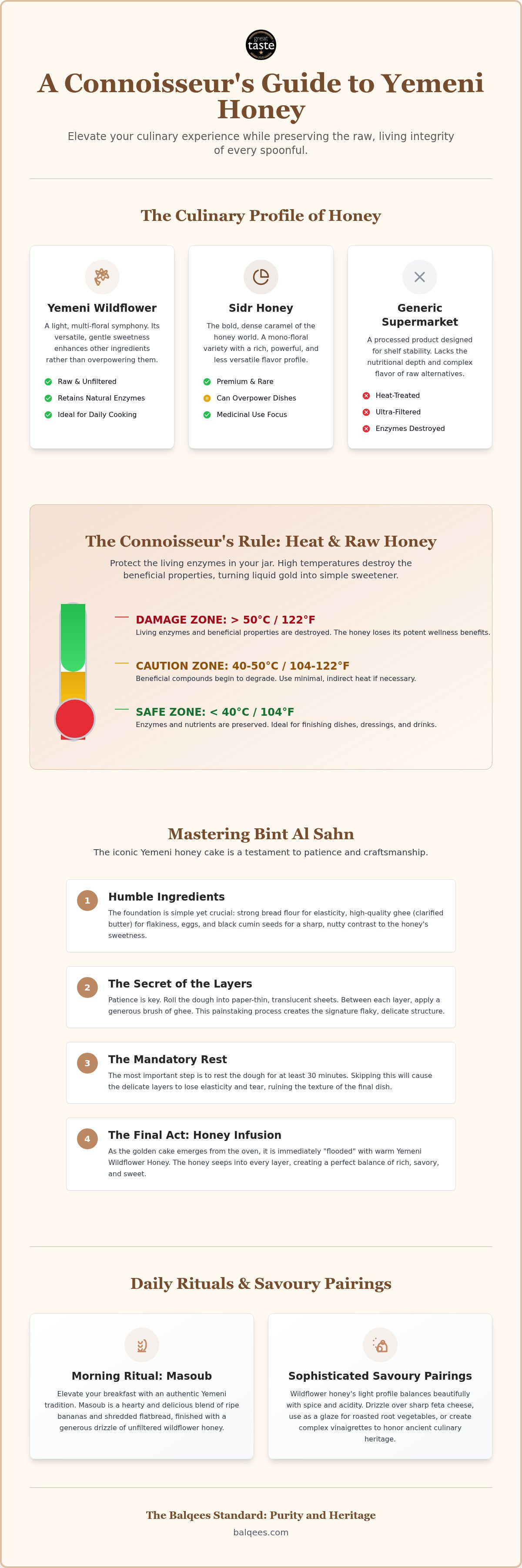
Yemeni wildflower honey is a masterclass in subtlety. It offers a light, multi-floral bouquet that dances across the palate with a gentle, persistent sweetness. This isn't the heavy, singular note of mono-floral varieties. Instead, it's a complex harmony of whatever was in bloom when the bees took flight. Because it's raw and unfiltered, the nectar retains its natural enzymes and antioxidants, offering a nutritional depth that processed alternatives simply can't match. Unlike generic supermarket varieties that are often heat-treated and ultra-filtered for shelf stability, Yemeni wildflower honey remains a living, seasonal expression of the earth, captured with artisanal respect.
A Floral Symphony from the Do'ani Valley
The hillsides of the Do'ani Valley provide a unique canvas for this honey. Here, the geography dictates the flavour. The bees forage across a diverse tapestry of wild plants, creating a "Floral Symphony" that changes with every harvest. You might notice bright, citrus-like top notes in the spring, while a late-summer jar might lean toward deeper, earthy undertones. This seasonal variation is a hallmark of authenticity. Our beekeepers use traditional, slow methods to ensure the "life-giving" enzymes stay intact. It's a patient process. We prioritize the integrity of the hive over the speed of production.
Why Wildflower Honey belongs in your Pantry
If Sidr honey is the bold, dense caramel of the honey world, wildflower honey is its versatile, airy counterpart. It's often the ideal "starter" honey for families. Its profile is approachable, making it perfect for those exploring Yemeni wildflower honey recipes for the first time. Whether you're experimenting with new Yemeni wildflower honey recipes or simply sweetening your morning tea, this honey provides a consistent bridge to ancient traditions. The lighter intensity doesn't overwhelm other ingredients; it enhances them.
This versatility shines in both sweet and savoury pairings. You can drizzle it over a sharp feta cheese or use it to glaze roasted root vegetables. It's also the essential finishing touch for traditional dishes like Bint Al Sahn, where its floral notes cut through the richness of ghee. Choosing wildflower honey allows you to incorporate high-quality Yemeni heritage into your daily wellness rituals without the premium cost of rarer mono-floral jars. It's a practical luxury for the modern kitchen.
Mastering Bint Al Sahn: The Iconic Yemeni Honey Cake
Bint Al Sahn is the soul of Yemeni hospitality. Often translated as "Daughter of the Plate," this dish isn't merely a cake; it's a testament to patience and craftsmanship. In Yemeni culture, serving this multi-layered bread reflects the deep respect a host has for their guests. Understanding The Rich Heritage of Yemeni Honey is essential to appreciating why this dish remains a cornerstone of the national identity. It's a culinary ritual where the quality of your ingredients, specifically the honey and ghee, determines the success of the final result.
The ingredients are humble, yet the preparation is an art form. You'll need strong bread flour, eggs, and a significant amount of ghee. The black cumin seeds are more than just a garnish; they provide a sharp, nutty contrast to the floral sweetness of the honey. It's this balance of fat, flour, and nectar that makes the dish so addictive. It's a staple at weddings, religious holidays, and family gatherings, bridging the gap between a simple snack and a sacred tradition.
The Secret of the Layers
Achieving the perfect Bint Al Sahn requires a specific technique. You must use strong flour to develop the gluten necessary for rolling the dough into paper-thin, translucent sheets. Between each layer, a generous brush of clarified butter, or ghee, is mandatory. This creates the signature flakiness that defines the dish. Don't rush. Resting the dough for at least 30 minutes between stages is the most important step. Without this pause, the layers will lose their elasticity and tear, ruining the delicate, bread-like structure that guests expect.
The Honey Infusion
The final act is the most sensory. As the cake emerges from the oven, golden and topped with black cumin seeds, it's "flooded" with honey. For a modern twist on traditional Yemeni wildflower honey recipes, many connoisseurs now use our Black Seed Fusion. This blend integrates the medicinal nigella sativa directly into the nectar, ensuring every bite carries that earthy, peppery undertone. Pour the honey while the cake is warm, but not piping hot, allowing it to penetrate the deep, buttery layers without degrading the honey's integrity.
The ritual of pouring the honey is a moment of quiet celebration. When the liquid gold meets the warm ghee, it creates a fragrance that is unmistakably Yemeni. While traditional Yemeni wildflower honey recipes call for a sprinkle of loose seeds, using a pre-infused blend ensures a more balanced distribution of flavour. The honey shouldn't just sit on top; it should seep into the very heart of the cake. Pair it with a cup of hot black tea for the quintessential Yemeni experience. If you're ready to start your journey, explore our Yemeni Wild Flower Honey to find the perfect floral companion for your next bake.
The Connoisseur’s Rule: Heat and Raw Honey
To truly master Yemeni wildflower honey recipes, you must first respect the living nature of the ingredient. There's a profound difference between raw honey vs commercial honey. While commercial varieties are often pasteurized at high temperatures to ensure a uniform, liquid state, raw honey remains untouched. It's an active, enzymatic substance. When you choose raw Yemeni nectar, you're choosing a product that still contains the pollen, propolis, and antioxidants intended by the bees. Treating it with too much heat doesn't just change the flavour; it erases the very benefits you seek.
The boundary between preservation and degradation is surprisingly thin. When raw honey exceeds 40 degrees Celsius, its complex enzymatic structure begins to break down, effectively neutralizing the medicinal properties that define high-quality Yemeni nectar. This is why we advocate for a mindful approach to temperature. If a recipe calls for honey to be incorporated into a hot base, timing becomes your most critical tool. You aren't just cooking; you're stewarding a delicate biological treasure.
Cooking with Honey vs. Drizzling
In the artisanal kitchen, we often follow the "Sacrifice Rule." This means using our versatile Yemeni Wildflower Honey for recipes that require some heat, while reserving rare varieties like Sidr for purely raw consumption. When preparing a dish like Bint al-Sahn: A Romantic Yemeni Dish, the tradition is to drizzle the honey over the warm bread immediately after it leaves the oven. The residual heat is enough to help the honey seep into the buttery layers without reaching the destructive 40-degree threshold. If your honey has crystallized, don't reach for the microwave. Instead, place the jar in a bowl of warm water (below 40°C) and let it slowly return to its liquid state, preserving its integrity through patience.
Preserving the 'Floral Symphony'
The "Floral Symphony" of wildflower honey is composed of volatile aromatic compounds. These are the first elements to vanish when exposed to heat. There's a stark sensory difference between honey that has been baked into a dough and honey used as a finishing touch. The latter retains its bright, floral top notes and nuanced aftertaste. To maintain this delicate scent over time, store your jar in a cool, dark place. Light and fluctuating temperatures are the enemies of aroma. By shielding your honey from these elements, you ensure that every time you open the jar, the scent of the Yemeni hillsides remains as vivid as the day it was harvested.
Daily Rituals: Masoub and Savoury Honey Pairings
While Bint Al Sahn is the celebratory crown of Yemeni cuisine, the true rhythm of daily life is found in more intimate rituals. These are the moments where Yemeni wildflower honey recipes become practical tools for wellness. Masoub, the quintessential Yemeni breakfast, is perhaps the finest example. It is a hearty, textured blend of mashed bananas and shredded flatbread, brought to life with a generous pour of raw honey. Unlike the more intense monofloral varieties, wildflower honey offers a bright, multi-floral lift that complements the fruit without overwhelming it. It is the essential starter honey for families, turning a simple morning meal into a sensory experience. As the Yemeni Ministry of Industry and Trade continues to enhance quality standards through its 2026 national project, the integrity of these traditional ingredients is being more rigorously protected than ever before.
Building the Perfect Masoub
Success in Masoub depends on the ripeness of your bananas. You want them spotted and soft, providing a natural creaminess that binds with the honey. To create a truly substantial meal, we recommend layering textures with fresh cream, chopped dates, and raw nuts. Wildflower honey is the superior choice here because its complex fruit profile mirrors the natural sugars in the banana. It creates a cohesive flavour profile that feels both ancient and perfectly suited to a modern, active lifestyle.
Savoury Honey Alchemy
Moving beyond the breakfast bowl, wildflower honey acts as a bridge between spice and acidity. It is a natural emulsifier, making it an ideal base for artisanal salad dressings. By whisking raw honey with apple cider vinegar and cold-pressed oil, you create a stable, velvety texture that highlights the nuances of rare honey varieties while cutting through the bitterness of leafy greens. This balance is critical in savoury applications, such as glazing roasted root vegetables where the honey interacts with earthy flavours to create a deep, caramelized finish.
A simple yet profound ritual is the morning "Honey and Labneh" plate. This pairing is a masterclass in contrast. The sour, creamy profile of the labneh provides a canvas for the floral notes of the honey, creating a dish that supports gut health while satisfying the palate. It is a framework for a balanced wellness plate that requires no cooking, only the finest raw ingredients. To bring this ritual into your home, we invite you to order our Yemeni Wild Flower Honey and begin your own culinary exploration of Yemeni wildflower honey recipes.
The Balqees Standards of Purity and Heritage
At the heart of Balqees Honey is a vision cultivated by our founder, Riath Hamed. It's a commitment to bridging ancient Yemeni traditions with the pace of a modern lifestyle. We don't just see ourselves as a retailer. We are storytellers and guardians of a craft that has survived for centuries. This dedication begins with sustainable beekeeping honey practices. By supporting ethical apiculture, we ensure that the hillsides of Yemen remain vibrant and that the traditional beekeeping communities continue to thrive. Transparency in our supply chain is non-negotiable. Every jar we offer is a testament to the integrity of the earth and the hands that harvest its nectar.
From Hive to Table
Our philosophy is rooted in minimal interference. We follow a strict "Cold Pressed" method, meaning we never heat-treat our wildflower honey. This preserves the delicate enzymatic profile and the complex "Floral Symphony" we've explored in earlier sections. Every harvest reflects the true terroir of the Yemeni countryside, capturing the specific bloom of the season. To help you explore this craft, we act as a dedicated mentor. We want to educate the next generation of honey lovers, ensuring they understand the difference between a mass-produced sweetener and a living, artisanal product. It's about respecting the slow, methodical nature of the industry.
Selecting your Culinary Honey
Building a complete culinary repertoire starts with a solid foundation. Yemeni Wild Flower Honey is the perfect entry point. It's versatile enough for daily Yemeni wildflower honey recipes but sophisticated enough to stand alone. This accessibility makes it the ideal anchor for a premium honey gift set. When you're curating your collection, consider the outcome you desire. Use the light wildflower for your morning Masoub or as a base for dressings. Reserve the darker, more potent varieties for moments of pure wellness or as a bold contrast to sharp cheeses. By choosing Balqees, you're not just buying honey; you're participating in a larger conversation about health, heritage, and quality. We invite you to explore our collection of raw, unfiltered Yemeni honey online and discover the transformative power of the hive in your own Yemeni wildflower honey recipes.
Bringing the Spirit of Yemen to Your Kitchen
Your journey through the hillsides of the Do'ani Valley doesn't have to end here. By mastering the delicate balance of temperature and texture, you've unlocked the true potential of the hive. You now understand that preserving the enzymatic integrity of your honey is just as important as the ingredients themselves. Whether you're layering a golden Bint Al Sahn or whisking a bright vinaigrette, these Yemeni wildflower honey recipes offer a bridge to a richer, more intentional way of living.
We invite you to experience the difference that raw, unfiltered nectar makes in your daily rituals. Every jar of Balqees honey is an artisanal treasure, sourced directly from Yemen and kept unheated to protect its natural vitality. With national delivery across the UAE, the "Floral Symphony" of the hillsides is closer than you think. It's about more than just sweetness; it's about honouring a heritage that values purity above all else.
Discover the Floral Symphony of Raw Yemeni Wildflower Honey and begin your own culinary ritual today. The earth has provided the ingredients; the rest is up to your hands and your heart.
Frequently Asked Questions
Can I use Yemeni wildflower honey in baking?
Yes, you can certainly use wildflower honey in baking. Its light, multi-floral profile makes it a versatile choice that doesn't overpower other ingredients. While rarer varieties like Sidr are often kept for raw use, this wildflower nectar is the perfect everyday companion for the oven. It adds a gentle sweetness and moisture to breads and cakes, ensuring your Yemeni wildflower honey recipes remain rooted in traditional quality.
What is the difference between Yemeni Sidr and Wildflower honey in recipes?
The primary difference lies in intensity and flavour profile. Yemeni Sidr honey is dense and bold with distinct caramel notes, making it a powerful standalone ingredient. In contrast, wildflower honey is lighter and more floral, offering a "Floral Symphony" that bridges different flavours. This makes it more suitable for a wider variety of recipes where you want the honey to enhance, rather than dominate, the other components of the dish.
How do I make the traditional Yemeni honey cake, Bint Al Sahn?
Creating Bint Al Sahn requires patience and a specific layering technique. You roll dough into paper-thin sheets, brushing each with clarified butter or ghee before stacking them. Once baked to a golden finish, the cake is traditionally "flooded" with raw honey. This ritual ensures the nectar seeps through the flakiness. It's a cornerstone of Yemeni hospitality that highlights the importance of using unfiltered, high-quality honey as a finishing touch.
Is it safe to heat raw Yemeni honey?
While it's safe to consume heated honey, doing so destroys the living enzymes and antioxidants that define raw nectar. To preserve the medicinal benefits, you should avoid exceeding 40 degrees Celsius. In many traditional recipes, the honey is added as a finish once the dish has slightly cooled. This strategic timing allows you to enjoy the rich aroma and health properties without subjecting the delicate enzymes to destructive levels of heat.
What are the best savoury uses for wildflower honey?
Wildflower honey excels in savoury applications where it can balance acidity and spice. It works beautifully as a natural emulsifier in vinaigrettes or as a glaze for roasted root vegetables. One of the most beloved daily rituals is the "Honey and Labneh" plate, where the floral sweetness cuts through the tartness of the creamy cheese. These simple yet sophisticated pairings show how easily you can integrate raw honey into a modern, healthy lifestyle.
How should I store my wildflower honey to keep it fresh for recipes?
Proper storage is essential to maintain the volatile aromatic compounds of your honey. You should keep the jar in a cool, dark place away from direct sunlight and fluctuating temperatures. Exposure to light and heat can cause the delicate floral scent to vanish over time. By sealing the jar tightly and keeping it in a stable pantry environment, you ensure that every spoonful remains as fresh and fragrant as the day it was harvested.
Can I use functional honey blends like Black Seed Fusion in my cooking?
Yes, functional blends like our Black Seed Fusion offer a modern twist on traditional recipes. Instead of adding loose seeds, you can use this pre-infused nectar to provide a balanced, peppery undertone to your dishes. It's particularly effective when drizzled over warm breads or incorporated into morning breakfast bowls. These fusions allow you to combine the nutritional benefits of nigella sativa with the light sweetness of wildflower honey in one simple step.
Why does my Yemeni wildflower honey crystallize, and can I still use it?
Crystallization is a natural sign of purity and proof that your honey is raw and unfiltered. It doesn't mean the honey has gone bad; in fact, many connoisseurs enjoy the spreadable texture. If you prefer a liquid state for specific Yemeni wildflower honey recipes, simply place the jar in a bowl of warm water below 40 degrees Celsius. The crystals will gently dissolve without damaging the honey's integrity or its complex nutritional profile.


