


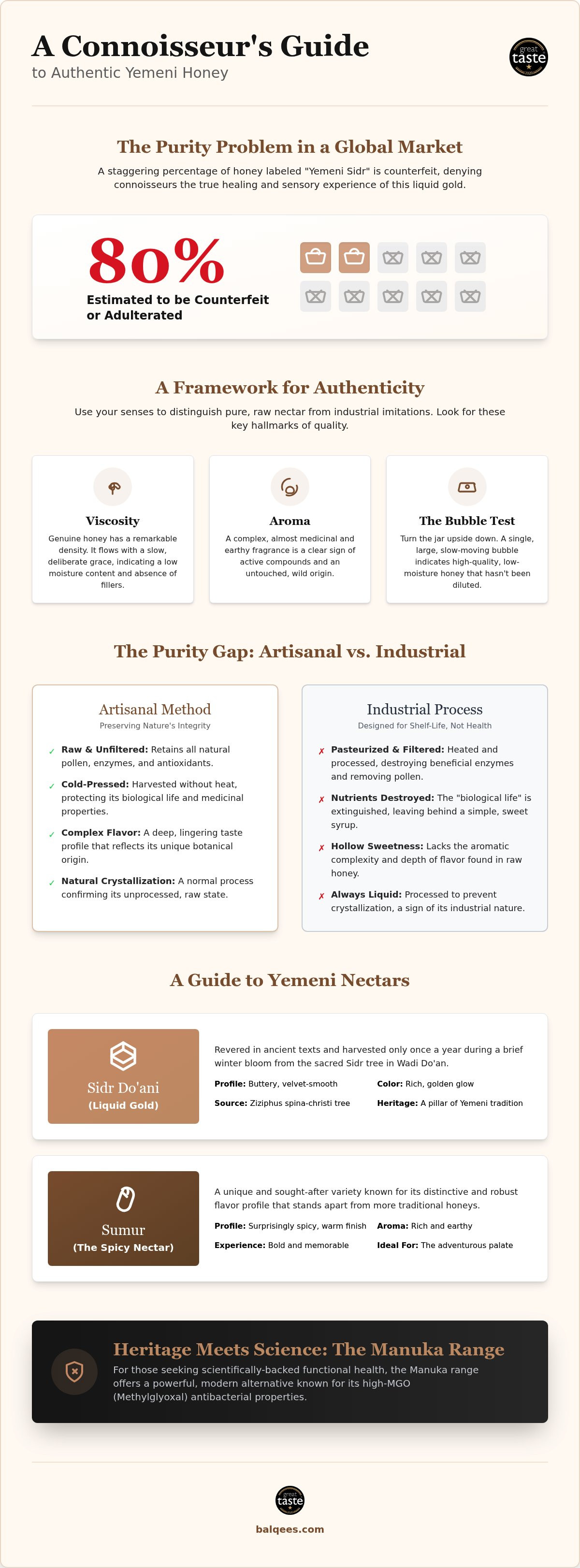
Did you know that as much as 80% of the jars labeled as "Yemeni Sidr" on the global market today are estimated to be counterfeit or heavily adulterated? It's a staggering reality for any connoisseur seeking the true, liquid gold of the Hadramaut region. You want more than just sweetness. You're looking for a legacy of healing and a sensory journey that justifies its rare status. Understanding the different types of Yemeni honey is the first step in ensuring your investment supports both your health and ancient beekeeping traditions.
We understand the hesitation that comes with a premium price point, especially when the market feels uncertain. It's why we've dedicated ourselves to transparency and the preservation of raw, unfiltered purity. This guide will demystify the complex world of premium nectars, helping you distinguish between authentic harvests and pale imitations. We'll explore the distinct profiles of Sidr, Sumur, and Wildflower varieties, giving you the clarity needed to choose a jar that resonates with your specific wellness ritual and honors the earth it came from.
Key Takeaways
- Understand how the unique terroir of the Hadramaut region creates a botanical record that defines the quality of genuine Yemeni nectar.
- Learn to evaluate authenticity using a connoisseur’s framework. Focus on the specific viscosity and medicinal aroma profiles that industrial alternatives cannot replicate.
- Compare the most sought-after types of Yemeni honey, from the prestigious Sidr Do'ani to the vibrant Wild Flower varieties, to find your ideal match.
- Discover how to integrate these premium nectars into your daily life by matching specific honey profiles to your morning energy or evening recovery rituals.
- Explore the bridge between heritage and modern wellness by learning why the high-MGO Manuka Range offers a scientifically-backed alternative for functional health.
The Heritage of Yemeni Honey: Why Origin Defines the Grade
Yemen's landscape is a rugged tapestry of extremes. Arid coastal plains give way to jagged mountain peaks that touch the clouds. This geological diversity is the secret behind the world's most sought-after types of Yemeni honey. In regions like the Hadramaut, the environment acts as a natural laboratory. The soil composition, the sparse rainfall, and the intense sun combine to create a terroir as distinct as any fine vineyard. Every drop of nectar collected by the bees is a botanical record of this ancient land.
We treat beekeeping as a sacred trust. In the remote valleys of Yemen, beekeepers still use traditional methods that have remained unchanged for over a thousand years. There are no synthetic chemicals, no pesticides, and absolutely no industrial heat. The honey is harvested with a deep respect for the hive, ensuring the final product is raw and unfiltered. Each of the various types of Yemeni honey tells a story of survival and purity. When honey is subjected to industrial heating, its biological life is extinguished. The delicate enzymes, antioxidants, and intricate flavor notes are destroyed, leaving a product that is sweet but essentially hollow.
The Sacred Sidr Tree and the Wadi Do'an Legacy
The Sidr tree, or Ziziphus spina-christi, is far more than a plant; it's a pillar of heritage. Revered in ancient texts and local folklore, it's known for its extraordinary resilience and medicinal properties. The valley of Wadi Do'an provides the perfect stage for this tree to flourish. Here, the specific geography and altitude create a micro-climate that concentrates the tree’s nutrients into a potent nectar. Sidr honey is often called 'Liquid Gold' due to its exceptionally rare harvest window, occurring only once a year during the brief winter bloom.
Artisanal vs. Industrial: The Purity Gap
The gap between artisanal honey and the commercial varieties found in most supermarkets is vast. Industrial honey is often pasteurized and micro-filtered to ensure it stays liquid on a shelf for years. Unfortunately, this process removes the pollen and kills the live enzymes that provide real health benefits. We advocate for cold-pressing, a method that maintains the honey's natural integrity and thick, luxurious texture. If you want to buy raw honey online UAE, transparency is your best tool. Authentic honey should possess a complex, medicinal aroma and a depth of flavor that lingers on the palate, serving as a testament to its untouched origin.
The Buyer’s Framework: How to Evaluate Quality and Authenticity
Authenticity isn't just a label; it's a physical experience. When you hold a jar of genuine nectar, the first thing you'll notice is its weight and resistance. Unlike the thin, translucent syrups found in mass-market aisles, real Yemeni honey possesses a remarkable density. It doesn't run. It flows with a slow, deliberate grace that speaks to its low moisture content and raw state. This viscosity is a hallmark of quality that ensures you aren't paying for added water or sugar fillers.
The scent is equally revealing. Open the jar and inhale. You should encounter a complex, almost medicinal aroma that evokes the wild landscapes of the Hadramaut. It's an earthy fragrance that signals the presence of active compounds. On the palate, the experience varies wildly across the different types of Yemeni honey. You might find the buttery, velvet-smooth notes of Sidr or the surprisingly spicy, warm finish of Sumur. These flavor profiles are the result of specific nectar sources and cannot be synthesized.
Many buyers fear crystallization, viewing it as a sign of spoilage or added sugar. This is a myth. In reality, crystallization is a natural process for many raw honeys. While some rare mountain varieties stay liquid for years due to their specific fructose-to-glucose ratio, others will set into a creamy, spreadable texture. This change doesn't diminish the honey's health benefits; it simply confirms its raw, unprocessed nature.
Visual and Sensory Benchmarks for the Connoisseur
Observe the color. The amber hue shifts beautifully depending on the season and the bloom. Sidr Do'ani often presents a rich, golden glow, while Wildflower varieties can lean toward a deeper, darker bronze. You can perform a simple 'bubble test' at home. Turn the jar upside down. A large, slow-moving bubble indicates high-quality, low-moisture honey. These sensory cues are essential when exploring rare honey varieties that define the peak of artisanal craft.
Certification and Provenance: What to Look for on the Label
Transparency is the only way to navigate a market rife with counterfeits. Look for labels that specify a particular valley or region rather than just a country of origin. Vague terms like "Natural" or "Pure" are often marketing fluff used to hide heat-treatment or filtration. A true connoisseur seeks out "Raw" and "Unfiltered" designations backed by lab testing for MGO levels and enzyme activity. To ensure you're getting the genuine article, we invite you to explore our curated collection of verified Yemeni harvests. This level of detail protects your wellness ritual from the risks of adulteration.
Comparing the Classics: Sidr, Wildflower, and the Manuka Range
Choosing between the various types of Yemeni honey is an exercise in aligning your palate with your wellness goals. Each variety offers a distinct chemical signature and sensory profile. While the Raw Yemeni Sidr Do'ani Honey stands as the undisputed sovereign of the collection, other nectars like the Yemeni Wild Flower Honey and the rare White Mountain Honey provide essential alternatives for the discerning buyer. It's about finding the right balance between flavor and function.
When evaluating the different types of Yemeni honey, the Raw Yemeni Sidr Do'ani Honey is celebrated for its profound medicinal potency and deep artisanal heritage. It’s a thick, velvet-like substance that carries the essence of the Sidr tree’s resilience. In contrast, the Yemeni Wild Flower Honey serves as a versatile, multi-floral all-rounder. It's perfect for those who want a high-quality daily honey that complements their morning tea or coffee without overpowering it. It offers a bright, floral lift that is both accessible and sophisticated.
For the gourmet palate, White Mountain Honey offers a creamy, almost fudge-like texture that is exceptionally rare. It’s a stark departure from the liquid golds of the valleys, providing a mild yet sophisticated sweetness that lingers. Finally, we must consider the Manuka Range. While these aren't harvested in the Yemeni wadis, this range complements our traditional offerings by introducing high-MGO science to your wellness cabinet, providing a different dimension of functional strength.
Yemeni Sidr vs. Manuka: Heritage vs. Science
The choice between Sidr and Manuka often comes down to the specific benefit you seek. Sidr honey is traditionally prized for its anti-inflammatory properties and its role in digestive health. Manuka is defined by its MGO (Methylglyoxal) levels, a specific marker of antibacterial potency. The sensory experience also differs significantly. Sidr is buttery and rich, with a flavor that feels like a warm embrace. Manuka is more medicinal and earthy, with a slightly bitter undertone that many find grounding. Use Sidr when you want a holistic, time-tested tonic. Reach for the Manuka Range when your focus is on scientifically-verified antibacterial support.
Wildflower and White Mountain: The Floral Alternatives
If you're seeking something truly unique, the white mountain honey benefits are impossible to ignore. Often called the 'dessert honey' of the elite, its pale color and clean finish make it a favorite for gourmet pairings. Understanding the pricing tiers helps you justify the investment. While Wildflower is accessible for daily enjoyment, Sidr Do'ani is a rare treasure that reflects the difficulty of its harvest and its unparalleled status. Each jar is a commitment to purity, ensuring that whether you choose a daily floral or a rare mountain cream, you're receiving the untouched essence of nature.
Matching Your Ritual: Which Honey Type Is Right for You?
Specific types of Yemeni honey excel in addressing targeted health goals. For digestive support, the enzyme-rich profiles of Sidr and Sumur are peerless. They act as gentle tonics for the gut, a tradition backed by centuries of use. If your focus is on immunity, you might consider how to use functional honey blends to maximize your intake of antioxidants and active compounds. For skin health, applying raw, unfiltered varieties as a face mask provides natural antibacterial benefits and deep hydration.
Gifting the Gift of Health
In Yemeni culture, honey is a profound symbol of respect and hospitality. Choosing a premium honey gift set allows you to share this heritage with others. A thoughtful set usually includes a tasting flight, allowing the recipient to explore the contrast between a dark, rich Sumur and a bright, golden Sidr. It's a gift that speaks of purity, longevity, and a deep appreciation for artisanal craft. To begin your own journey or to find the perfect gesture for a loved one, we invite you to explore our collection of raw Yemeni nectars.
Investing in Purity: Why the Balqees Manuka Range is the Modern Choice
While we cherish the ancient lineages of the various types of Yemeni honey, modern wellness often demands a bridge between heritage and scientific precision. The Balqees Manuka Range represents this evolution. It isn't a departure from tradition but rather a focused application of it. By applying the same artisanal standards we use for our Yemeni harvests to the functional world of Manuka, we offer a potent tool for those who prioritize evidence-based health alongside sensory pleasure.
Our commitment to purity starts with the extraction. Most industrial brands heat-treat their honey to ensure it remains perfectly clear on a supermarket shelf. We don't. We use a cold-pressing method that preserves the delicate, heat-sensitive enzymes. This ensures the honey remains raw and unfiltered, maintaining the maximum bio-availability of its compounds. It’s a slower, more methodical process that honors the work of the bees and the integrity of the nectar.
The Functional Power of the Manuka Range
The defining characteristic of this range is Methylglyoxal, or MGO. Think of MGO as the primary marker of the honey’s antibacterial strength. The higher the rating, the more concentrated the activity. Unlike some industrial options that rely on pasteurization, our Manuka stays raw to keep its complex nutritional profile intact. Our collection features five distinct products tailored for different wellness stages, ranging from daily maintenance to intensive support during times of illness.
Final Steps: Curating Your Personal Collection
Building a honey collection is like curating a fine cellar. Start with a 'Daily Wellness' option, such as our Yemeni Wild Flower Honey, for its versatile lift. Then, add 'Medicinal' staples like the Raw Yemeni Sidr Do'ani Honey or a high-MGO Manuka for targeted recovery. This balanced approach ensures you have the right nectar for every ritual, whether it's a simple morning tea or a potent immunity boost. Understanding the different types of Yemeni honey allows you to layer these benefits effectively.
To preserve these treasures, store your jars in a cool, dark place away from direct sunlight. High temperatures can degrade the very enzymes you’re investing in. When handled with care, these honeys will maintain their potency and flavor for years. Ready to complete your cabinet? Explore the Balqees Manuka Range and elevate your wellness ritual today.
Elevating Your Wellness Ritual through Heritage
Choosing the right jar is about more than just flavor; it's an investment in a legacy that spans centuries. By understanding the distinct profiles and seasonal nuances of the various types of Yemeni honey, you can move beyond the uncertainty of the market and embrace a product that is truly raw and unfiltered. We've explored how origin defines the grade and how to use a sensory framework to verify the purity of what you consume. This knowledge empowers you to select a nectar that aligns perfectly with your personal health goals and daily rituals. It's a journey of discovery that rewards the patient seeker with unparalleled vitality.
Our commitment remains rooted in artisanal reverence, ensuring every harvest is handled with the care it deserves to maintain maximum enzyme activity. Trusted by connoisseurs across the UAE, we act as your guide in this ancient craft. It's time to experience the difference that transparency and heritage make in your well-being. Discover the Potency of the Balqees Manuka Range and find the perfect addition to your collection. Your journey into the world of premium nectars is a path toward deeper vitality and a more profound connection to the natural world.
Frequently Asked Questions
What are the main types of Yemeni honey available?
The most prestigious types of Yemeni honey include Sidr Do'ani, harvested from the sacred Sidr tree, and Sumur, known for its deep, smoky notes. You'll also find Yemeni Wild Flower honey, which captures the diverse botanical essence of the valleys, and the rare, creamy White Mountain honey. Each variety offers a unique enzyme count and mineral density based on the specific wadi and micro-climate where the bees forage.
Is Yemeni Sidr honey better than Manuka honey?
Neither is objectively superior as they serve different wellness goals. Yemeni Sidr honey is prized for its holistic anti-inflammatory properties and its ancient lineage as a total body tonic. Manuka honey is valued for its scientifically measured Methylglyoxal (MGO) levels, which provide targeted antibacterial support. Many connoisseurs keep both in their collection, using Sidr for daily digestive health and the Manuka Range for more intensive functional requirements.
How can I tell if my Yemeni honey is authentic and raw?
Authenticity is revealed through the senses. Real Yemeni honey has a high density and won't run like common syrup. It should possess a complex, medicinal aroma rather than just a simple sugar scent. Look for "raw" and "unfiltered" designations and verify the producer's transparency regarding the specific valley of origin. Lab testing for enzyme activity and purity is the only way to confirm it hasn't been heat-treated or adulterated.
Why is Yemeni honey so much more expensive than other varieties?
The premium price reflects the extreme difficulty of the harvest and the scarcity of the product. Beekeepers in Yemen use traditional, chemical-free methods in rugged mountain terrains where access is limited. With only one or two short harvest windows per year, the yield is naturally low. This artisanal approach, combined with the high concentrations of antioxidants found in the Hadramaut region, justifies the investment for those seeking true purity. Just as specialized labor is vital for these harvests, businesses in all sectors can explore Contingent Staffing and Permanent Placement Fees to find the right expertise through Human Bees.
Yemeni Sidr honey offers a rich, buttery texture with a flavor profile that's deeply herbal and slightly woody. It has a velvet-like finish that lingers on the palate. In contrast, Yemeni Wild Flower honey is lighter and more vibrant. It features a bright, multi-floral sweetness that's less intense, making it an excellent choice for daily use in teas or as a natural sweetener that doesn't dominate other ingredients.
Can I use Yemeni honey for medicinal purposes every day?
Yes, integrating these types of Yemeni honey into your daily routine is a time-honored practice for maintaining vitality. A spoonful of raw Sidr in the morning acts as a gentle digestive tonic and immunity booster. Because our honey is cold-pressed and unfiltered, the live enzymes remain active, providing consistent support for your wellness ritual. We recommend starting with small amounts to allow your body to adjust to the high potency.
How should I store my premium raw honey to maintain its quality?
Proper storage is essential to preserve the delicate biological life within the jar. Keep your honey in a cool, dark place away from direct sunlight and heat sources, as high temperatures can degrade the beneficial enzymes. Ensure the lid is tightly sealed to prevent moisture from being absorbed. While honey doesn't spoil, storing it in glass rather than plastic helps maintain its intricate flavor profile and medicinal integrity for years.
Which honey is best for a sore throat and cough?
For soothing a sore throat and managing a cough, Raw Yemeni Sidr Do'ani Honey is the traditional choice due to its natural anti-inflammatory properties. Its thick consistency coats the throat, providing immediate relief. For a more intensive antibacterial effect, a high-MGO option from the Manuka Range is also highly effective. Both varieties work to calm irritation while supporting the body's natural immune response during the recovery process.


