


The most expensive nectar in the world isn't necessarily the one your body needs today. While the Sidr tree holds a legendary status, the hidden complexity of a mountain bloom offers a different, equally vital story. You've likely felt the confusion of choosing between Yemeni Sidr vs Wildflower honey, worried that you might be paying for a name rather than a tangible health benefit. It's natural to hesitate. The fear of buying heat-treated or counterfeit honey is real in an era where transparency is often sacrificed for profit.
We promise to bring clarity to your table. You'll learn about the distinct botanical heritage and sensory profiles of these two liquid treasures. We'll examine their unique wellness properties so you can match a honey to your specific health goals. By the end of this journey, you'll have the knowledge to spot authentic Yemeni nectar and understand the true value of what's in your jar. Whether you seek a clinical powerhouse or a seasonal symphony, your path to becoming a honey connoisseur starts here.
Key Takeaways
- Discover how Yemen’s prehistoric landscape and nomadic beekeeping traditions create a unique terroir for some of the world’s most nutrient-dense flora.
- Understand the monofloral purity of Sidr honey, harvested from a sacred tree during a brief, intense flowering season that concentrates its potent properties.
- Explore the "seasonal symphony" of wildflower honey, a complex multi-floral blend that captures the essence of hundreds of high-altitude desert blossoms.
- Master the sensory differences of Yemeni Sidr vs Wildflower honey by decoding their distinct visual aesthetics and contrasting medicinal versus floral flavor profiles.
- Learn how to select the right jar for your needs, matching these rare nectars to specific rituals ranging from acute recovery to daily wellness maintenance.
The Sacred Landscape: Understanding Yemeni Honey Origins
Yemen's landscape is a prehistoric tapestry of volcanic peaks and deep, limestone wadis. This isn't just a place where honey is made; it's a unique terroir that hasn't changed for millennia. The soil is rich in minerals, and the air in remote valleys remains untouched by modern industrial pollution. This purity creates a foundation for nutrient-dense flora that you simply won't find in commercial agricultural zones. When we look at the nuances of Yemeni Sidr vs Wildflower honey, the story begins with this ancient, rugged earth.
The Ancient Tradition of Nomadic Beekeeping
Traditional beekeeping in Yemen is an act of devotion. Artisanal beekeepers don't keep their hives in one place. Instead, they lead a nomadic life, moving their colonies across high-altitude valleys to follow the rhythm of seasonal blooms. There are no industrial machines or chemical treatments here. The bees forage on wild, uncultivated plants, free from the pesticides that plague modern honey production. Nomadic harvesting ensures the bees access the most vigorous, nutrient-dense blossoms at their peak, resulting in the highest possible bio-activity in every jar. This constant movement allows for the collection of nectars that are as pure as the landscape itself.
Terroir and Potency: The Yemeni Advantage
The concentration of potency in Yemeni honey is a direct result of environmental stress. The arid climate and volcanic soil force plants to produce highly concentrated nectar, rich in antioxidants and enzymes. In the remote wadis, the lack of human interference preserves the medicinal integrity of the plants. For us, raw and unfiltered are not marketing terms; they are sacred standards that define the quality of our offerings.
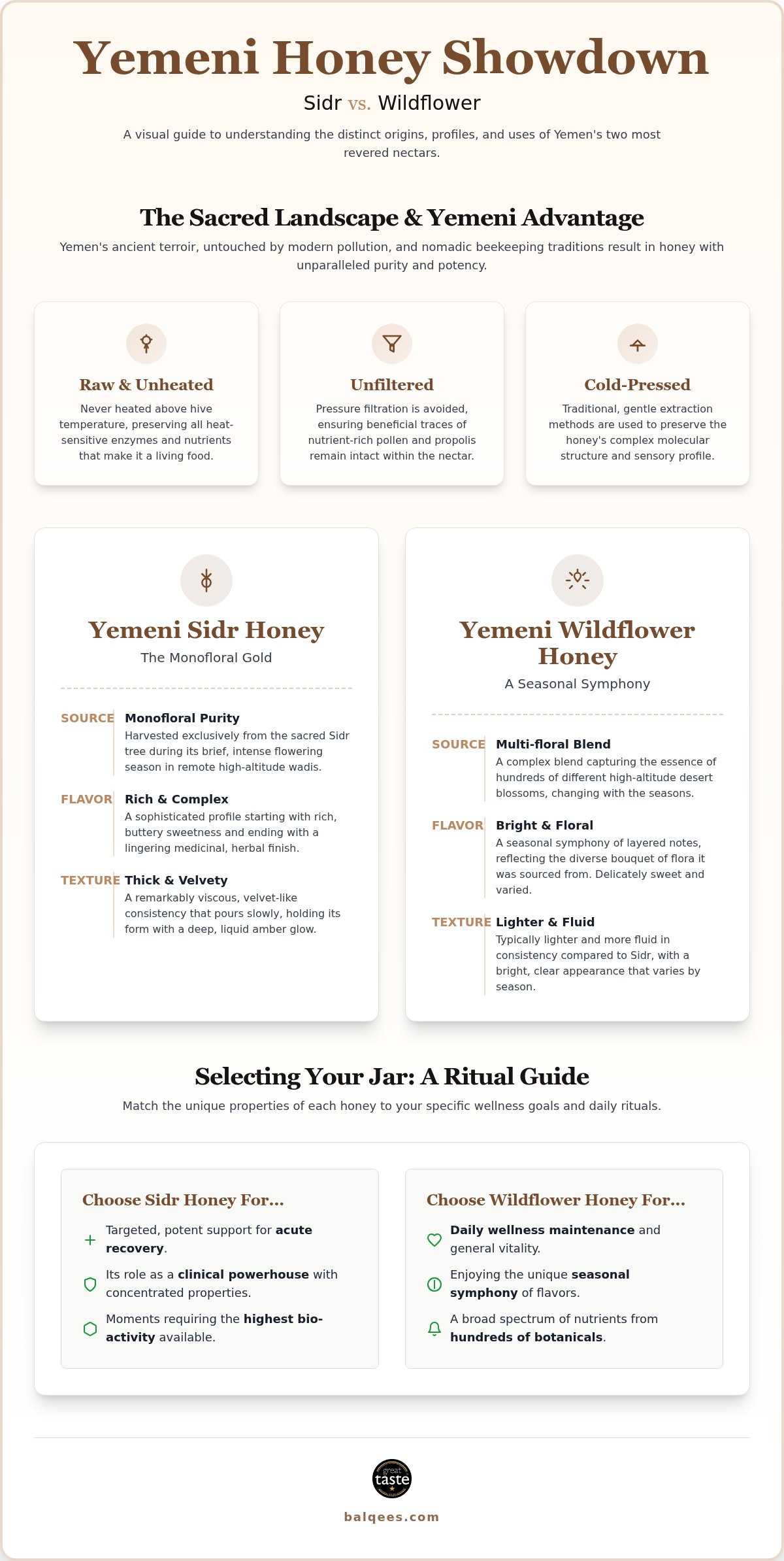
- Raw: The honey is never heated above the natural temperature of the hive. This protects the delicate, heat-sensitive enzymes that make honey a living food.
- Unfiltered: We avoid fine pressure filtration. This ensures that beneficial traces of pollen and propolis remain intact within the nectar.
- Cold-pressed: Traditional extraction methods preserve the honey's complex molecular structure and sensory profile.
Unlike supermarket alternatives that are often pasteurized into a sterile syrup, Yemeni honey remains a living record of the land. It’s a bio-active substance teeming with the energy of the sun and the minerals of the volcanic soil. Every spoonful contains a complex profile of enzymes and nutrients that industrial processes would otherwise destroy. This commitment to traditional purity is why Yemeni honey continues to be revered as one of the most potent natural substances on earth.
Yemeni Sidr Honey: The Monofloral Gold of the Wadi
The Sidr tree, Ziziphus spina-christi, stands as a botanical guardian of the Yemeni wadis. It’s an ancient species, mentioned in sacred texts and revered for thousands of years for its resilience and life-giving properties. When the tree blooms, it does so with a singular intensity that dictates the rhythm of the entire valley. During this short flowering window, bees are drawn exclusively to these blossoms, largely ignoring other surrounding flora. This focused foraging results in a monofloral honey of extraordinary purity and potency.
This nectar has earned its reputation as "Liquid Gold" through both its appearance and its rarity. It’s a title that reflects the immense global demand and the limited nature of the harvest. When comparing Yemeni Sidr vs Wildflower honey, Sidr is the undisputed king of prestige. Its price point is a direct reflection of the low yields produced by these ancient trees and the arduous labor required to harvest it from the most remote, high-altitude regions of the country.
The Prestige of Raw Yemeni Sidr Do'ani
The Wadi Do'an is widely regarded as the epicentre of premium Sidr production. The specific mineral composition of the volcanic soil here influences the honey’s character, creating a sensory experience that is both bold and refined. If you're weighing the choice of Yemeni Sidr vs Wildflower honey, the texture of Do'ani is often the deciding factor. Our Raw Yemeni Sidr Do'ani Honey is characterized by a remarkably thick, velvet-like consistency. It pours slowly, holding its form with a deep, viscous amber glow. The flavor profile is a sophisticated journey; it begins with a rich, buttery sweetness and concludes with a slightly medicinal, herbal finish that lingers. For a more exhaustive look at this specific terroir, you can explore our Ultimate Guide to Raw Yemeni Sidr Do’ani Honey.
Wellness Benefits: Beyond the Palate
While the flavor is captivating, the medicinal attributes are what truly set Sidr apart. It’s a powerhouse of antibacterial properties and digestive support. When compared to other famous monofloral varieties like Manuka, Sidr honey often shows a higher concentration of specific antioxidants and phenolic compounds. It’s frequently used as a functional food for acute recovery, providing the body with a dense concentration of raw enzymes and minerals when it needs them most. From supporting immune health to its traditional use in skin recovery, it remains a vital part of the Yemeni apothecary. If you are ready to experience this heritage, you can explore our full collection of artisanal Yemeni nectars.
Yemeni Wildflower Honey: A Multi-floral Seasonal Symphony
There is a persistent myth that multi-floral honey is somehow generic. In the wadis of Yemen, the opposite is true. While Sidr represents the power of a single tree, Yemeni Wildflower Honey is a living record of a landscape in motion. It captures a seasonal symphony that no monofloral nectar can replicate. This nectar is a complex blend, gathered from hundreds of high-altitude desert blossoms that thrive in the rugged terrain. When you weigh the choice of Yemeni Sidr vs Wildflower honey, you aren't choosing between better or worse; you're choosing between a solo performance and a full orchestra.
The beauty of this honey lies in its "Seasonal Symphony." Because the bees forage on whatever is currently in bloom, the flavor profile shifts with the summer and winter rains. One harvest might lean toward the herbal notes of wild thyme, while another might carry the subtle sweetness of desert succulents. This multi-floral advantage provides a diverse range of pollen and enzymes from varied botanical sources. It's a hidden gem for the connoisseur who values intricate floral complexity over singular intensity.
The Complexity of the Wadi Bloom
The Yemeni countryside is home to rare flora that exists nowhere else. Bees frequent these remote blooms, creating a profile that is as vibrant as the landscape itself. Our Yemeni Wildflower Honey typically presents a light amber color and a bright, floral aroma. On the palate, it offers crisp notes of citrus and meadow flowers, concluding with a clean, refreshing finish that doesn't overwhelm. For those who wish to explore the wider world of specialized nectars, our Rare Honey Varieties guide offers a deeper look into these coveted botanical treasures.
Daily Vitality and Maintenance
Wildflower honey is the perfect choice for daily energy and versatile culinary use. Its brighter acidity and lighter body make it an ideal companion for morning rituals, whether stirred into tea or drizzled over fresh fruit. Beyond flavor, multi-floral honey plays a unique role in wellness. By containing a wide spectrum of local pollens, it helps build resilience and supports the body’s natural defenses. We position this honey as an accessible luxury. It provides the same artisanal purity and raw integrity as our Sidr varieties, but at a price point that encourages everyday use. It’s a foundational element of a balanced lifestyle, offering a consistent source of bio-active enzymes for those who prioritize long-term maintenance and vitality.
Side-by-Side: Decoding Flavor, Texture, and Potency
When placing Yemeni Sidr vs Wildflower honey side by side, the contrast is immediate and striking. Sidr honey carries a visual weight that is almost tangible. It is dark and deep, reflecting the volcanic minerals of the Do'an valley. In contrast, Wildflower honey is bright and translucent, catching the light like a liquid gemstone. This visual difference is the first clue to their distinct internal chemistry and the specific botanical secrets they hold. While Sidr is a singular, focused nectar, Wildflower is a broad spectrum of the wadi’s seasonal life.
Crystallization is a point of frequent confusion for enthusiasts. Wildflower honey tends to crystallize faster than its monofloral counterpart. This isn't a sign of spoilage; it's a natural process driven by a higher glucose-to-fructose ratio. It creates a fine, velvet-like texture that many find delightful on warm bread. Sidr honey, possessing a higher fructose content, remains liquid and viscous for years. This stability is a testament to its unique molecular structure and the intense concentration of the Sidr bloom.
The Connoisseur’s Comparison Table
To truly understand the value of these nectars, one must look at how they perform across different sensory and therapeutic categories. The price difference between them is a direct reflection of rarity. Sidr is harvested during a fleeting window in difficult terrain, while Wildflower represents a more abundant, though equally artisanal, harvest.
| Attribute | Raw Yemeni Sidr Do'ani | Yemeni Wildflower |
|---|---|---|
| Nectar Source | Ziziphus spina-christi | Multi-floral Wadi Bloom |
| Color | Deep, Dark Amber | Bright Golden Straw |
| Texture | Thick, Viscous, Heavy | Fluid, Smooth, Light |
| Palate | Buttery, Earthy, Medicinal | Floral, Citrusy, Refreshing |
| Primary Benefit | Acute Recovery & Immunity | Daily Vitality & Maintenance |
Authenticity can be identified through the "sting" at the back of the throat. This sharp, peppery tingle is a sign of high enzyme count and bio-activity. It’s the signature of a living food. If a honey is smooth but lacks this character, it may have been heat-treated, which strips away the very medicinal integrity you seek.
Culinary and Wellness Pairings
Sidr is a solo act. It is best enjoyed raw, straight from the spoon, or paired with a sharp, aged cheese that can stand up to its earthy depth. It’s a luxury meant to be savored slowly. Wildflower is the ultimate collaborator in the kitchen. It’s widely considered the best honey for tea because its floral brightness enhances the brew without masking the delicate notes of the tea leaves. For a daily wellness routine, we suggest using Wildflower in the morning for a gentle energy lift. Reserve your Sidr for evening rituals or moments when your immune system requires a concentrated, potent boost. You can browse our collection of raw Yemeni honeys to discover which profile resonates with your current needs.
Selecting Your Jar: Matching Honey to Your Ritual
Choosing between Yemeni Sidr vs Wildflower honey is less about finding a superior product and more about matching the nectar to the specific rhythm of your life. Every jar tells a story of the land. Your selection should reflect the ritual you wish to create. If you're focused on acute recovery, immune support, or seeking a potent natural ally during seasonal changes, the Raw Yemeni Sidr Do'ani Honey is your definitive choice. Its high bio-activity and concentrated enzymes make it a functional food for your most demanding health needs.
Yemeni Wild Flower Honey excels as a cornerstone of daily maintenance. It’s the energy you need for a productive morning and the versatile sweetness your culinary creations deserve. Sourcing from trusted artisanal brands in the UAE is vital to ensure you're receiving a product that hasn't been heat-treated or blended with inferior syrups. To preserve the living enzymes within your honey for years, always store your jar in a cool, dark cupboard. Avoid metal spoons if possible; never expose the nectar to high heat, as this can permanently damage its medicinal integrity.
The Ritual of Gifting and Heritage
In the Middle East, sharing honey is a profound gesture of hospitality and respect. It’s a bridge between generations. Because of its legendary status and rare harvest, Sidr remains the ultimate premium honey gift set for weddings, births, or significant milestones. It conveys a message of health and heritage that few other gifts can match. For those who are just beginning to explore the world of Yemeni nectars, Wildflower honey serves as a welcoming introduction. It offers a brighter, accessible flavor profile that invites the palate to appreciate the complexity of the wadi without the intense medicinal weight of Sidr.
Final Checklist for the Conscious Buyer
Before you commit to a purchase, verify the "Raw" and "Unfiltered" labels. These aren't just buzzwords. They are guarantees that the honey has been handled with the reverence it deserves. Understanding the nuances of Yemeni Sidr vs Wildflower honey allows you to curate a wellness cabinet that is both effective and deeply personal. Authentic Yemeni honey is an investment in your well-being and the preservation of an ancient craft that supports thousands of nomadic beekeepers. When you choose a jar, you're becoming a guardian of this tradition. We invite you to explore the full collection of Raw Yemeni Honey at Balqees and find the perfect match for your own daily rituals.
Embracing the Living Heritage of the Wadi
The journey through the nuances of Yemeni Sidr vs Wildflower honey reveals that your choice is ultimately a reflection of your own wellness journey. Whether you seek the intense, medicinal depth of the Sidr tree for acute recovery or the bright, multi-floral symphony of the wadi for your daily rituals, you're participating in a 3,000-year-old tradition. We don't see honey as a simple sweetener; it's a living record of the earth's vitality.
At Balqees, we remain dedicated guardians of this ancient craft. Every jar is artisanally sourced from the most remote wadis of Yemen, ensuring it remains unfiltered and cold-pressed to preserve those precious living enzymes. Our heritage is built on a foundation of transparency and uncompromising quality. You've now gained the knowledge to choose with confidence. It's time to bring the untouched purity of the desert to your table and experience the difference of truly raw nectar.
Discover the Purity of Raw Yemeni Honey
May every spoonful nourish your body and connect you to the heart of the land.
Frequently Asked Questions
Which is better for a sore throat: Sidr or Wildflower honey?
Sidr honey is the superior choice for managing a sore throat due to its higher concentration of antibacterial enzymes and viscous texture. While both varieties provide a soothing coating, the intense bio-activity of Sidr targets the underlying irritation more effectively. Wildflower honey offers a gentler relief and is excellent for daily soothing in tea, but for acute discomfort, the medicinal depth of Sidr remains the gold standard in traditional Yemeni wellness.
Why is Yemeni Sidr honey so much more expensive than Wildflower honey?
The significant price gap between Yemeni Sidr vs Wildflower honey reflects the rarity and harvesting difficulty of the Sidr bloom. Sidr trees flower only once a year for a brief period in remote, rugged wadis, yielding a limited supply. Wildflower honey is harvested from a broader range of seasonal desert blossoms across a longer duration. This higher yield and greater accessibility allow us to offer it at a more approachable price point for daily consumption.
Does authentic Yemeni Sidr honey crystallize over time?
Authentic Yemeni Sidr honey is remarkably stable and rarely crystallizes, often remaining in its liquid, viscous state for several years. This is due to its high fructose-to-glucose ratio, which prevents the sugar molecules from binding together easily. If you notice rapid crystallization, it may indicate a multi-floral blend or a different nectar source. True Sidr should maintain its smooth, velvet-like consistency even when stored in a cool, dark environment over long periods.
Can I use Wildflower honey for the same medicinal purposes as Sidr?
You can use Wildflower honey for general wellness, but it doesn't possess the same concentrated antibacterial potency as Sidr. Wildflower honey is a living food rich in diverse pollens and enzymes, making it ideal for daily immune maintenance and allergen resilience. However, for specific therapeutic needs like wound healing or acute recovery, the monofloral intensity of Sidr is irreplaceable. Each honey serves a distinct purpose within a balanced, health-conscious lifestyle.
What is the main difference in taste between these two Yemeni varieties?
The main difference lies in the flavor's weight and complexity. Sidr honey offers a rich, buttery sweetness with deep earthy undertones and a lingering medicinal finish. It feels heavy on the palate. Yemeni Wildflower honey is much lighter and brighter, featuring crisp floral notes and a refreshing citrusy aftertaste. While Sidr is bold and singular, Wildflower provides a vibrant, multi-layered experience that captures the diverse essence of the seasonal wadi bloom.
How can I be sure the Yemeni honey I buy in the UAE is authentic?
Ensuring you buy authentic Yemeni Sidr vs Wildflower honey in the UAE requires sourcing from brands that prioritize transparency and direct wadi relationships. Look for raw and unfiltered labels, as these indicate the honey hasn't been heat-treated. Authentic Yemeni nectar should also produce a slight sting or peppery sensation at the back of the throat. This is a natural sign of high enzyme activity and purity that mass-produced supermarket honeys simply cannot replicate.
Is it safe to give raw Yemeni honey to children?
Raw Yemeni honey is safe and highly beneficial for children over the age of one. It serves as a natural energy source and a gentle way to support their developing immune systems. However, pediatricians worldwide advise against giving any raw honey to infants under twelve months old due to the risk of botulism spores. For older children, a small spoonful of Wildflower honey in the morning is a wonderful, nutrient-dense alternative to refined sugars.


