


Is it possible for a single jar of honey to hold the weight of a thousand-year-old tradition and the resilience of a landscape that refuses to be tamed? When you encounter a price tag that rivals a rare vintage wine, the question is inevitable: why is Yemeni honey so expensive? You aren't alone in your skepticism. In a world of mass-produced sweeteners, the cost of authentic Sidr honey can feel startling, especially when you're looking for genuine health benefits rather than just a sugar hit.
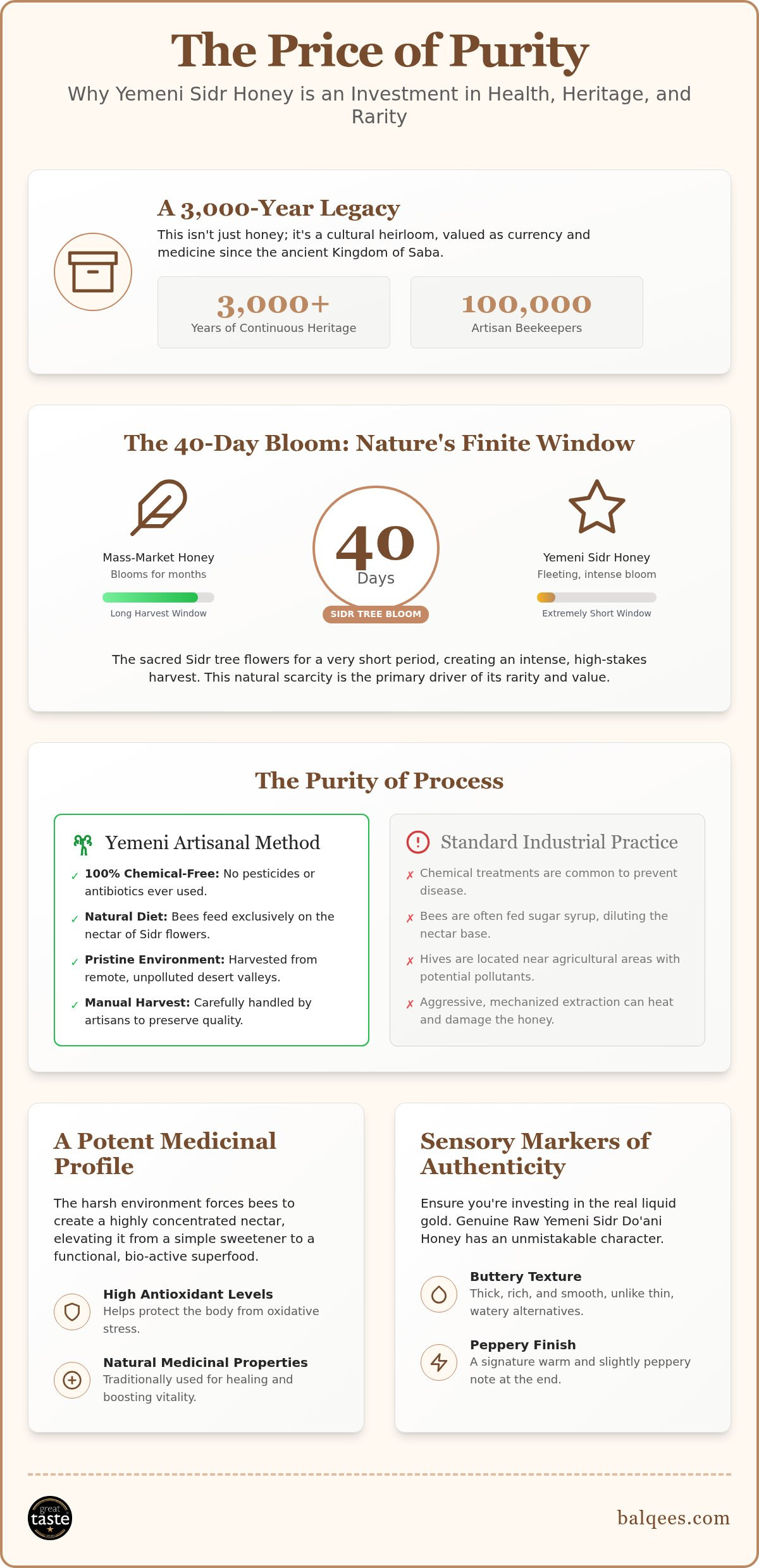
We understand that choosing a high-value supplement requires more than just trust; it requires knowledge. You're about to discover the extraordinary combination of ancient heritage, rare botany, and artisanal craftsmanship that makes Yemeni honey the world's most coveted liquid gold. We'll peel back the layers of this ancient trade, explaining how factors like limited production cycles and chemical-free beekeeping by 100,000 traditional artisans contribute to its value. By the end, you'll know exactly how to identify genuine Yemeni Sidr honey and feel confident that this liquid treasure is worth every drop.
Key Takeaways
- Discover how a 3,000-year heritage from the ancient Kingdom of Saba transformed this nectar into a legendary cultural status symbol.
- Learn how the rare 40-day blooming cycle of the sacred Sidr tree answers the question of why is Yemeni honey so expensive and why its supply remains so finite.
- Understand the artisanal commitment to chemical-free beekeeping, where ancient methods ensure every drop is free from modern pesticides and antibiotics.
- Explore the potent bio-active profile and high antioxidant levels that elevate Raw Yemeni Sidr Do'ani Honey from a simple sweetener to a functional medicinal treasure.
- Master the sensory markers of genuine honey, such as its signature buttery texture and distinct peppery finish, to ensure you're investing in an authentic product.
The Legend of Liquid Gold: A Legacy Three Thousand Years in the Making
In the rugged valleys of Hadramout, honey isn't merely a harvest. It's a legacy. For the people of Yemen, this nectar is a cultural status symbol, a family heirloom, and a testament to a history that stretches back long before modern borders were drawn. When skeptics ask why is Yemeni honey so expensive, they often overlook the weight of three millennia. This is a substance that has outlasted empires, maintaining its position as a global power commodity since the days of the ancient Kingdom of Saba.
The moniker 'Liquid Gold' is far from hyperbole. Historically, Yemeni honey was so revered that it served as a form of currency and a primary medicinal treasure. In the courts of the Queen of Sheba, it was a symbol of wealth and divine favor. Today, that reverence persists in the traditional Yemeni home. Offering a guest a bowl of pure Sidr honey is the highest mark of respect; it's a silent declaration that the guest is worthy of the land's most precious gift. This isn't just food. It's an act of honor.
The high price isn't just for the nectar; it's an investment in the socio-economic resilience of the 100,000 beekeepers who protect these valleys. Their refusal to compromise with industrial shortcuts, even during times of national hardship, preserves a purity that cannot be replicated. When you purchase this honey, you're supporting a community that has guarded these secrets for generations, ensuring that the world's most coveted liquid gold doesn't vanish into history.
From the Kingdom of Sheba to Modern Connoisseurs
Centuries ago, Yemeni honey was traded alongside frankincense and myrrh on the legendary spice routes. It was sought by kings and healers across the Mediterranean and Asia. This enduring reputation as a 'fertile pasture' for the world's finest bees is a historical fact recognized by ancient travelers. The practice of Artisanal Beekeeping in these regions remains a slow, methodical craft that rejects the frantic pace of modern industry. This deep-rooted heritage creates a premium of origin where the honey's value is inseparable from the sacred soil and ancient history of Yemen itself.
The Cultural Value of Authenticity
In many Arab households, a jar of genuine Sidr honey is treated with the same care as a piece of fine jewelry. It's a staple of traditional Yemeni medicine, used for everything from healing wounds to boosting vitality. This transition from ancient remedy to modern wellness essential has only increased its allure. By exploring the world of rare honey varieties, it becomes clear that Yemeni Sidr stands alone. It's a sensory bridge between a storied past and a conscious, health-focused future, explaining why is Yemeni honey so expensive in a market flooded with lesser imitations.
The Botanical Scarcity: Why Geography Dictates the Price
The Sidr tree, known scientifically as Ziziphus spina-christi, is a survivor. It thrives in the arid, unpolluted landscapes of Yemen, where few other plants can endure. This tree isn't just a source of shade; it's the sacred origin of the world's most expensive nectar. To understand why is Yemeni honey so expensive, one must first understand the tree's refusal to be hurried. Unlike clover or wildflower fields that may bloom for months, the Sidr tree offers a fleeting window of opportunity. It typically flowers for only 40 days, once or twice a year, depending on the region's delicate balance of heat and moisture.
This narrow window creates a high-stakes environment for both bees and beekeepers. If the rains fail, the bloom is sparse. If the rains are too heavy, the blossoms are washed away. This climate volatility makes every harvest an unpredictable gamble. The harshness of the desert and mountain environments actually serves a purpose, though. The extreme heat and lack of rainfall force the bees to produce a highly concentrated honey with minimal water content. This natural reduction process intensifies the flavor and ensures a unique bio-active profile of Yemeni Sidr honey, packed with nutrients that are often diluted in mass-produced varieties.
The Fleeting Bloom of the Sidr Tree
During those precious 40 days, the biological pressure on the bees is immense. They must work with frantic precision to gather nectar before the sun scorches the blossoms. This botanical scarcity is the primary reason the honey cannot be scaled for the mass market. You can't simply plant more Sidr trees and expect a larger yield; the trees require a specific, untouched ecosystem to produce the medicinal-grade nectar that connoisseurs demand. It's a finite resource, dictated entirely by the whims of nature.
Hadramaut and Wadi Do’an: The Terroir of Excellence
Much like a rare vintage from a specific vineyard, the value of Yemeni honey is deeply tied to its 'terroir'. The soil of Wadi Do’an in the Hadramaut region is rich in minerals that impart a distinct character to the honey. Accessing these remote mountain hives is a feat of physical endurance. There are no paved roads leading to the most prized colonies. Beekeepers often transport their hives by hand or on the backs of donkeys up steep, rocky paths to reach the high-altitude Sidr groves.
This geographical isolation ensures the honey remains pure and free from the reach of modern pollutants. When you experience the depth of Raw Yemeni Sidr Do'ani Honey, you're tasting the literal essence of a landscape that is as difficult to reach as it is beautiful. It's this combination of risk, labor, and rare geography that answers the question of why is Yemeni honey so expensive. For those seeking the pinnacle of purity, you might consider starting your journey with our signature Sidr collection, where every drop tells the story of the Wadi.
Artisanal Beekeeping: The Cost of Chemical-Free Craftsmanship
Purity is a choice. In the remote valleys of Yemen, it's a choice made daily by generations of artisans who refuse to compromise. While the global honey industry has largely turned to industrial shortcuts to maximize yield, Yemeni beekeepers remain steadfast in their rejection of modern chemicals. In these traditional regions, the use of antibiotics for bees or pesticides for trees is strictly forbidden. This isn't just a preference; it's a sacred rule of the craft. When discerning customers ask why is Yemeni honey so expensive, they are often paying for the absence of things found in commercial jars: synthetic residues and industrial interference. This commitment to bee health is mirrored by specialists like BS Honey Bees Ltd, who help beekeepers prepare for future seasons with premium queen bees.
This commitment to chemical-free craftsmanship requires an extraordinary amount of manual labor. Every stage of the process is handled with a reverence that borders on the spiritual. The honey is hand-harvested and hand-spun. By avoiding the high-speed centrifugal force and heat of modern machinery, the delicate enzymes, volatile aromas, and medicinal properties of the nectar remain intact. It's a slow, expensive way to work, but it's the only way to ensure the honey remains a "living" food. Consider these pillars of the Yemeni method:
- No synthetic antibiotics are ever introduced to the hives, protecting the bees' natural immunity.
- Zero pesticides are used on the ancient Sidr groves, ensuring the nectar is as nature intended.
- Extraction is performed entirely by hand to protect the honey's complex molecular structure.
The Nomadic Journey of the Yemeni Beekeeper
The life of a Yemeni beekeeper is one of constant movement. They are nomads, following the blooming cycles of the Sidr trees across vast, rugged deserts and mountain ranges. Transporting hundreds of hives through terrain where no paved roads exist is a logistical nightmare. It requires a deep understanding of the land and a physical resilience that few modern farmers possess. These individuals are the true guardians of the bees, prioritizing the health of the colony over the ease of the harvest. You can read more about these sustainable beekeeping honey practices that protect the delicate Yemeni ecosystem. This tradition of moving with the seasons is detailed in this complete guide to Yemeni honey, which highlights how these ancient migrations contribute to the honey's rarity.
Cold-Pressed and Unfiltered: Preserving Nature’s Blueprint
Commercial honey is often pasteurized, a heat-treatment process that destroys the very enzymes that make honey beneficial. Yemeni honey, however, is always cold-pressed and left unfiltered. This preserves the honey's natural blueprint, including microscopic traces of propolis and pollen. These elements aren't impurities; they are the markers of authenticity and health. Hand-extraction is the only method that maintains the honey's integrity, ensuring that the natural antioxidants aren't lost to industrial friction. This artisanal dedication is a primary factor in why is Yemeni honey so expensive, as it sacrifices quantity and speed for absolute quality. Every jar is a snapshot of a moment in time, untouched by the fires of pasteurization.
The Bio-Active Profile: Science Behind the Medicinal Price Tag
To view Yemeni Sidr honey merely as a sweetener is to miss its true essence. In the world of premium apiculture, this nectar is functionally closer to a medicinal tonic than a food staple. When people ask why is Yemeni honey so expensive, the answer often lies in the laboratory rather than just the landscape. The biological composition of Sidr honey is a marvel of nature's engineering, possessing a concentration of bio-active compounds that few other substances can match. It is a living food, teeming with enzymes that support gut health and bolster the body's natural defenses.
One of the most defining characteristics of this honey is its remarkably low moisture content. While standard commercial honeys often hover around 18 to 20 percent moisture, authentic Yemeni Sidr typically measures between 14 and 16 percent. This natural concentration prevents fermentation and ensures an incredible shelf life, but more importantly, it signifies a higher density of nutrients per spoonful. You aren't just buying honey; you're investing in a potent, stable source of well-being. Consider the scientific attributes that set it apart:
- Antioxidant Superiority: Laboratory tests show antioxidant levels significantly higher than most commercial varieties, providing robust support against oxidative stress.
- Enzymatic Vitality: The "living" enzymes preserved through cold-pressing aid in digestion and metabolic function.
- Mineral Richness: The unique soil of the Hadramaut region infuses the honey with essential trace minerals.
Comparing Yemeni Sidr to Manuka and Beyond
While Manuka honey has long been celebrated for its MGO (Methylglyoxal) levels, Yemeni Sidr honey operates through a different, yet equally powerful, antibacterial mechanism. It relies on high levels of peroxide activity and a unique pH level that makes it an exceptionally effective agent for both internal wellness and topical applications. This specific chemical blueprint allows it to remain stable and effective where other honeys might lose their potency. You can explore the full spectrum of authentic Sidr honey benefits to understand how these properties translate into daily wellness rituals.
The Power of Functional Infusions
At Balqees, we believe in honoring this natural bio-activity by enhancing it. We've developed specific blends that create a synergy between raw Yemeni honey and other traditional superfoods. By combining the strength of Sidr with ingredients like Black Seed or Ginseng, we maximize the functional potential of every jar. This isn't just about flavor; it's about creating a targeted wellness tool. Understanding how to use functional honey blends can help you integrate these potent fusions into your lifestyle effectively. This scientific complexity and the resulting health benefits are core reasons why is Yemeni honey so expensive; it is an investment in your most valuable asset.
Experience the peak of medicinal purity with our Raw Honey & Ginseng Fusion, crafted to elevate your daily energy and immunity.
Investing in Quality: How to Ensure You Are Buying Real Yemeni Honey
The prestige surrounding Sidr honey is a double-edged sword. While its reputation as a medicinal marvel is well-deserved, its high valuation unfortunately makes it a primary target for counterfeiters. Diluted syrups and mislabeled blends often flood the market, clouding the truth for those seeking genuine healing. When you ask why is Yemeni honey so expensive, you're also asking for a guarantee of integrity. True luxury in the world of honey isn't just about the price; it's about the transparency of the journey from a remote mountain hive to your table. Understanding the sensory markers of authenticity is the first step in protecting your investment.
Authenticity isn't found in a laboratory report alone. It lives in the sensory experience of the honey itself. A genuine jar of Sidr honey carries the soul of the Wadi, expressing itself through a complex profile that sugar-syrup imitations simply cannot replicate. At Balqees, we believe that every connoisseur should be empowered to recognize the hallmarks of purity. This knowledge transforms a simple purchase into a deliberate act of preservation for a craft that has survived for millennia.
A Connoisseur's Checklist for Authenticity
The texture of real Sidr honey is unmistakable. It possesses a thick, buttery consistency that feels substantial on the palate. Due to its naturally low moisture content and high purity, it should never crystallize quickly; it remains fluid and golden for years. The aroma is equally telling. Instead of a generic sweetness, you should detect a deep, herbal scent that lingers. Most importantly, look for the "peppery kick." This subtle, medicinal back-note is a signature of the phytochemicals found in the Sidr tree. If the honey is cloyingly sweet without this complexity, it's likely not the real treasure you're seeking.
The Ethical Choice: Supporting the Beekeeping Community
Beyond the bottle, the price of this nectar serves a profound purpose. Paying a fair value for these nectars supports the resilience of over 100,000 Yemeni beekeepers and their families. In a region where economic stability is often elusive, beekeeping is more than a trade; it's a lifeline. By rejecting cheap imitations and choosing artisanal brands, you're directly contributing to the survival of traditional Yemeni society. Balqees acts as a guardian of this connection, ensuring that these rare gifts reach the world while the artisans who produce them are honored for their sacrifice. This socio-economic support is a fundamental reason why is Yemeni honey so expensive. It's an ethical investment in human heritage. We invite you to Explore our collection of Raw Yemeni Sidr Do'ani Honey and experience the true price of purity for yourself.
Embracing the Legacy of Liquid Gold
The journey from the blossoms of the Sidr tree to your home is one of extreme geography and unwavering dedication. It's a story of 3,000 years of heritage and the silent labor of traditional beekeepers who move with the seasons. When you consider the finite blooming window and the total rejection of modern chemicals, the question of why is Yemeni honey so expensive finds its answer in the preservation of absolute purity. You aren't just purchasing a sweetener; you're becoming a guardian of a craft that refuses to be industrialized.
This liquid gold is a functional treasure, rich in bio-active enzymes that support a modern lifestyle through ancient wisdom. As a heritage brand, Balqees is dedicated to the art of traditional honey, sourcing directly from artisanal beekeepers to ensure every jar remains unfiltered, raw, and cold-pressed. We invite you to Experience the Unrivaled Purity of Raw Yemeni Sidr Do'ani Honey and taste the depth of the Wadi. Your journey into the heart of Yemeni tradition begins with a single, golden spoonful.
Frequently Asked Questions
Is Yemeni Sidr honey better than Manuka honey?
They represent two different worlds of wellness. While Manuka is famous for MGO, Sidr honey relies on potent peroxide activity and a specific pH that supports internal healing. Many connoisseurs prefer Sidr because it's produced using ancient, chemical-free methods that preserve a broader range of enzymes. It's a choice between a laboratory-standardized product and a wild, artisanal treasure that has been revered for millennia.
Why does the color of Yemeni honey vary so much?
The shade of your honey is a direct reflection of the earth it came from. Variations in soil minerals, rainfall, and the specific blooming cycle of the trees cause the color to shift from golden amber to a deep, dark brown. Darker honeys generally contain higher mineral concentrations and a more intense flavor profile. It's a natural signature of a harvest that hasn't been blended or standardized for the mass market.
How can I tell if my Yemeni honey is fake?
Authentic Sidr honey has a distinct buttery texture and a deep, herbal aroma that lingers. If you're wondering why is Yemeni honey so expensive, it's because real Sidr honey should never taste like simple sugar syrup. Look for a subtle peppery kick at the back of the throat. This medicinal finish is a hallmark of the phytochemicals found in the sacred Sidr tree and is nearly impossible to replicate synthetically.
Does Yemeni honey expire or lose its potency over time?
Pure, raw honey is one of the few foods that will never truly expire. While its color and texture may change over decades, its foundational properties remain intact. However, to benefit from the living enzymes and bio-activity, it's best consumed within a few years of harvest. The high concentration of natural sugars and low moisture prevents the growth of bacteria, making it a timeless addition to your wellness pantry.
Why is Sidr Do'ani specifically more expensive than other Yemeni honeys?
Wadi Do’an is the "Grand Cru" of the honey world. The specific soil composition and the high concentration of ancient Sidr trees in this remote valley produce a nectar of unparalleled purity. This geographical prestige and the extreme difficulty of harvesting in such rugged terrain are key factors in why is Yemeni honey so expensive. It's the pinnacle of Yemeni apiculture, reserved for those who seek the highest medicinal grade available.
Can I use Yemeni honey for medicinal purposes every day?
A single teaspoon of raw honey every morning is a time-honored ritual for vitality. Its bio-active enzymes support gut health and provide a steady, natural energy boost without the crash of processed sugars. Because it's a functional food, it integrates seamlessly into your wellness routine. Whether taken straight or stirred into warm water, it acts as a gentle daily support for your immune system and overall well-being.
What is the best way to store high-quality raw honey?
Keep your honey in a cool, dark place away from direct sunlight. Glass is the ideal container because it doesn't leach chemicals and helps preserve the honey's delicate aroma. You don't need to refrigerate it; in fact, cold temperatures can cause the honey to thicken or cloud. Simply ensure the lid is sealed tightly to prevent moisture from the air from being absorbed into the jar, which maintains its concentrated potency.
Why is the harvest of Yemeni cave honey so rare?
Harvesting honey from wild bees in remote mountain caves is a high-risk endeavor with incredibly low yields. Beekeepers must often scale dangerous cliffs to reach these untouched hives, where the bees have fed on a diverse range of wild desert flora. This rarity and the physical danger involved in the harvest make cave honey one of the most exclusive and sought-after nectars on the planet, often appearing only in limited quantities.


