


Saffron brings a distinctive aroma and colour to cooking. Balqees combines it with Yemeni Sidr Do’ani in a honey fusion designed to be enjoyed for its flavour.
Why is saffron so special?
Saffron is a highly valued spice and one of the most expensive culinary ingredients in the world. It's from the Crocus family and the word crocus means thread in Greek, referring to the appearance of its stamens. Saffron originates from the Arabic word, Zafaran.
This special spice has been around for a thousand years and has a plethora of uses. The best quality saffron has a deep red colour and is often referred to as ‘the red gold’. A high price is placed on this ingredient because of the amount of labour that goes into producing its threads. It takes 80,000 flowers to produce 453 grams (1 pound) of saffron. The stigmas of the flower are gathered only at dawn as the violet-blue flowers open, in order to retain their aroma and natural goodness. Every flower has three delicate crimson stigmas in the centre which are placed on a special sieve and cured over heat to amplify their flavour.
The saffron crocus thrives best in warm, humid climates and interestingly, these stigmas are the pollen receptors, capturing tiny grains of pollen as the flowers are visited by bees seeking their nectar. That’s why there is such a strong affinity between the flavours of honey and saffron; it carries a honey aroma and a delicate musky, earthy taste that is used to add flavour and its golden colour to foods.
Saffron has been cultivated for thousands of years to be used in medicines and perfumes mostly in Iran, Spain and India. Saffron is also endemic to Greece and other Mediterranean regions and it is cultivated in a limited amount in countries like the US, Turkey, Italy, Pakistan, France. Iran produces more than 95% of the entire world supply.
Saffron research and food use
-
Studies of saffron extracts use particular preparations and amounts. They do not establish that this honey fusion treats depression, anxiety, eye disease or other medical conditions. Use the blend as a food, following its ingredient label.
Raw Honey and Saffron Fusion
Our saffron honey fusion combines saffron with a Yemeni Sidr Do’ani base. Check the current product label for the ingredients and serving information.
The appeal is in the balance of saffron’s aroma and honey’s sweetness. Start with a little so the spice complements the food without overwhelming it.
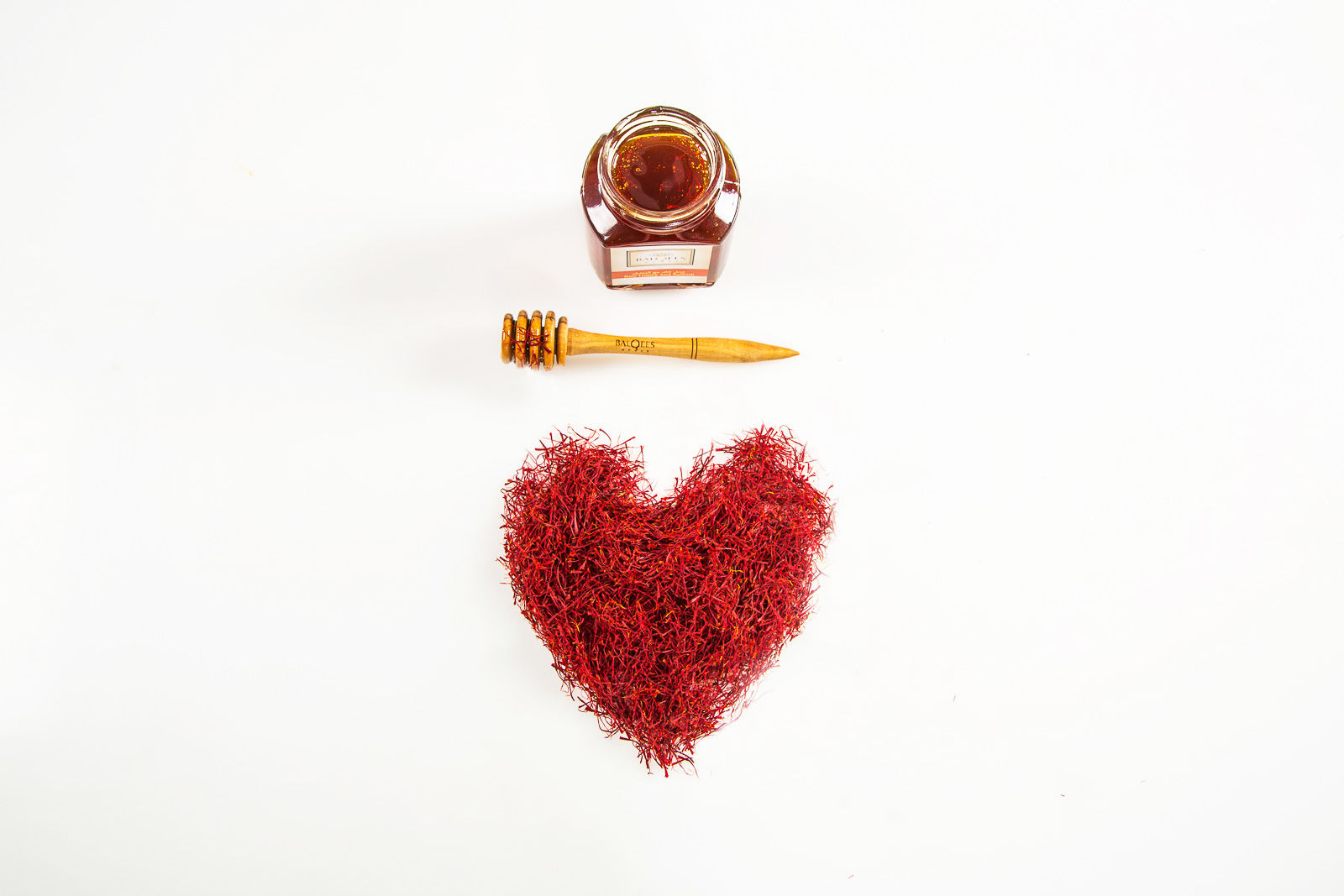
Ways to pair honey fused with saffron
Spice up your morning porridge and drizzle this luscious, fragrant honey over it. It goes well with mild or sharp cheeses. Brush it over stone fruit, like apricots, or spoon over pancakes and waffles with buttermilk ice-cream. Add it to labneh or Greek yoghurt for a healthy breakfast. For the not so healthy, luqaimat, an Emirati sweet (fried dough balls that are often eaten for breakfast) soaked in saffron-infused raw honey, one of our favourites here at Balqees.
Try a little in coffee with cardamom, or stir into yoghurt with cinnamon. In savoury cooking, use it sparingly in a glaze or dressing and adjust sweetness to taste.
Let hot drinks cool to a comfortable temperature before adding honey to enjoy its aroma. Honey is not suitable for infants under 12 months.
- Can Honey Help You Sleep? Evidence and Bedtime Use
- What Is Bee Propolis? Ingredients, Research and Precautions
Found this interesting? Never miss a post – sign up for our regular newsletter packed with exclusive offers, recipes, health news and much more.


