


Propolis is the resinous material bees use around their hive. Bees collect plant resins and combine them with other hive materials. It is different from honey, pollen and royal jelly, even when those ingredients appear together in a product.
Why composition matters
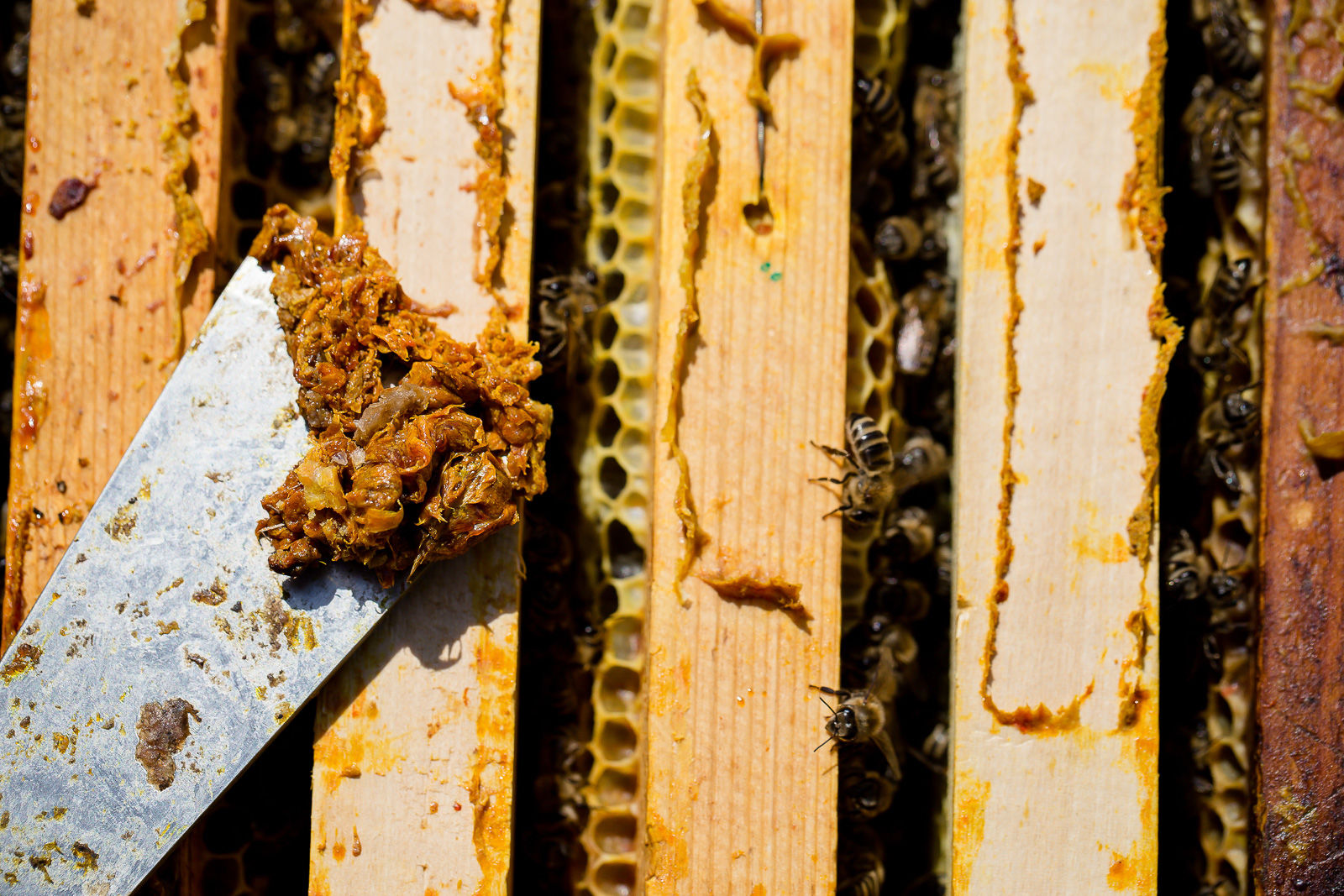
The plants available to the bees affect what propolis contains. A tincture, an extract, a capsule and a honey blend are also different preparations. The name “propolis” alone does not tell you the concentration or dose of a particular constituent.
Our beekeeper visits have included seeing propolis collected at Cape Honey Factory in Stellenbosch, South Africa. That first-hand observation helps explain where an ingredient comes from; it does not establish how a finished product performs medically.
What a study does not prove
Laboratory work on microbes or cancer cells cannot justify describing a retail honey blend as an antibiotic or cancer treatment. We cannot substantiate promises here for preventing cancer, treating arthritis, curing infections or repairing skin. Those claims require appropriate evidence for the actual product and use.
Read the ingredients and instructions on the exact product. Bee products can cause allergic reactions, and different extracts may have different precautions. Seek advice before using a propolis supplement alongside medication or for a health condition. Do not replace prescribed treatment or apply a food product to a wound on the basis of an ingredient story.


