


ماذا لو لم تكن أول مذاق للحلاوة الذي قدمته لطفلك مجرد دفعة سكرية، بل صلةً بسلالة عريقة ذهبية من العافية؟ يشعر معظم الآباء بتردد هادئ عند استكشاف عالم العسل الخام للأطفال. أنت تريد الأفضل لصحتهم. أنت تبحث عن النقاء. ومع ذلك، فإن النصائح المتضاربة بشأن السلامة والخوف من الإضافات الخفية قد تبدو مرهقة. إنها معادلة دقيقة. أنت تبحث عن جوهر الطبيعة الخالص في عالم من الاختصارات الصناعية.
نحن هنا لنقدم لك الوضوح. في هذا الدليل، ستكتشف الإرشادات الأساسية للسلامة، والفوائد الغذائية، والطقوس الحرفية لإدخال العسل الخام النقي إلى حياة طفلك. سنشرح قاعدة السلامة الحاسمة عند عمر 12 شهرًا، وكيفية التعرّف على الرحيق الحقيقي، وكيفية استخدام أنواع مثل عسل الزهور البرية اليمني كعلاج طبيعي لطيف. ستتعلم التمييز بين العسل عالي الجودة والشرابات المصنعة، لضمان أن تكون كل ملعقة آمنة ومؤثرة في النفس. حان الوقت لتجاوز الارتباك وتبنّي نهج أكثر رقيًا وحسيًا في رفاهية عائلتك.
أهم النقاط
- تعلم لماذا تُعد محطة 12 شهرًا معيارًا صحيًا حيويًا، وكيف ينضج جهاز الهضم لدى الطفل للتعامل مع الأبواغ الطبيعية.
- اكتشف التفوق الغذائي للعسل الخام للأطفال، إذ يوفر إنزيمات حية وعناصر أثرية دقيقة تفتقر إليها الشرابات الصناعية المعالجة بالحرارة.
- تعرف على العلامات الحسية للنقاء الحرفي، مع التركيز على تقنيات العصر البارد التي تحافظ على قوام العسل ورائحته وسلامته.
- ادمج رحيق الطبيعة في الحياة اليومية لعائلتك عبر طقوس مسائية مهدئة وتقاليد صباحية منعشة.
- اعثر على ملف العسل المثالي للأذواق الصغيرة، من حلاوة عسل الزهور البرية اليمني السهلة، إلى الخصائص القوية لعسل السدر اليمني الخام الدوعني.
التعامل مع أول مذاق: متى ولماذا يكون العسل الخام آمنًا للأطفال
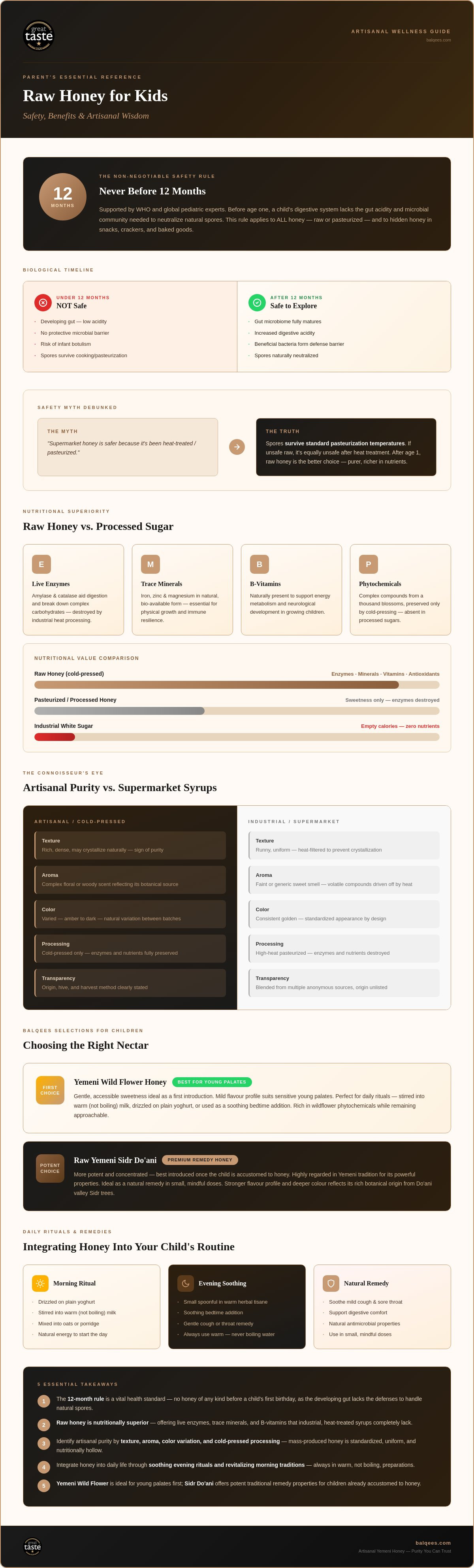
إن بلوغ 12 شهرًا ليس مجرد عيد ميلاد. إنه عتبة بيولوجية. بالنسبة للآباء، تمثل هذه المحطة اللحظة التي يصبح فيها عالم المُحليات الطبيعي الغني والمعقد متاحًا. قبل هذه النقطة، يكون جهاز الهضم لدى الطفل بيئة نقية في طور التكوّن. فهو يفتقر إلى الحموضة القوية والمجتمع الميكروبي المتنوع اللازم للتعامل مع بعض العناصر الموجودة في البيئة. لهذا السبب، فإن الإجماع الصحي العالمي، المدعوم من منظمة الصحة العالمية وخبراء طب الأطفال حتى يوليو 2026، واضح. لا ينبغي تقديم أي عسل، خامًا كان أم غير ذلك، قبل إتمام السنة الأولى.
لا تقتصر السلامة على الملعقة المباشرة. فكثيرًا ما يختبئ العسل في الوجبات الخفيفة المصنعة، وبسكويت غراهام، والمخبوزات الحرفية. وحتى إذا تم طهي العسل، فإن الأبواغ تبقى. يجب على الآباء أن يظلوا يقظين بشأن الملصقات خلال الأشهر الاثني عشر الأولى. وما إن تُطفأ تلك الشمعة الأولى، يتحول الحديث من المنع إلى الاكتشاف. إن تقديم العسل الخام للأطفال يصبح رحلة نحو التعليم الحسي والحيوية الطبيعية. إنه انتقال من الحذر إلى عالم من العافية الحرفية.
التحول البيولوجي عند عمر سنة
حوالي عيد الميلاد الأول، يمر ميكروبيوم أمعاء الطفل بتحول مهم. يصبح الجهاز الهضمي أكثر حموضة. وتستعمر البكتيريا النافعة النظام، مكوِّنة حاجزًا دفاعيًا لا يوجد ببساطة لدى الرضع الأصغر سنًا. هذه البيئة الناضجة قادرة على تحييد الأبواغ الخاملة الموجودة طبيعيًا في التربة والغبار والرحيق قبل أن تسبب ضررًا. يمر البالغون والأطفال الأكبر سنًا عبر العالم دون تأثر بهذه العناصر الأثرية، لأن كيمياء أجسامنا مصممة للتعامل معها. التسمم السُجقي عند الرضع حالة نادرة لكنها قابلة للوقاية لدى من هم دون العام. وبالانتظار حتى إتمام السنة الأولى، تضمن أن يكون جسم طفلك مستعدًا لتحويل هذا الرحيق الذهبي إلى طاقة نقية.
الخام مقابل المبستر: تفنيد خرافات السلامة
يظن البعض خطأً أن عسل السوبرماركت أكثر أمانًا لأنه خضع للمعالجة الحرارية. هذا اعتقاد خاطئ. فالأبواغ المرتبطة بـ التسمم السجقي عند الرضع شديدة المقاومة. فهي تنجو من درجات البسترة القياسية المستخدمة في المعالجة الصناعية. إذا كان المنتج غير آمن للرضيع في حالته الخام، فإنه يظل غير آمن بعد البسترة.
اختيار العسل الخام للأطفال بعد عمر السنة ليس تنازلاً عن السلامة؛ بل هو التزام بالجودة. فمصدرية العسل عالية الجودة هي الضمانة الأهم. في بلقيس، نعطي الأولوية للعسل المعصور على البارد والمُعالَج بعناية حرفية. وهذا يضمن بقاء الإنزيمات حية والملف النكهاتي نقيًا. عندما تشتري من حارس للتقاليد، فأنت لا تشتري مُحلّيًا فحسب. بل تُدخل إلى منزلك جزءًا نظيفًا وغير ملوث من العالم الطبيعي. هذا المستوى من الشفافية يمنح راحة بال لا يمكن للشرابات المصنعة بكميات كبيرة أن توفرها.
الكيمياء الذهبية: لماذا يتفوق العسل الخام على السكريات المصنعة لنمو الأجسام
السكر، في صورته الصناعية، لصّ. فهو يستهلك موارد الجسم لمعالجته دون أن يقدم شيئًا في المقابل. العسل الخام للأطفال هو نقيض هذا الاستنزاف. إنه غذاء حي. فداخل كل مرطبان توجد «كيمياء ذهبية» معقدة من الإنزيمات والمعادن والمركبات النباتية النشطة التي تعمل بتناغم مع جسم الطفل النامي. هذه المكونات ليست مجرد إضافات. إنها إرث ألف زهرة، محفوظ عبر العصر البارد لضمان بقاء حيويتها بعيدة عن حرارة المعالجة المدمرة في المصانع. وبينما تؤكد الجهات الصحية ضرورة تجنب العسل خلال السنة الأولى لمنع تسمم غذائي خطير يُسمى التسمم السجقي، فإن الانتقال إلى مرحلة الطفولة المبكرة يفتح بابًا لدعم غذائي لا نظير له.
تبدأ السحرية بإنزيمات متاحة حيويًا مثل الأميلاز والكاتالاز. هذه العناصر «الحية» تساعد هضم الطفل عبر المساهمة في تفكيك الكربوهيدرات المعقدة، مما يخفف العبء الأيضي. وإلى جانب الهضم، يوفر العسل الخام عناصر أثرية في أكثر صورها طبيعية وقابلية للامتصاص. فالحديد والزنك والمغنيسيوم موجودة لا كتحصينات صناعية، بل كهبات من الأرض نفسها. وهذه المعادن أساسية للنمو الجسدي وتطور البنية القوية. باختيار الرحيق الخام بدل الشرابات المصنعة، فإنك تمنح أساسًا من العافية يحترم حكمة الجسم الفطرية.
متعدد فيتامينات الطبيعة في مرطبان
يُعد العسل الخام مصدرًا خفيفًا لكنه قوي لفيتامينات ب، التي تلعب دورًا حاسمًا في دعم التطور المعرفي لدى الطفل وصحة الجهاز العصبي. إنه لا يبقى في المعدة فحسب؛ بل يغذي البيئة الداخلية بشكل فعّال. ويعمل العسل الخام كـبريبايوتيك لطيف، يعزز الفلورا النافعة اللازمة لـ العسل لصحة الأمعاء وللتحمل الهضمي على المدى الطويل. وتتميز الأنواع الداكنة، خصوصًا عسل السدر اليمني الخام الدوعني، بكثافة استثنائية في البوليفينولات، ما يوفر تركيزًا قويًا من مضادات الأكسدة التي تدعم دفاعات الخلايا لدى الطفل.
الميزة الجلايسيمية للأطفال النشطين
الأطفال آلات حركة دائمة. إنهم يحتاجون إلى وقود يُبقيهم نشطين خلال اللعب بعد الظهر والحصص الصباحية دون الانفعال الحتمي الناتج عن هبوط السكر. وعلى عكس الارتفاعات الحادة والعدوانية التي يسببها شراب الذرة عالي الفركتوز، فإن التوازن الطبيعي بين الفركتوز والجلوكوز في العسل يوفر إطلاقًا ثابتًا ومقننًا للطاقة. يضمن هذا الانسجام الأيضي توفر الطاقة عند الحاجة إليها أكثر من غيرها. وهو يدعم التركيز في الصف والتحمل في ساحة اللعب. وللبدء في هذه الرحلة نحو العافية، قد تفكر في كيف يمكن لـ الرحيق الحرفي النقي أن يحول تغذية طفلك اليومية إلى طقس صحي ذي معنى.
عين الخبير: التمييز بين النقاء الحرفي وشرابات السوبرماركت
للعين غير المدربة، يبدو العسل غالبًا سلعة بسيطة موحّدة. إنه سائل ذهبي في زجاجة بلاستيكية، متوقع وثابت. لكن بالنسبة للوالد الباحث عن العسل الخام للأطفال، فإن هذا التماثل في الحقيقة علامة تحذير. العسل الحقيقي انعكاس لوقت ومكان محددين. إنه لحظة مُحتجزة من منظر طبيعي، فريدة وحيوية. أما الأنواع الموجودة في السوبرماركت فغالبًا ما تُجرَّد من هذه الهوية عبر الحرارة الصناعية والترشيح القاسي، فينتج منتج «ميت» بالمقارنة. إن فهم الفروق الدقيقة للنقاء الحرفي يتيح لك اختيار رحيق لا يزال يحمل حيوية الخلية.
تُعد الحرارة اللصّ الأساسي للنقاء. غالبًا ما يسخّن المعالجون الصناعيون العسل إلى درجات مرتفعة لتسهيل ضخه عبر الأنابيب ولمنع التبلور على الرف. هذا «الموت بالحرارة» يدمر الإنزيمات الحساسة والمركبات العطرية المتطايرة التي تمنح العسل طابعه وفوائده الصحية. العسل الحرفي يُعصر على البارد. يبقى في حالته الطبيعية، كثيفًا وحيويًا، محافظًا على ملف النكهة المعقد الذي قصدته الطبيعة. إذا كان العسل شديد الصفاء وسهل السيلان، فغالبًا ما يكون قد خضع لترشيح فائق. هذه العملية تزيل جسيمات دقيقة من حبوب اللقاح والبروبوليس، مما يجعل تتبع المنشأ الجغرافي للعسل مستحيلاً.
كما أن المصدرية بالغة الأهمية. فمعظم عسل السوبرماركت هو خليط من محاصيل متعددة من بلدان مختلفة، مع إعطاء الأولوية للتجانس وانخفاض التكلفة. تشير الأبحاث إلى أن نحو 78 إلى 82 بالمئة من العسل المستهلك في الولايات المتحدة في 2025 كان مستوردًا، وغالبًا من مصادر صناعية متنوعة. هذه الخلطات تفتقر إلى روح الحصاد ذي المنشأ الواحد. أما الرحيق ذو المنشأ الواحد، كما في مجموعاتنا المتخصصة، فيوفر صلة شفافة بالأرض وبحرفة النحال.
تشريح مرطبان نقي
يمكنك تحويل التحقق من الجودة إلى طقس عائلي ذي معنى. جرّب «اختبار الماء» مع أطفالك كدرس علمي بسيط. ضع ملعقة من العسل الخام للأطفال في كوب ماء. العسل النقي منخفض الرطوبة سيهبط إلى القاع ككتلة متماسكة ويبقى محافظًا على شكله. أما الشرابات المصنعة، التي غالبًا ما تحتوي على نسبة ماء أعلى أو مُحليات مضافة، فستبدأ في الدوران والذوبان في الماء فورًا. هذه التجربة اللمسية تعلّم الأطفال تقدير كثافة الطعام الحقيقي ووزنه.
إرث النحال
تربية النحل اليمنية التقليدية حرفة يحددها الصبر واحترام الدورة الطبيعية. ينقل النحالون خلاياهم مع المواسم، متتبعين تفتح أشجار السدر أو الزهور البرية دون استخدام مواد كيميائية صناعية أو اختصارات صناعية. ويضمن هذا الإرث بقاء الفاعلية العلاجية للرحيق سليمة من الخلية إلى المرطبان. عندما تختار منتجًا من حارس لهذه الأساليب العريقة، فأنت لا تشتري مُحلّيًا فحسب. بل تدعم إرثًا من النقاء ظل ثابتًا عبر القرون.
الطقوس والعلاجات اليومية: دمج رحيق الطبيعة في روتين الطفل
الطقس هو نبض المنزل. فهو يحول مكوّنًا بسيطًا إلى ذكرى مشتركة، ولحظة توقف في عالم مزدحم. إن إدخال العسل الخام للأطفال في جدولهم اليومي لا يتعلق بالغذاء فقط. بل يتعلق بالإرث. ومن خلال نسج هذا الرحيق الذهبي في نسيج يوم طفلك، تخلق خريطة حسية تربط العافية بالراحة والتقاليد. هذه الأفعال الصغيرة المقصودة تعلّم الطفل احترام إيقاع الطبيعة ونقاء ما يستهلكه.
ابدأ اليوم بـ«إشراقة الصباح». فملعقة صغيرة من العسل تُحرّك في كوب من الماء الدافئ تصنع منشطًا لطيفًا مرطبًا يوقظ الجهاز الهضمي. تأكد من أن الماء لا يكون مغليًا أبدًا. فالحرارة الزائدة عدو الإنزيمات الحية التي ناقشناها في الأقسام السابقة. هذا الإكسير البسيط يوفّر مصدر طاقة نقيًا يدعم التركيز خلال ساعات المدرسة دون الارتفاعات الحادة التي تسببها الحبوب المصنعة. إنها بداية هادئة ومتمركزة تمنح الأولوية للحيوية طويلة الأمد بدل الحل السكري السريع.
تمتد مرونة الرحيق الخام إلى ما هو أبعد من المطبخ. ففي حال الخدوش البسيطة أو تهيجات الجلد، تعمل طبقة رقيقة من العسل الخام كحاجز طبيعي. فـpH المنخفض ومحتواه العالي من السكر يخلقان تأثيرًا أسموزيًا يساعد على إبقاء الجروح نظيفة ويدعم عملية تعافي الجلد الطبيعية. إنه مرهم الطبيعة الخاص، غير الممسوس وفعّال. استكشف مجموعات العسل المتخصصة لدينا للعثور على الملف المثالي لروتين صباح طفلك وعافيته.
تلطيف الوعكات الموسمية
عندما تتبدل الفصول، يصبح العسل حليفًا أساسيًا. فهو يعمل كملطف طبيعي، يغلف الحلق ليمنح راحة فورية ولطيفة من التهيج. إن استخدام العسل الطبيعي للسعال ممارسة متوارثة ومسنودة بالملاحظات السريرية الحديثة. يمكنك تحضير شاي عافية بسيط بخلط ملعقة من عسل الزهور البرية اليمني مع ماء دافئ وقليل من عصير الليمون الطازج. يدعم هذا المزيج جهاز المناعة، مع تقديم رائحة زهرية مريحة يجدها الأطفال سهلة ومهدئة.
تطوير ذوق رفيع
تعليم التذوق هدية تدوم مدى الحياة. ومن خلال تقديم ملفات عسل مختلفة، تربط طفلك بجغرافيا العالم. قدّم له تذوقًا لعسل الجبل الأبيض، المعروف بقوامه الكريمي الشبيه بالفدج وحلاوته الخفيفة. وقارن ذلك بالنوتات الزهرية الزاهية لعسل الزهور البرية اليمني. إن مناقشة هذه الفروق تساعد الأطفال على إدراك الفروق الدقيقة في النكهة والرائحة والمنشأ. إنها درس حسي في التنوع الحيوي، يعلّمهم أن الطعام الحقيقي ليس موحدًا؛ بل هو انعكاس نابض ومتغير لفصول الأرض.
اختيار الرحيق المناسب: تشكيلات بلقيس للخبير الصغير
إن اختيار العسل الخام للأطفال المناسب هو فعل انتقاء بعناية. إنه يتعلق بمطابقة الملف الفريد لرحيق معين مع الاحتياجات والتفضيلات الخاصة بطفلك. وبينما الفوائد السريرية واضحة، فإن المتعة الحقيقية للعسل تكمن في تنوعه الحسي. والانتقال من علاج طبيعي إلى طقس عافية يومي يتطلب تقديمًا لطيفًا ومدروسًا. وعبر اختيار أنواع ذات ملفات نكهة سهلة، فإنك تدعو طفلك ليصبح مشاركًا فاعلًا في رحلة صحته الخاصة. إنها تربية على الذوق والتقاليد.
عسل الزهور البرية اليمني هو الرحيق المثالي «للبداية». فهو يقدم ملفًا لطيفًا ومشرقًا وزهريًا يجذب الأذواق الصغيرة دون أن يكون طاغيًا. إنه خفيف على اللسان. يلتقط هذا العسل جوهر الإزهار المتنوع، موفرًا طيفًا واسعًا من العناصر الأثرية في شكل سهل ومحبب. وللأوقات التي تحتاج فيها عائلتك إلى دعم إضافي للمناعة، يبقى عسل السدر اليمني الخام الدوعني «المعيار الذهبي». إنه كثيف وغني وقوي، ويحمل الإرث العلاجي لشجرة السدر. إنه خيار أساسي في فترات تغير المواسم أو عندما يحتاج الجسم إلى تغذية عميقة ومجددة.
يقدم عسل الجبل الأبيض تجربة مختلفة تمامًا. فهو يتمتع بقوام كريمي يكاد يشبه الحلوى، يحبه الأطفال بطبيعتهم. إنه كثيف وناعم، مما يجعله مرافقة ممتازة لخبز الحبوب الكاملة أو شرائح الفاكهة. ومع نمو طفلك ونضج ذائقته، يمكنك إدخال خلطات وظيفية. إن مزيج الحبة السوداء أو مزيج العسل الخام والجينسنغ يجمعان فوائد الرحيق الخام مع الأعشاب التقليدية. ومن الأفضل تقديم هذه الخلطات تدريجيًا، مع منح الطفل وقتًا للتأقلم مع النوتات الأكثر تعقيدًا وترابية في هذه التركيبات النباتية القوية.
التميّز في المصدرية لعائلتك
في بلقيس، التزامنا بنقاء 100% خام وغير مفلتر وحرفي التكوين هو التزام ثابت لا يتزعزع. نحن لا نبيع العسل فحسب؛ بل نعمل كحراس لهذه الحرفة. ويضمن نهجنا القائم على الإرث أن يلبّي كل مرطبان أعلى معايير السلامة لعام 2026. ومن خلال العمل مباشرة مع النحالين الحرفيين، نحافظ على سلسلة حيازة شفافة. وهذا يضمن بقاء العسل معصورًا على البارد وغير ممسوس بالاختصارات الصناعية، محافظًا على سلامة المنتج «الحية» لرفاهية عائلتك.
بدء رحلة العسل الخاصة بك
للحفاظ على السلامة الإنزيمية لـ العسل الخام للأطفال، فإن التعامل الصحيح أمر أساسي. خزّن المرطبانات في مكان بارد ومظلم بعيدًا عن أشعة الشمس المباشرة. فالشمس قد تُضعف المركبات الحساسة مع الوقت. وعند التقديم، استخدم ملاعق خشبية أو خزفية. فقد تتفاعل الملاعق المعدنية أحيانًا مع الحموضة الطبيعية للعسل، مما قد يؤثر في الإنزيمات الحية. هذه الخطوات الصغيرة الواعية تحفظ حيوية العسل وتؤكد أن الطعام الحقيقي يستحق الاحترام والعناية في التعامل.
تنمية إرث من العافية الطبيعية
إن تبنّي عالم العسل الخام للأطفال ليس مجرد خيار غذائي بسيط؛ إنه استثمار في الإرث الحسي والجسدي لعائلتك. فمن خلال احترام محطة السلامة عند 12 شهرًا واختيار الرحيق المعصور على البارد وغير الملوث، تضمن أن تكون كل ملعقة مصدرًا للحيوية لا مجرد حلاوة. أصبحت الآن تملك الأدوات اللازمة للتمييز بين الحقيقة الكثيفة المعتمة للعسل النقي والوضوح عديم الحياة للشرابات الصناعية. هذه الطقوس اليومية، من المنشطات الصباحية إلى شاي المساء المهدئ، تخلق صلة أساسية بالعالم الطبيعي سيحملها طفلك إلى مرحلة البلوغ.
في بلقيس، نواصل تكريس أنفسنا لتقاليد حرفتنا العريقة. ومنذ 2013، شراكتنا مع النحالين اليمنيين التقليديين جلبت لكم جودة 100% خام وحرفية يمكن الوثوق بها. عسلنا لا يُعالج بالحرارة أبدًا، ما يضمن بقاء الإنزيمات الحية والمعادن الحساسة كما قصدتها الطبيعة تمامًا. حان الوقت لترقية مخزنك بمعيار ذهبي للعافية يحترم الأرض وجسم طفلك النامي معًا. استكشف مجموعتنا من العسل النقي الحرفي لرحلة عافية عائلتك. ابدأ اليوم في بناء طقوسك الذهبية الخاصة.
الأسئلة الشائعة
هل العسل الخام أكثر أمانًا من العسل المعالج لطفلي؟
العسل الخام يتفوق بشكل كبير للأطفال فوق عمر سنة لأنه يحتفظ بالإنزيمات الحية والعناصر الأثرية الدقيقة التي تُفقد أثناء المعالجة الحرارية الصناعية. وبينما غالبًا ما يُرشَّح العسل المعالج بشكل فائق لإزالة حبوب اللقاح المفيدة، يبقى العسل الخام الحرفي غذاءً كاملًا حيًا. ويضمن هذا النقاء أن يتلقى طفلك الطيف الغذائي الكامل الذي قصدته الطبيعة دون إضافات صناعية أو شرابات خفية.
ماذا أفعل إذا تناول طفلي الرضيع العسل عن طريق الخطأ قبل عمر السنة؟
إذا تناول رضيع دون 12 شهرًا العسل، فيجب عليك الاتصال بطبيب الأطفال أو خدمات الطوارئ المحلية فورًا للحصول على إرشادات مهنية. وعلى الرغم من ندرة حالات التسمم السجقي عند الرضع، فإن المراقبة الطبية المبكرة ضرورية للسلامة. راقب طفلك عن كثب بحثًا عن علامات ضعف العضلات، أو بكاء ضعيف، أو إمساك مستمر خلال الأيام الثلاثة إلى الثلاثين التالية.
هل يمكن للأطفال الذين يعانون من الحساسية الموسمية الاستفادة من تناول العسل الخام المحلي؟
يجد كثير من الآباء أن العسل الخام للأطفال يساعد في التعامل مع الحساسية الموسمية عبر إدخال كميات ضئيلة من حبوب اللقاح إلى الجهاز المناعي. هذا النهج التقليدي يعمل كعملية تحسيس/إزالة تحسس لطيفة وطبيعية. ورغم أنه ليس بديلًا عن العلاج الطبي، فإن إدراج ملعقة يومية من الرحيق الخام يمكن أن يدعم القدرة على التحمل على المدى الطويل تجاه المؤثرات البيئية عبر تعويد الجسم على الفلورا المحلية.
كم كمية العسل التي يمكن لطفل عمره سنتان تناولها بأمان يوميًا؟
التوصية القياسية لطفل عمره سنتان هي نحو ملعقة إلى ملعقتين صغيرتين من العسل يوميًا. تسمح هذه الكمية لطفلك بالاستفادة من «الكيمياء الذهبية» للإنزيمات والمعادن دون تجاوز حدود السكر اليومية الموصى بها. والأفضل تقديمه ضمن وجبة متوازنة، مثل إضافته إلى عصيدة الصباح أو رشه فوق الفاكهة الطازجة لتوفير طاقة ثابتة.
هل يسبب العسل تسوس الأسنان لدى الأطفال أكثر من السكر الأبيض؟
العسل لا يسبب تسوس الأسنان أكثر من السكر الأبيض؛ بل إن خصائصه الطبيعية المضادة للبكتيريا قد تساعد في تثبيط بعض بكتيريا الفم. ومع ذلك، وبسبب لزوجة العسل واحتوائه على سكريات طبيعية، فقد يلتصق بمينا الأسنان. لذلك فإن الالتزام بروتين ثابت لنظافة الفم بعد تناوله أمر ضروري لحماية صحة أسنان طفلك وضمان بقاء الأسنان اللبنية قوية.
هل يمكنني استخدام العسل الخام لعلاج الحروق أو الجروح البسيطة لدى طفلي؟
العسل الخام علاج موضعي طبيعي ممتاز للخدوش والحروق البسيطة بفضل خصائصه المضادة للميكروبات والالتهاب. وتُكوّن الأنواع عالية الجودة، مثل عسل السدر اليمني الخام الدوعني، حاجزًا واقيًا يدعم عملية تعافي الجلد الطبيعية. يكفي وضع طبقة رقيقة على المنطقة المصابة بعد تنظيفها للمساعدة في إبقاء الجرح رطبًا ومحميًا من الشوائب البيئية.
هل من الآمن للأم المرضعة تناول العسل الخام؟
إنه آمن تمامًا للأمهات المرضعات تناول العسل الخام، إذ لا يمكن انتقال أبواغ التسمم السجقي عبر حليب الأم. كما أن الجهاز الهضمي الناضج لدى الأم يحيّد الأبواغ قبل دخولها إلى مجرى الدم. وهذا يتيح لك الاستمتاع بفوائد الرحيق الحرفي الصحية مع الاستمرار في توفير تغذية طبيعية وآمنة لرضيعك دون أي خطر انتقال.
ما أفضل طريقة لتقديم العسل للطفل الذي يرفض الطعام؟
أفضل طريقة لتقديم العسل الخام للأطفال الذين يرفضون الطعام هي التركيز على القوام وما يمكن مزجه معه بطريقة تشعرهم أنه مكافأة. فالأنواع الكريمية، مثل عسل الجبل الأبيض، تتمتع بقوام خفيف يشبه الفدج غالبًا ما يجده الأطفال أكثر جاذبية من الرحيق السائل. جرّب رشه فوق أطعمة مألوفة مثل الزبادي اليوناني أو استخدامه كغموس طبيعي لشرائح التفاح المقرمشة.


