What if the most effective remedy in your wellness cabinet isn't a synthetic syrup, but a living nectar harvested from ancient landscapes? We've all endured those restless nights where a persistent, dry rasp steals our peace, leaving us exhausted and wary of the chemical side effects found in standard drugstore bottles. It's a frustrating cycle that many seek to break with cleaner, more traditional alternatives. Using natural honey for cough relief is a practice as old as time, yet modern science is only now uncovering the true depth of its restorative power.
This guide will show you how to distinguish between mass-produced, often adulterated commercial blends and the potent, raw nectars that actually facilitate healing. You'll learn the science behind why raw honey coats the throat and calms irritation more effectively than many processed alternatives. We'll also introduce you to rare varieties, like the legendary Yemeni Sidr, and show you how to integrate these artisanal treasures into your daily wellness rituals. By the end, you'll have the knowledge to choose honey that offers not just flavor, but deep, medicinal comfort for better sleep and a clearer chest.
Key Takeaways
- Understand the demulcent effect and how specific antioxidants in raw honey work to create a protective, soothing film over the pharynx.
- Learn to identify the sensory markers of purity, ensuring you choose a potent natural honey for cough relief rather than a heat-processed commercial alternative.
- Master the art of the soothing ritual, including the critical temperature rule that prevents the destruction of honey’s living medicinal enzymes.
- Navigate essential safety protocols, from managing sugar intake to the non-negotiable age restrictions for infant care.
- Discover how artisanal sourcing from untouched valleys elevates a simple remedy into a sophisticated wellness experience.
The Science of Soothing: How Natural Honey Calms a Cough
Science often struggles to catch up with ancient wisdom. For centuries, healers reached for the hive to quiet a ragged breath. Today, clinical research confirms what our ancestors knew instinctively: natural honey for cough relief isn't just a folk remedy. It's a sophisticated biological intervention. When we swallow a spoonful of raw nectar, we aren't just consuming sugar. We are introducing a complex array of enzymes and compounds that interact directly with our respiratory system.
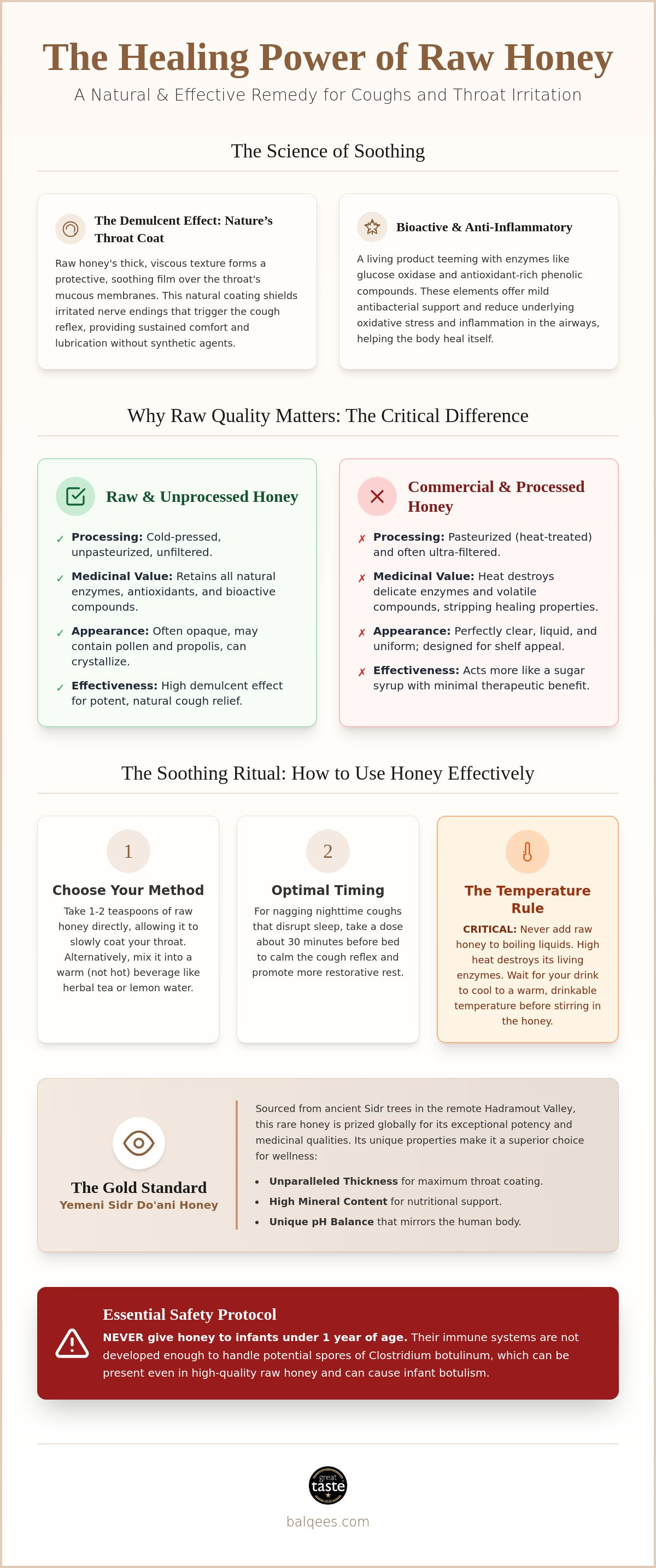
The primary mechanism at work is the demulcent effect. This occurs when a viscous substance forms a protective, soothing film over the mucous membranes of the pharynx. This thin barrier shields sensitive nerve endings from the air and irritants that trigger the cough reflex. A comprehensive overview of honey reveals that its unique density and molecular structure make it an ideal candidate for this physical protection. Beyond the throat, honey has been shown to reduce airway inflammation, providing a double-layered approach to respiratory distress.
This efficacy is particularly evident during the night. Nagging coughs often intensify when we lie down, disrupting the vital sleep cycles needed for recovery. Research indicates that honey can outperform common over the counter suppressants, like dextromethorphan, by significantly reducing cough frequency and severity in children over one year old. By quieting the physical impulse to cough, honey facilitates a deeper, more restorative rest for both the patient and the caregiver.
The Demulcent Property: Nature’s Throat Coat
The thick, velvet texture of raw honey is its greatest asset against a dry, tickly cough. As it glides down the throat, it lubricates the parched tissues of the upper respiratory tract. This physical coating does more than just feel pleasant; it actively calms the irritated nerve endings that send "cough" signals to the brain. Because it lingers longer than thin liquids, this natural honey for cough relief provides sustained comfort, effectively dampening the constant urge to clear the throat without the use of synthetic numbing agents.
Bioactive Compounds and Respiratory Health
Raw honey is a living product, teeming with bioactive elements that support the body’s natural defenses. One such element is glucose oxidase, an enzyme that produces low levels of hydrogen peroxide, offering mild antibacterial support to the affected tissues. Phenolic compounds are the diverse range of plant-derived molecules that provide the potent antioxidant and anti-inflammatory properties found in rare, raw nectars. Rather than merely masking a symptom, these compounds work to reduce the underlying oxidative stress in the airways, assisting the body in its journey back to equilibrium.
Selecting the Best Nectar: Why Raw Quality Matters
Heat is the thief of healing. Most commercial honeys found in supermarkets have undergone intense pasteurization, a process designed to prevent crystallization and ensure a perfectly clear, liquid appearance. While this makes for a convenient product, it is devastating to the honey's medicinal integrity. High temperatures destroy the delicate enzymes and volatile compounds that give honey its therapeutic edge. When seeking a natural honey for cough relief, the word "raw" is your most vital indicator of quality.
Truly exceptional honey reveals itself through the senses. It is often opaque rather than translucent, holding within it the pollen and propolis that signify a living product. Its aroma should be evocative, carrying the distinct scent of the blossoms from which it was gathered. Cold-pressed methods are essential here, as they preserve the nectar's inherent potency without the interference of industrial heat. Is Honey: An effective cough remedy? The answer depends entirely on the preservation of these bioactive elements. A dead, heat-treated syrup cannot offer the same restorative depth as a vibrant, raw nectar.
The Power of Yemeni Sidr Do’ani Honey
Among the world's rare honeys, Raw Yemeni Sidr Do'ani Honey stands as the undisputed gold standard. Sourced from the ancient Sidr trees in the remote Hadramout valley, this nectar is prized for its high mineral content and a unique pH balance that mirrors the body's own needs. It is thicker and richer than almost any other variety, providing an unparalleled coating for an irritated throat. To truly understand why this specific harvest is so revered, you can explore The Connoisseur’s Guide to Raw Yemeni Sidr Do’ani Honey, which delves into its incredible heritage. If you are ready to experience this purity firsthand, you might consider beginning your journey with our Raw Yemeni Sidr Do'ani Honey.
Functional Infusions: Black Seed and Ginger
While pure honey is remarkable on its own, its benefits can be amplified through thoughtful, artisanal infusions. Combining the demulcent properties of honey with other natural anti-inflammatories creates a synergistic effect that targets respiratory distress from multiple angles. The Black Seed Fusion is a traditional favorite, blending the "seed of blessing" with raw nectar to provide deep, grounding support for the chest. The sensory experience is equally profound; the earthy, peppery notes of the black seed balance the sweetness of the honey, creating a ritual that is as much about flavor as it is about recovery. Choosing a high-quality natural honey for cough management becomes a sensory journey when you embrace these potent, heritage-inspired blends.
How to Use Natural Honey for Cough Relief: Daily Rituals
Rituals anchor us during times of illness. They transform a simple remedy into a moment of mindful restoration. When you choose a natural honey for cough relief, you are participating in a tradition that spans millennia, but its success depends on how you handle the nectar. Raw honey is a living substance. It's delicate. If you treat it with the same haste as a synthetic pill, you risk losing the very enzymes that facilitate healing.
The most critical rule is one of temperature. Never expose raw honey to boiling water. High heat shatters the molecular structure of the honey, neutralizing the beneficial peroxide activity and the fragile phenolic compounds discussed earlier. According to a scientific review on honey's uses, the chemical composition of honey is highly sensitive to thermal processing. To preserve its integrity, ensure your liquids have cooled to below 40°C before stirring in your golden dose. Proper storage is equally important; keep your jar in a cool, dark cupboard, away from direct sunlight, to maintain its bioactive potency for years.
The Warm Elixir Ritual
A steaming mug is a comfort, but an elixir is a cure. Begin with filtered water, allowed to sit for several minutes after boiling to reach that safe, warm threshold. Squeeze in the juice of half a fresh lemon for a bright hit of vitamin C and add two thin slices of raw ginger to stimulate circulation. Finally, fold in a generous tablespoon of raw Sidr. The zesty acidity of the lemon cuts through the richness of the nectar, creating a balanced, soothing draught. For those seeking the perfect profile for their brew, our guide on the Best Honey for Tea offers deeper insights into pairing botanical notes with specific infusions.
Direct Ingestion for Immediate Coating
Sometimes, the most direct path is the most effective. The "Slow Spoon" method is ideal for acute irritation. Take a teaspoon of natural honey for cough suppression and place it on the center of your tongue. Don't swallow immediately. Let the warmth of your mouth slowly dissolve the honey, allowing it to slide down the back of your throat to create that essential demulcent film. Taking this dose approximately 30 minutes before sleep is the most studied application for nocturnal relief. For a persistent, dry tickle, repeat this ritual three times daily, ensuring the final spoonful is your last act before settling into bed.

Safe Practices: Dosage and Important Considerations
While the hive offers profound healing, we must approach these potent nectars with both reverence and responsibility. Natural honey for cough relief is a gentle intervention, yet its strength requires us to observe specific boundaries. Understanding these limits ensures that your wellness rituals remain safe and effective for every member of your household. It's about finding the balance between tradition and modern health awareness.
The most vital safety standard concerns our youngest ones. Infants under twelve months of age must never consume honey because their immature digestive systems cannot neutralize Clostridium botulinum spores, which can lead to infant botulism. This is a non-negotiable rule that applies to all types of honey, regardless of their purity or origin. For adults and older children, the risks are virtually non-existent, but for the very small, we must wait until their systems have matured.
We also need to consider those managing metabolic health. While raw nectar is a whole food, it remains a concentrated source of natural sugars. If you're monitoring blood glucose levels, treat honey as you would any other carbohydrate. Its glycemic index may be lower than refined sugar, but moderation is key. A single teaspoon is often enough to provide the desired demulcent effect without causing significant spikes, allowing you to enjoy the benefits while maintaining your health goals.
Guidelines for Children and Families
Once a child passes their first birthday, you can begin to introduce honey into their wellness routine. Start with a small amount, perhaps a half-teaspoon, to ensure they enjoy the flavor and texture. For children aged one to five, a half-teaspoon before bed is often the recommended dose. Older children and teens can move up to a full teaspoon. By framing honey as a precious gift from nature rather than a chore, you encourage a "food as medicine" mindset that will serve them for a lifetime. It's a simple way to build a foundation of health through high-quality, natural ingredients.
When to Consult a Professional
Honey is a remarkable supportive remedy, but it isn't a substitute for medical diagnosis. You should seek professional advice if a cough is accompanied by a high fever, shortness of breath, or if it persists for more than three weeks. These "red flag" symptoms may indicate an underlying condition that requires more than just soothing. Interestingly, supporting your recovery often starts in the gut. Because honey for gut health can help maintain a balanced microbiome, it indirectly supports the immune system's ability to fight off respiratory infections. To ensure you are using the most potent and pure varieties for your family’s wellness, explore our collection of Raw Yemeni Sidr Do'ani Honey.
The Balqees Standard: Artisanal Excellence in Every Jar
Quality is never an accident. It's the result of a deliberate, respectful partnership with the natural world. At Balqees, we don't just source honey; we curate a legacy of purity that stretches back through generations of traditional beekeeping. The quest for a truly effective natural honey for cough symptoms leads away from the supermarket shelf and toward the remote, untouched valleys where the air is still clean and the nectar is untainted by modern industry. This is where true healing begins.
Our commitment begins in the high valleys of Yemen, a landscape of rugged beauty and ancient wisdom. Here, the bees forage on wild Sidr trees, producing a nectar of such rare potency that it has been revered for millennia. We believe that a connoisseur deserves more than just sweetness. You deserve a sensory experience that speaks of its origin, carrying the earthy, floral, and medicinal notes that only a raw, unadulterated product can provide. By choosing an artisanal standard, you're ensuring that your wellness rituals are built on a foundation of integrity and strength.
From Hive to Home: Unfiltered Purity
Nature's wisdom is fragile. To protect it, we employ a meticulous cold-extraction process that avoids the damaging heat of industrial pasteurization. This slow, careful method ensures that every enzyme, antioxidant, and volatile compound remains exactly as the bees intended. We prioritize the health of the hive and the sustainability of the land, working closely with traditional beekeeping communities who treat their craft as a sacred trust. If you are looking to Buy Raw Honey Online in the UAE, you are choosing to support an ecosystem that values heritage over high-speed production.
Curating Your Wellness Collection
A well-stocked home apothecary is a source of great comfort during the winter months. The Black Seed Fusion is a cornerstone of this collection, offering a powerful synergy between raw honey and the traditional respiratory support of Nigella sativa. Selecting the right nectar is a personal journey. Whether you reach for the deep, mineral richness of Raw Yemeni Sidr Do'ani Honey for its legendary potency or a lighter Yemeni Wild Flower Honey for daily maintenance, the goal is the same. We encourage you to embrace the slow, artisanal pace of natural healing. It's a reminder that the most effective remedies don't come from a lab, but from the patient, rhythmic cycles of the earth itself.
Embracing the Wisdom of the Hive
The journey from a persistent cough to a night of restorative sleep begins with a single, mindful choice. We've explored how the living enzymes and demulcent properties of raw nectar provide a level of relief that processed alternatives simply can't match. By respecting the temperature rules of traditional rituals and selecting varieties with high phenolic content, you transform a simple kitchen staple into a potent wellness tool. Using natural honey for cough relief is about more than just suppression; it's about supporting your body’s natural rhythm with the purest ingredients the earth provides.
At Balqees, we remain dedicated to this standard of excellence. Every jar is sourced from artisanal beekeepers in the remote valleys of Yemen, ensuring a heritage of quality that remains untouched by industrial haste. Our nectars are cold-pressed and unfiltered to preserve their full bioactivity, while our award-winning functional blends offer targeted support for your family's health. We invite you to step away from the mass-produced and rediscover the healing power of the hive.
Experience the purity of nature, explore our Raw Yemeni Sidr Honey collection. May your path to recovery be as slow and sweet as the honey that guides it.
Frequently Asked Questions
Is natural honey better than cough syrup?
Clinical studies suggest that natural honey for cough relief can be as effective, and sometimes more effective, than common over the counter suppressants like dextromethorphan. While synthetic syrups often focus on numbing the throat or suppressing the brain's cough reflex, raw honey provides a physical demulcent barrier and anti-inflammatory support. It offers a cleaner alternative without the drowsiness or gastrointestinal side effects often associated with pharmaceutical options.
Which honey is best for a dry cough?
Dark, viscous varieties like Raw Yemeni Sidr Do'ani Honey are generally considered the best choice for a dry, persistent cough. These honeys have a higher mineral content and a thicker texture, which allows them to coat the pharynx more effectively and for a longer duration. This physical barrier is crucial for quieting the tickle that triggers dry coughing fits, providing a deeper sense of comfort than thinner, lighter nectars.
Can I take honey for a cough if I have diabetes?
You can use honey if you have diabetes, but it must be managed carefully as part of your total carbohydrate intake. While raw honey has a lower glycemic index than refined sugar, it'll still affect your blood glucose levels. We recommend consulting with your healthcare provider to determine a safe dosage. Typically, a single teaspoon is enough to soothe the throat without causing an excessive spike for most individuals.
Why is honey unsafe for babies under one year old?
Honey is unsafe for infants under twelve months because of the risk of infant botulism caused by Clostridium botulinum spores. A baby's digestive system isn't yet mature enough to handle these naturally occurring spores, which can produce toxins in their intestinal tract. Once a child reaches one year of age, their gut microbiome is sufficiently developed to neutralize these spores, making honey a safe and healthy addition to their diet.
How much honey should I take for a sore throat and cough?
A standard dose for adults is one to two teaspoons taken two to three times daily. For the most effective results, we suggest the Slow Spoon method mentioned earlier, allowing the honey to dissolve slowly at the back of the throat. If your symptoms are particularly acute, you can repeat this every few hours. Just remember to stay mindful of your total sugar consumption throughout the day.
Does honey lose its medicinal properties in hot tea?
Yes, honey will lose its most vital medicinal properties if stirred into boiling water. The delicate enzymes and bioactive compounds that make natural honey for cough relief so effective are highly sensitive to heat. To preserve the honey's integrity, always wait for your tea or water to cool to a warm, drinkable temperature, ideally below 40°C, before adding your spoonful of nectar.
Can raw honey help with a nighttime cough?
Raw honey is exceptionally effective at reducing the frequency and severity of nighttime coughs, which often disrupt vital sleep. Its thick consistency provides a lasting protective film over irritated tissues that become more sensitive when you lie down. Taking a dose approximately 30 minutes before bed helps calm the respiratory system, allowing for a more restful night and a more efficient recovery process for the body.
What is the difference between Manuka and Sidr honey for coughs?
While both are revered for their antibacterial properties, Sidr honey is often preferred for coughs due to its superior demulcent texture and pH balance. Manuka is widely known for its MGO levels and wound healing potential, but Sidr honey from Yemen is traditionally prized for its ability to soothe respiratory inflammation and coat the throat. It offers a smoother, richer sensory experience that feels more immediate in its comforting effects.