


Can a single jar of honey truly capture the essence of an entire mountain range, or is it better when it distills the soul of a lone, ancient tree? Most people see honey as a simple pantry staple, yet the nuanced debate of polyfloral vs monofloral honey reveals a world of complex terroir and artisanal precision. It's perfectly natural to feel skeptical when faced with vague wildflower labels or high-priced single-origin jars. You want more than just sweetness; you seek purity, heritage, and a genuine connection to the earth.
We understand that identifying authentic raw honey can feel like a daunting task in a market often filled with industrial shortcuts. This guide serves as your mentor, promising to refine your palate and provide the confidence needed to choose the right nectar for your specific wellness ritual. We'll examine the rigorous standards of pollen verification, the sensory brilliance of rare Yemeni Sidr Do'ani, and the vibrant seasonal symphony found in polyfloral blends. By the end, you'll see every spoonful as a deliberate choice in craftsmanship. Discover how these distinct expressions of the hive can transform your understanding of nature's most golden gift.
Key Takeaways
- Learn to distinguish between "floral fidelity" and diverse botanical blends to understand the true origin and purity of every jar.
- Navigate the nuanced debate of polyfloral vs monofloral honey to decide between the targeted medicinal strength of a single source or the broad antioxidant profile of a wildflower mix.
- Discover how the precise timing of the harvest and strategic hive placement in remote landscapes ensure the integrity of premium monofloral varieties.
- Master a comparative tasting framework that reveals how color and flavor shift from the delicate notes of White Mountain honey to the deep complexity of desert blooms.
- Build a versatile honey collection with the knowledge to pair specific sensory profiles with your daily wellness rituals and culinary pairings.
Defining the Floral Landscape: Monofloral vs. Polyfloral Honey
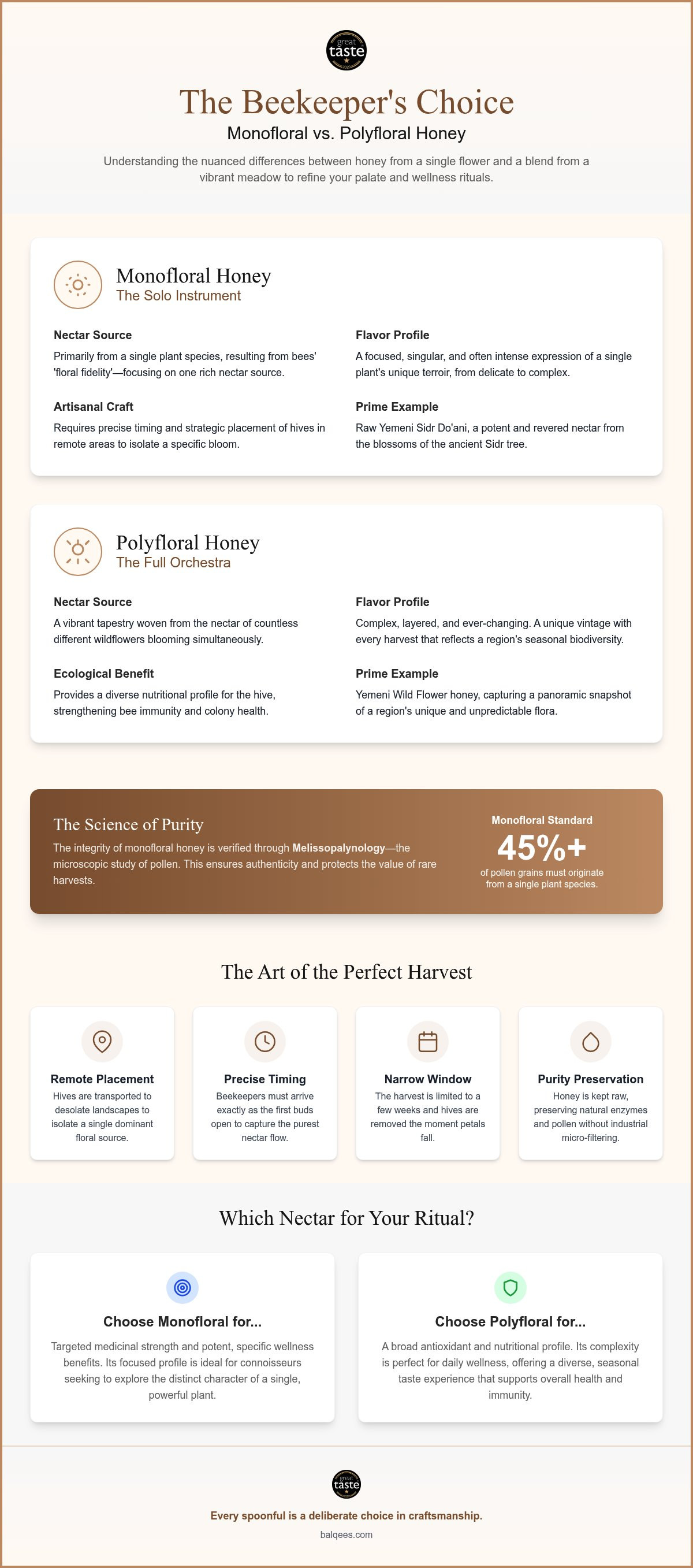
The journey from blossom to jar is a story of choice. Every spoonful of raw honey reflects a specific moment in time and a precise location on the map. When we explore the nuances of polyfloral vs monofloral honey, we aren't just debating labels; we're examining the very soul of the hive's work. The fundamental distinction lies in the nectar's origin. Monofloral honey is the result of bees visiting one primary plant species, creating a singular, focused profile. Polyfloral honey is a vibrant tapestry, woven from the nectar of countless different wildflowers blooming simultaneously across a landscape.
Bees are not chaotic foragers. They follow a biological imperative known as floral fidelity. Once a scout bee identifies a rich nectar source, the colony focuses its energy almost exclusively on that species until the bloom fades. This natural focus allows for the creation of single-origin nectars. The beekeeper’s role is one of a silent partner. By strategically placing hives in remote regions like Wadi Do’an during the Sidr bloom, they ensure the bees have little choice but to forage from the intended trees. It's a delicate dance of timing and geography. Neither type is inherently better than the other. Instead, they serve different purposes for the connoisseur, offering a choice between the precision of a solo instrument and the depth of a full orchestra.
The Science of Single-Source Nectar
Verification is the cornerstone of the premium honey trade. To be officially recognized as monofloral, a honey must meet specific botanical standards. This objective standard is part of the broader monofloral and polyfloral honey classification system used by experts to protect the integrity of rare harvests. According to established international standards, a honey is generally classified as monofloral when at least 45% of its pollen grains originate from a single plant species. Scientists use melissopalynology, the study of pollen in honey, to verify these origins under a microscope. Monofloral honey is a concentrated expression of a single plant's DNA.
The Seasonal Symphony of Multi-Flower Blends
Polyfloral honey captures the raw biodiversity of a specific geographic region in a way no single-source nectar can. It's a panoramic landscape in a jar. Because the mix of blooming flowers shifts with every rainfall and temperature change, every harvest of Yemeni Wild Flower honey is a unique vintage. This unpredictability is its greatest strength. For the hive, producing polyfloral honey is an ecological necessity, providing a diverse nutritional profile that strengthens bee immunity. For the consumer, it offers a complex, layered sensory experience that changes with every season.
The Artisanal Craft of Producing Pure Monofloral Honey
Creating a truly monofloral honey is an exercise in restraint and meticulous timing. While the bees provide the labor, the beekeeper acts as the conductor of a very brief, very specific symphony. To capture a single botanical essence, apiaries must be transported to remote regions where a specific species dominates the landscape. It isn't enough to simply be near the trees. The hives must arrive exactly as the first buds open and be removed the moment the petals begin to fall. This narrow window, often lasting only a few weeks, is what separates a generic harvest from a rare, single-origin nectar. When we look at the logistics of polyfloral vs monofloral honey, the latter requires a level of nomadic dedication that most industrial producers simply cannot maintain.
The greatest challenge in this craft is the constant threat of 'floral contamination.' If a secondary species blooms nearby, the bees, ever the opportunists, will naturally diversify their foraging. This would shift the honey into a polyfloral category. Traditional Yemeni beekeepers manage this by placing hives in the most desolate, untouched pockets of the desert or high mountain plateaus. Here, the lack of botanical competition ensures that the bees focus entirely on the target bloom. Unlike commercial brands that use industrial micro-filters to strip away 'impurities,' artisanal producers rely on the purity of the source itself. They preserve the honey's raw state, allowing the natural enzymes and pollen to remain intact.
Sidr Honey: The Gold Standard of Monofloral Purity
Within the world of monofloral nectars, one name commands universal reverence. The Sidr tree, particularly those found in the Wadi Do’an region, produces a nectar so potent it has been venerated for millennia. Our Raw Yemeni Sidr Do'ani Honey is a testament to this ancient heritage. It's world-renowned for its remarkable consistency, achieved through generations of beekeeping wisdom. When you taste it, the sensory markers are unmistakable. You'll find a thick, buttery texture that coats the palate, followed by a deeply medicinal, herbal aroma that lingers long after the sweetness fades. It is a pure distillation of the desert's resilience.
Terroir and the Beekeeper’s Calendar
Just as a fine wine reflects its vineyard, honey is a product of its terroir. The chemical profile of the nectar is dictated by the soil's mineral content and the altitude of the trees. A Sidr tree growing in the alkaline soil of a dry riverbed will yield a different enzymatic structure than one growing in the cooler mountain air. Beekeepers must live by a strict seasonal calendar, moving their colonies across vast distances to follow these specific floral flows. This nomadic tradition ensures that every jar is a snapshot of a specific moment in nature's cycle. If you're ready to experience this level of craftsmanship, you might explore our collection of single-origin nectars to find your perfect match.
Sensory Profiles: A Comparative Tasting Framework
To truly appreciate the difference between polyfloral vs monofloral honey, one must look beyond the initial hit of sweetness. It's a sensory exploration that begins with the eyes. The color spectrum of raw honey is as varied as a desert sunset, ranging from the ghostly, translucent pale of high-altitude blooms to the deep, obsidian-like amber of forest nectars. While polyfloral varieties often settle into a warm, classic gold, monofloral honeys are more daring. They reflect the specific pigments of their host plant with startling accuracy. This visual cue is your first hint at the chemical complexity waiting inside the jar.
The physical experience of honey, its viscosity and mouthfeel, is dictated by the delicate balance of fructose and glucose. Some varieties possess a silk-like fluidity that vanishes instantly on the tongue. Others offer a dense, chewy texture that demands a slower pace. This "melt" is a signature of the terroir. Aroma follows a similar pattern of distinction. A monofloral harvest usually presents a singular, powerful top note, such as the intense herbal punch of Sidr. In contrast, a polyfloral blend offers a full bouquet. It's a crowded room of scents where different floral notes emerge and recede as the honey warms to your body temperature.
Precision vs. Complexity: What Your Palate Detects
Tasting monofloral honey is an exercise in precision. You're searching for the soul of a single plant. The palate identifies specific, predictable characteristics, perhaps a hint of citrus or a sharp, peppery finish. Polyfloral honey, however, is a journey. It often begins with a bright, floral sweetness that gradually gives way to a lingering, complex herbal finish. To truly master this comparative tasting, we recommend cleansing your palate with a slice of green apple or a sip of sparkling water between varieties. This simple ritual ensures that the nuances of the next nectar aren't masked by the echoes of the last.
Crystallization and Texture
There's a common misconception that honey should always be a clear, golden liquid. In reality, crystallization is a sign of life, not a mark of expiration. Many multi-flower varieties crystallize quickly due to their diverse sugar profiles and high pollen content. Then there is the remarkable White Mountain Honey, which is naturally creamy and white. Its fine-grained, velvety texture is a result of the unique environmental conditions of the Kyrgyz mountains. Whether a honey is liquid or set, its state is a natural evolution. Don't fear the crystals; they're simply the honey's way of preserving its inherent purity over time.
Health and Wellness: Choosing Honey for Targeted Benefits
Choosing between polyfloral vs monofloral honey isn't just a matter of personal taste; it's a strategic decision for your daily wellness ritual. While both varieties offer significant health benefits, they approach healing from different biological angles. Monofloral honey acts as a precision tool, delivering high concentrations of specific enzymes and bioactive compounds tied to a single plant species. Polyfloral honey, conversely, provides a broad spectrum of nutrients, creating what experts call an "entourage effect" where various pollens and nectars work in harmony to support overall vitality. Understanding these differences allows you to curate a honey collection that serves your body's changing needs.
Medicinal Potency in Monofloral Varieties
Rare monofloral nectars are prized for their therapeutic strength. In the case of Sidr honey, its high antibacterial properties and antioxidant levels make it a staple in traditional medicine. It's frequently compared to Manuka for its non-peroxide activity, offering a potent punch for immune support and wound healing. Because the bees focus on a single botanical source, the resulting honey contains a distilled version of that plant's specific defensive chemicals. This single-source focus creates a predictable medicinal profile that allows for targeted therapeutic use. Whether you're addressing a sore throat or seeking digestive relief, the focused enzymatic activity of a monofloral honey provides a reliable, high-potency solution.
The Bioactive Diversity of Polyfloral Honey
If monofloral honey is a targeted treatment, polyfloral honey is your daily nutritional anchor. By collecting nectar from a vast array of desert blooms, bees create a substance rich in diverse antioxidants and minerals. This botanical variety is particularly beneficial for those seeking to build resilience against seasonal environmental shifts. Our Yemeni Wild Flower Honey captures this nutritional breadth perfectly, offering a complex blend of local pollens. This diversity also makes it the ideal base for functional honey blends, where raw honey is fused with potent botanicals like Black Seed or Ginseng to amplify its natural strengths.
You won't find these benefits in industrial, pasteurized jars. The heat used in commercial processing destroys the very enzymes and heat-sensitive antioxidants that give honey its value. Preserving these delicate compounds requires a refusal to compromise, which is why we insist on raw, unfiltered methods. This ensures that every jar remains a living product, teeming with the same beneficial properties it possessed inside the hive. If you're ready to elevate your wellness ritual with nature's most potent nectars, browse our selection of raw medicinal honeys today.
Curating Your Honey Collection: The Connoisseur’s Verdict
A true connoisseur doesn't see a conflict in the choice of polyfloral vs monofloral honey. Instead, they recognize that each jar represents a different chapter of the earth's story. Monofloral honey is a precision instrument, ideal for when you want to highlight a specific, singular botanical note. Polyfloral honey is a panoramic view, offering a broader, more robust experience that shifts with the seasons. Keeping both in your pantry provides the ultimate versatility. You'll find that one serves your morning wellness ritual with medicinal intensity, while the other brings a complex sweetness to your evening table.
Success in honey curation depends entirely on the integrity of the source. In a world where industrial processing often strips honey of its soul, the importance of choosing artisanal honey brands cannot be overstated. These producers act as guardians of the hive, ensuring that the nectar remains raw, unfiltered, and deeply connected to its origin. Every spoonful should be a direct link to a specific ecosystem, untouched by high-heat pasteurization or excessive filtration. This commitment to purity is what allows the delicate nuances of the flowers to shine through.
Culinary Pairings and Daily Rituals
When it comes to food, think of monofloral honey as a tool for contrast. A sharp, herbal Sidr honey can cut through the richness of a heavy cream or a strong blue cheese. Conversely, polyfloral honey is best used to build depth. Its layered botanical notes can elevate a simple bowl of Greek yogurt or a slice of sourdough toast into something extraordinary. For many, the most important application is in daily wellness rituals. Whether it's a spoonful in a glass of warm water or a companion to your favorite tea, the right honey turns a simple habit into a meaningful ceremony.
The Balqees Commitment to Purity
Our work is rooted in a deep reverence for the traditional beekeeping methods of Yemen. We specialize in raw, unfiltered, and cold-pressed honey that honors the heritage of the Wadi Do’an region. By protecting the integrity of both our rare monofloral Sidr and our vibrant polyfloral varieties, we offer more than just a product. We offer a sensory journey through one of the most unique landscapes on earth. Our process ensures the honey you receive is as close to the hive as possible. We invite you to explore our collection and find the signature nectar that resonates with your palate. Discovery is just a spoonful away.
Elevating Your Daily Nectar Ritual
Choosing between polyfloral vs monofloral honey is more than a culinary preference; it's an invitation to connect with the earth's most pristine landscapes. You now understand that while monofloral varieties offer a focused, medicinal punch, polyfloral blends provide a broad botanical symphony for daily vitality. Both have a place in a well-curated pantry, serving as either a precision tool for wellness or a complex partner for your favorite foods. This knowledge transforms a simple ingredient into a deliberate choice for your health and palate.
At Balqees, we remain dedicated to preserving these ancient traditions. Every jar is sourced directly from the remote valleys of Yemen, remaining raw, unfiltered, and never heat-treated to protect its living enzymes. Our commitment to quality is reflected in the dozens of 5-star reviews from fellow honey connoisseurs who value authenticity as much as you do. We invite you to explore the Balqees collection of rare monofloral and polyfloral honeys and discover the difference that heritage and purity make. Your journey into the world of artisanal nectar is just beginning, and we are honored to be your guide.
Frequently Asked Questions
Is monofloral honey better than polyfloral honey for health?
Neither variety is inherently superior; they simply offer different therapeutic profiles for your wellness ritual. Monofloral honey provides a concentrated dose of specific plant enzymes, while polyfloral varieties offer a broader spectrum of antioxidants. When comparing polyfloral vs monofloral honey, choose based on your goals. For targeted antibacterial strength, select a single-source honey. For daily vitality and nutritional variety, a high-quality wildflower blend is the ideal choice.
How can I tell if my honey is truly monofloral?
Authentic monofloral honey is verified through laboratory pollen analysis, a discipline known as melissopalynology. This scientific process ensures that a significant percentage of the pollen grains come from a single plant species. You can also rely on sensory markers like a specific, lingering aroma or a unique texture. Reputable artisanal brands will always provide clear sourcing information and harvest details to prove the honey's single-origin status.
Why is monofloral honey usually more expensive than wildflower honey?
The higher price reflects the intensive labor and narrow harvest window required to capture a single botanical essence. Beekeepers must move hives to remote, untouched regions precisely when a specific tree or flower blooms. This nomadic practice is far more costly than keeping hives in one permanent location. When navigating the polyfloral vs monofloral honey market, remember that you're paying for the rarity of a fleeting seasonal moment.
Does polyfloral honey help more with seasonal allergies?
Polyfloral honey is often preferred for allergy resilience because it contains a diverse mix of local pollens from various blooming flowers. By consuming small amounts of these varied pollens, your body can gradually build a tolerance to the environmental triggers in your specific region. This "entourage effect" of multiple nectar sources provides a comprehensive botanical shield that a single-source monofloral honey simply cannot replicate for this specific purpose.
Can a honey be 100% monofloral?
It's biologically impossible for honey to be 100% monofloral because bees are natural opportunists. They will occasionally forage from secondary blossoms near the primary source, even during a heavy bloom. Most international standards consider honey monofloral if the dominant pollen count exceeds 45%. In rare, remote landscapes like Yemen's valleys, this percentage can climb much higher, but there will always be a trace of the surrounding desert biodiversity.
What happens if bees visit other flowers during a monofloral harvest?
If bees forage significantly from other species, the honey loses its monofloral classification and becomes a polyfloral blend. This shift changes the sensory profile and dilutes the specific medicinal markers of the intended host plant. Beekeepers prevent this by harvesting the honey immediately after the primary bloom ends. This ensures the purity of the single-origin nectar remains intact before other competing flowers begin to open across the landscape.
Which honey should I use for a sore throat: polyfloral or monofloral?
Monofloral honey is the superior choice for soothing a sore throat due to its concentrated antibacterial and anti-inflammatory properties. Varieties like Sidr Do'ani contain high levels of specific enzymes that provide a protective coating and promote faster healing. While polyfloral honey is incredibly nutritious, it lacks the focused medicinal punch required to effectively combat the bacteria often associated with persistent respiratory discomfort or throat irritation.
Does the taste of polyfloral honey change every year?
The flavor of polyfloral honey shifts with every harvest, reflecting the unique environmental conditions of that specific year. Variations in rainfall, temperature, and soil moisture determine which wildflowers bloom most vibrantly in a given season. This unpredictability makes every jar a unique vintage. It captures a fleeting moment in the landscape's ecological history that can never be exactly replicated, offering a new sensory journey with every season.


