


Could the very ingredient you use to sweeten your morning cup be the reason you aren't truly tasting its potential? It's a quiet tragedy when a premium, single-origin bean is overshadowed by a honey that feels clashing or discordant on the palate. You've likely felt the frustration of watching your favorite brew lose its character to an overpowering floral note. Finding the best honey for tea and coffee isn't about mere sweetness. It's about alchemy.
You deserve a morning ritual that feels like a deliberate act of care. We understand that you want the raw, untouched benefits of nature without compromising on flavor or accidentally destroying delicate enzymes in boiling water. This guide will help you master the nuances of rare, artisanal pairings. We'll reveal how to match the deep, malty depths of Yemeni Sidr with bold roasts and how to let the ethereal lightness of White Mountain Honey elevate your finest teas. Prepare to transform your daily caffeine habit into a sophisticated sensory journey that honors both the bee and the bean.
Key Takeaways
- Transform your daily caffeine habit into a refined ritual by learning how raw nectar illuminates the complex botanical notes of your favorite brew.
- Master the delicate balance of temperature and timing to preserve the life-giving enzymes and minerals found within pure, raw honey.
- Use our artisanal pairing guide to select the best honey for tea and coffee by matching specific nectar profiles with the unique tannins of your drink.
- Understand why unheated and unfiltered honey is the only choice for a discerning palate that values heritage, purity, and sensory depth.
- Learn the professional "Art of the Pour" to create perfectly balanced infusions that honor the dedicated craftsmanship of both the bee and the barista.
Beyond Sweetness: Why Raw Honey is the Ultimate Companion for Tea and Coffee
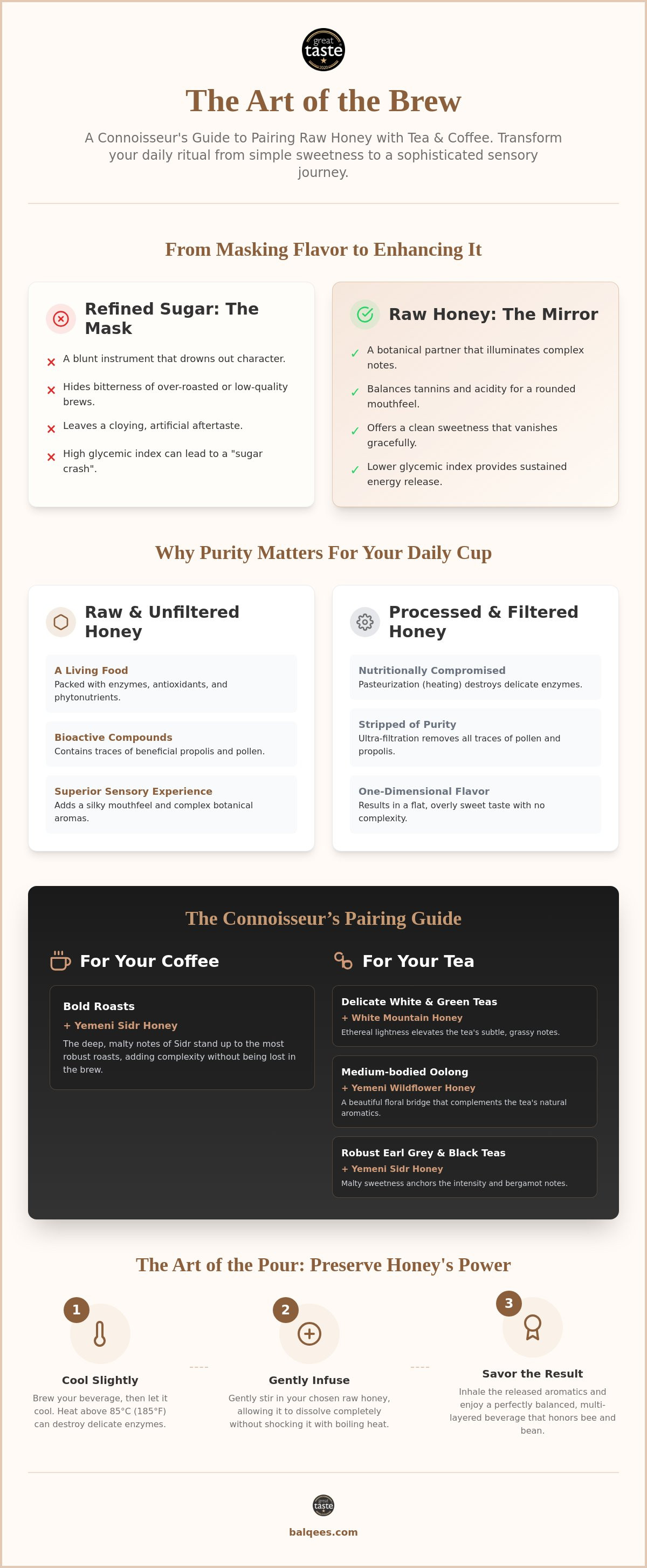
Sugar is a mask. Raw honey is a mirror. For too long, the standard approach to sweetening our morning brew has been to use refined sugar as a blunt instrument. It's often used to hide the bitterness of over-roasted beans or the astringency of low-quality tea leaves. Choosing the best honey for tea and coffee represents a fundamental shift in philosophy. Instead of drowning out the character of your beverage, you're inviting a botanical partner to illuminate it. This transition from masking to enhancing turns a simple caffeine intake into a mindful, sensory ritual.
Unlike industrial syrups that leave a cloying, artificial coating on the tongue, raw honey offers a clean sweetness that vanishes gracefully. It leaves behind only the ghost of the flowers from which it was born. Those seeking a comprehensive overview of honey will find that its history as a culinary and medicinal staple is rooted in this purity. When you stir raw nectar into a warm cup, the heat acts as a catalyst. It gently releases volatile aromatics that would otherwise remain trapped in the honey's thick structure, creating a fragrant steam that precedes the first sip.
The Nutritional Edge of Raw Honey
Raw honey is a living food. It's packed with enzymes, antioxidants, and phytonutrients that processed sugars simply don't possess. While many people worry about heat destroying these benefits, a mindful pour at the correct temperature preserves much of this integrity. Artisanal varieties often contain traces of propolis and pollen, which contribute to a more robust well-being profile. Beyond the micronutrients, raw honey typically has a lower glycemic index than refined sugar. This means it provides a more sustained release of energy, preventing the sharp "sugar crash" that can often ruin the focus of a productive morning.
A Sensory Journey: Aroma and Mouthfeel
The experience of a fine brew is as much about texture as it is about taste. Raw honey adds a remarkable, silky mouthfeel to black coffee, softening its acidic edges without flattening its personality. It introduces earthy and floral aromatics that sugar cannot replicate. Because it's unfiltered, the honey retains its botanical identity. This creates a complex finish on the palate, where the deep notes of the coffee or tea are elongated by the honey's natural resins. It's the difference between a flat, sweet drink and a multi-layered masterpiece that evolves with every sip.
The Connoisseur’s Pairing Guide: Matching Honey Profiles with Your Brew
Think of your morning brew as a canvas. Selecting the best honey for tea and coffee requires an understanding of how different nectars interact with the chemical compounds of your drink. The 'Flavour Wheel' of raw honey is vast, ranging from the delicate, ethereal notes of alpine blossoms to the rich, malty depths of desert trees. To find the perfect match, you must look beyond sweetness. You're looking for a botanical partner that can either mirror the existing notes in your cup or provide a necessary counterpoint to them.
The science of a perfect pairing often comes down to balancing tannins and acidity. In tea, tannins provide structure but can sometimes lean toward bitterness. A creamy, high-enzyme honey can soften these edges, creating a rounded mouthfeel that allows hidden floral notes to emerge. Coffee presents a different challenge. High-altitude beans often carry a bright, citrusy acidity. While the health benefits of honey are well-documented through clinical research, its role as a chemical balancing agent is what truly captivates the connoisseur. Yemeni honey varieties are particularly prized here. Grown in rugged, high-altitude terrain, they possess a mineral complexity that stands up to the most robust roasts without being lost in the brew.
Best Honey for Tea: From Green to Oolong
Delicate white and green teas require a gentle hand. Pairing these with White Mountain Honey ensures the tea's subtle grassy notes aren't overwhelmed by a heavy nectar. For those who prefer the medium body of an Oolong, Yemeni Wild Flower Honey provides a beautiful floral bridge that complements the tea's natural aromatics. If your preference leans toward a robust Earl Grey, you need a honey with enough character to match the bergamot. A bold, raw Sidr honey provides a malty sweetness that anchors the tea's intensity, turning a simple cup into a luxurious experience. You can explore our artisanal collections to find these specific varieties.
Best Honey for Coffee: Roasts and Origins
- Light Roasts: These beans often have vibrant, citrusy, or berry-like profiles. Use a light, floral honey to enhance these high notes rather than dulling them with heavy caramel.
- Dark Roasts: The bitterness of a dark roast needs a partner with significant depth. Raw Yemeni Sidr Do'ani Honey is the ultimate choice here; its natural caramel and butterscotch undertones cut through the smoke and char of the bean.
- Espresso: The concentrated nature of espresso demands a honey with a creamy texture. A dense, raw honey can actually enhance the crema, adding a velvety richness to the finish that lingers on the palate.
Raw vs. Processed: Why Purity Matters for Your Daily Cup
Purity is not a marketing term. It's a chemical reality. When you seek the best honey for tea and coffee, you're looking for a substance that remains exactly as the bees intended: unfiltered, unheated, and untouched. Most commercial honey found on supermarket shelves has been subjected to ultra-filtration and high-heat pasteurisation. These industrial processes are designed for shelf stability and aesthetic clarity, but they come at a significant cost. They strip away the pollen and volatile compounds that give honey its botanical soul, leaving behind a generic, one-dimensional sweetener that lacks character.
The "syrup problem" is a growing concern for the discerning consumer. In 2025, the FDA found that 4% of honey samples were adulterated with undeclared sweeteners. This dilution turns a complex natural product into little more than a liquid sugar. Artisanal sourcing, however, ensures that the honey retains its unique regional profile. Whether it's the resinous depth of a desert Sidr or the crisp sweetness of an alpine blossom, raw honey provides a consistent, high-quality flavour that complements your brew rather than cluttering it with additives. True honey should be a bridge to a specific landscape, not a mass-produced commodity.
The Thermal Threshold: Protecting Honey’s Integrity
Heat is the enemy of raw honey’s delicate structure. To preserve the enzymes and antioxidants that make nectar a "living" food, you must respect the 40°C rule. Adding raw honey to boiling water or coffee freshly poured from a French press can flash-pasteurise the nectar, destroying its nutritional value and dulling its aroma. Let your beverage cool for a few minutes. If you can comfortably hold the cup, it's likely safe to stir in your honey. This patience ensures that every sip remains as beneficial as it is delicious.
Identifying High-Quality Raw Honey
Texture is often the first clue to a honey's purity. While many believe that liquid honey is superior, natural crystallisation is actually a sign of life. It indicates that the honey hasn't been over-processed or heated to extreme temperatures. Provenance is equally vital. Yemeni heritage beekeeping, for example, relies on ancient methods that prioritise the health of the hive and the purity of the harvest. Understanding these nuances is essential for any connoisseur. You can learn more about how to identify pure honey to ensure your daily ritual remains untainted by industrial shortcuts.
The Tea and Coffee Collection: Our Top Recommendations for Your Ritual
A true connoisseur understands that the vessel is only as good as what it holds. We've spent years curating a selection of nectars specifically chosen for their ability to harmonise with premium brews. This isn't a random assortment. Each variety in our collection has been vetted for its solubility and its unique aromatic profile. We look for honeys that dissolve effortlessly, leaving no grit or residue, only a pure and elevated flavour. The best honey for tea and coffee is one that respects the craftsmanship of the roaster and the tea master while adding its own signature of excellence.
Behind every jar lies a story of ancient traditions and meticulous handling. Our beekeepers in the remote valleys of Yemen and the high alpine meadows of Kyrgyzstan follow rhythms that haven't changed for centuries. They understand that the purity of the nectar is a reflection of the health of the landscape. By choosing these artisanal varieties, you're not just sweetening a drink. You're participating in a legacy of heritage and care. You can explore the full Tea & Coffee Honey Collection to find the perfect partner for your morning cup.
Raw Yemeni Sidr Do'ani Honey: The King of Coffee Pairings
This is the ultimate choice for the coffee purist. Raw Yemeni Sidr Do'ani Honey possesses a buttery, malty profile that mirrors the complexity of the finest Arabica beans. It's particularly favoured by dark roast enthusiasts because its low acidity provides a soothing counterpoint to the smoke and char of the roast. Instead of competing with the coffee, it anchors the flavour, creating a rounded, luxurious finish. For a deeper look at this rare nectar, read The Ultimate Guide to Raw Yemeni Sidr Do'ani Honey.
White Mountain Honey: The Creamy Choice for Tea
If you're searching for the best honey for tea, White Mountain Honey is a revelation. Its rare, pearlescent white colour and smooth, fudge-like consistency make it a sensory delight even before it hits the water. When added to light herbal or white tea infusions, it dissolves into a beautiful, milky cloud, adding a delicate floral lift that never overpowers the tea's natural notes. It's a sophisticated choice for those who appreciate the finer, more ethereal nuances of their brew.
Yemeni Wild Flower Honey: The Versatile All-Rounder
For the drinker who moves from a morning espresso to an afternoon Oolong, Yemeni Wild Flower Honey is the ideal companion. It's a symphony of nectar sources, providing a complex, multi-layered taste that evolves on the tongue. It balances bright floral high notes with a grounding, earthy base, making it robust enough for coffee yet nuanced enough for tea. It's a testament to the diverse flora of the Yemeni highlands, offering a versatile profile that fits every mood and every cup. Discover our premium honey offerings to begin your own pairing journey.
The Art of the Pour: How to Perfectly Infuse Honey into Hot Beverages
The final step in your journey is the most delicate. To truly honour the best honey for tea and coffee, you must move beyond the perfunctory "spoon and stir." Treat the infusion as a slow act of alchemy. When you drizzle raw nectar into your cup, do it with intention. If you're using a glass vessel, try pouring the honey slowly down the inner side. This creates a beautiful, layered visual effect where the dense honey settles at the bottom, gradually releasing its aromatics as the heat of the beverage coaxes them upward. It ensures that the first sip is different from the last, allowing the flavour to evolve as you drink.
Milk and creamers add another layer of complexity to this ritual. Raw honey acts as a natural emulsifier, binding with the fats in dairy or plant-based milks to create a velvety mouthfeel. This is particularly striking when using a creamy variety like White Mountain Honey, which can turn a standard latte into something reminiscent of a liquid dessert. However, the integrity of these aromatic oils depends on how you handle the jar. Always use a clean, bone-dry dipper. Even a small amount of moisture introduced into the jar can compromise the honey's shelf life. Store your collection in a cool, dark cupboard, away from the oscillating temperatures of a stovetop or the direct glare of a window.
Step-by-Step: The Perfect Honey Infusion
- Step 1: Brew your tea or coffee to your preferred strength. Whether it's a pour-over or a long-steeped Oolong, ensure the base is exactly as you like it before adding sweetness.
- Step 2: Exercise patience. Allow the beverage to cool to approximately 40-50°C. As we explored earlier, this temperature range is the "sweet spot" where the honey dissolves easily without losing its vital enzymes.
- Step 3: Gently fold the honey into the liquid. Avoid aggressive whisking. A slow, circular motion preserves the delicate structure of the raw nectar and prevents excessive bubbles from forming on the surface.
The 'Honey First' Method for Iced Beverages
Cold brew coffee and iced teas require a slightly different technique. Because raw honey is dense, it won't dissolve in a chilled liquid. The secret is to create a concentrated base. Dissolve your honey in a small amount of warm water or a splash of your hot brew first. This creates a bespoke, raw simple syrup. For a truly luxurious summer drink, try pairing White Mountain Honey with a cold brew. The honey's natural creaminess integrates with the coffee's oils, resulting in a smooth, silky finish that feels much more sophisticated than a standard iced coffee. It's a simple adjustment that preserves the botanical identity of your best honey for tea and coffee while ensuring a perfectly balanced chill.
Elevate Your Daily Ritual
Your morning cup is more than a caffeine delivery system. It's a sacred pause in a busy world. By respecting the delicate thermal threshold of 40°C and choosing nectars that mirror the botanical notes of your brew, you've moved from merely sweetening to masterfully pairing. Selecting the best honey for tea and coffee is an investment in your own sensory pleasure and daily well-being. It's about finding that perfect balance where raw, enzyme-rich nectar illuminates the craftsmanship of the bean and the leaf.
Our collections are sourced from dedicated artisanal beekeepers in Yemen and beyond, ensuring every jar is raw, unfiltered, and brimming with heritage. These sophisticated flavour profiles are designed for the connoisseur who refuses to settle for the ordinary. Are you ready to transform your next pour into an extraordinary experience? Discover the Perfect Honey for Your Tea and Coffee and begin your journey into the world of artisanal pairings. Your most refined morning ritual is just a drizzle away.
Frequently Asked Questions
Can I put raw honey in boiling hot coffee?
You should wait for your coffee to cool slightly before adding raw nectar. Pouring it into boiling water destroys the heat-sensitive enzymes and antioxidants that make raw honey so beneficial. Aim for a temperature around 40 or 50 degrees Celsius. This patience ensures you preserve the living integrity of the honey. It also allows the subtle aromatic oils to release gently rather than being scorched by extreme heat.
Does honey change the taste of specialty tea?
Raw nectar doesn't just change the taste; it illuminates it. When you pair a light, floral honey with a delicate tea, you're creating a botanical synergy that sugar can't replicate. The right pairing can soften bitterness and bring hidden notes to the surface. It's a dialogue between the leaf and the flower. Choosing a poor match might mask the tea's character, but a thoughtful pairing elevates the entire sensory experience.
Which honey is best for a strong black coffee?
Raw Yemeni Sidr Do'ani Honey is the peerless choice for a robust black coffee. Its deep, malty profile and buttery undertones are strong enough to cut through the bitterness of a dark roast without being overwhelmed. Unlike lighter nectars that might taste discordant in coffee, Sidr provides a grounding, earthy sweetness. It mirrors the complexity of premium Arabica beans, creating a luxurious, rounded finish that lingers beautifully on the palate.
How much honey should I use per cup?
We recommend starting with a single teaspoon per standard cup. When searching for the best honey for tea and coffee, remember that raw nectar is far more potent than refined sugar. You'll likely find that you need less than you think. The goal isn't to create a syrupy drink but to enhance the existing flavours. A measured approach ensures the botanical notes of the honey and the bean remain in perfect balance.
Is honey better than sugar for weight loss in coffee?
While honey is still a source of natural sugars, it offers a more mindful alternative to processed sweeteners. It has a lower glycemic index, which leads to a more sustained release of energy rather than a sharp spike and crash. Because raw honey is so flavourful, many people find they use smaller amounts. It's a sophisticated way to manage your intake while still enjoying a luxurious morning ritual that feels deeply satisfying.
Why does some honey not dissolve easily in tea?
High density and low temperatures are usually the culprits. Truly raw honey is thick and full of natural solids like pollen, which can make it slower to dissolve than thin, processed syrups. If you're making an iced beverage, don't add the honey directly to the cold liquid. Instead, dissolve your chosen nectar in a small splash of warm water first to create a natural syrup that integrates seamlessly into your chilled drink.
Does Yemeni Sidr honey have a strong aftertaste in beverages?
Sidr honey possesses a distinct, resinous finish that is highly prized by connoisseurs. It doesn't leave a cloying or artificial aftertaste; instead, it provides a lingering malty depth that complements the natural tannins in tea and the oils in coffee. This complexity is what makes it a staple in any artisanal collection. It's a bold profile that stays with you, reminding you of the rugged Yemeni landscapes where the bees forage for nectar.
What is the best honey for herbal infusions?
Yemeni Wild Flower Honey is often considered the best honey for tea and coffee infusions that lean toward the herbal. Its multi-layered taste comes from a symphony of different nectar sources, making it versatile enough to match everything from chamomile to peppermint. It provides a grounding, earthy base while allowing the bright, medicinal notes of the herbs to shine. It's the perfect choice for those who appreciate a complex, botanical cup.


