


Archive: this is an account of a past visit. Figures, product availability and future plans describe the time of the original interview.
Ever wondered what really goes on in a hive? We met up with an Irish beekeeper who showed us how he tends his apiaries, how he collects the honey and told us everything about his very special bees in the beautiful Irish countryside.
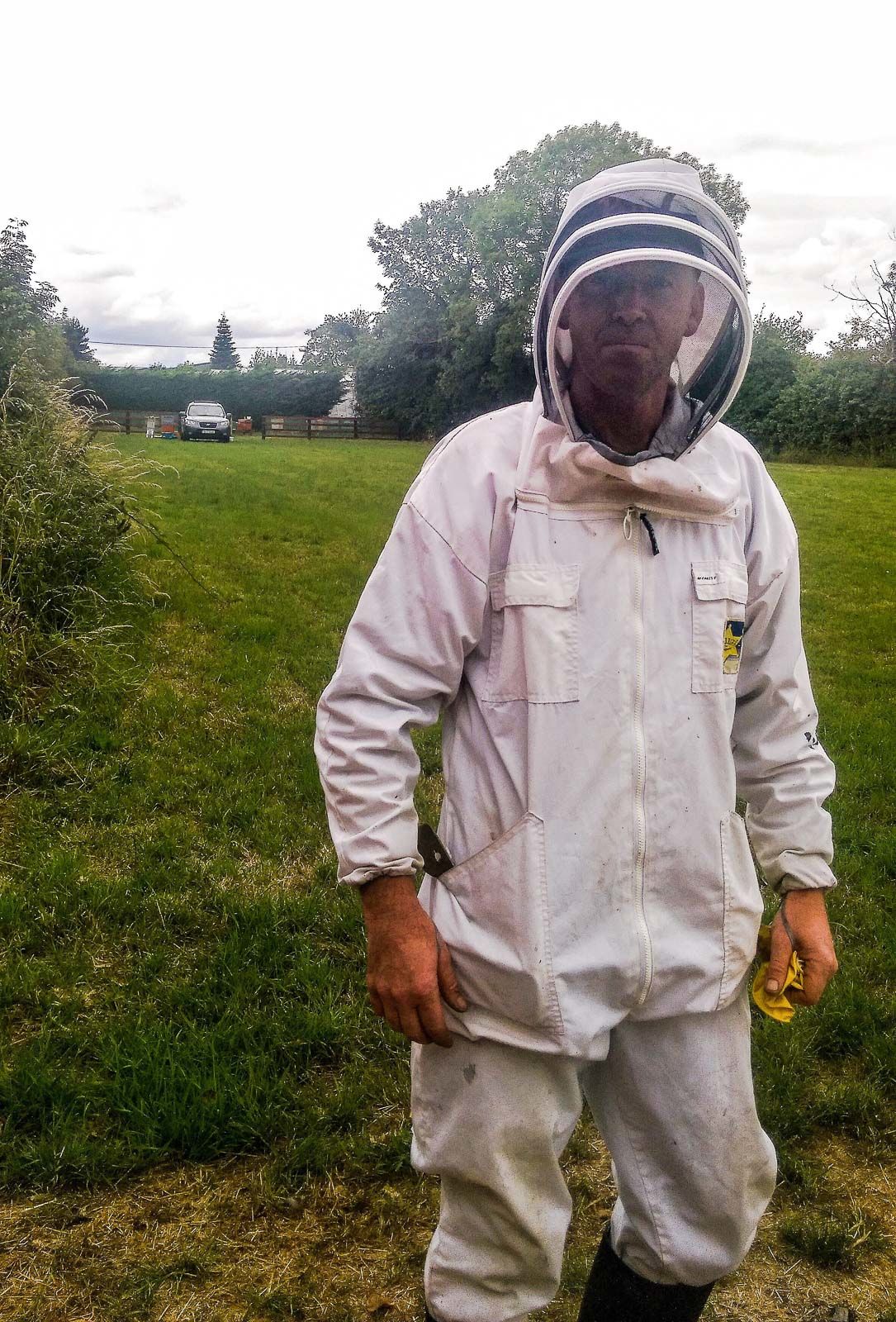
For 25 years, Finbarr Lambert had a fascination for bees and the art of beekeeping and eventually took up the practise in 2013. He finds the process of managing hives, bringing on the bees and producing natural raw honey to be a perfect way to de-stress from his day job as a firefighter. He has two apiaries, one in the North and one in the South of County Dublin. We meet at the one in the North, in Fingal, home to Keogh's potatoes and Keogh's Kettle crisps. Finbarr manages this apiary for Tom Keogh who he met through the Pollinator of Ireland Plan and The Federation of Irish Beekeepers who are working together in a government-driven plan to improve biodiversity.
It was a tad tense to start with as the bees were in a ‘tetchy’ mood. It is a typical, overcast day in Ireland, the nectar is in full flow and at the beginning of July there are new queens in ‘situ’ and a full population inhabit the hives. On approaching the hives the bees go into ‘guard’ mode and a respectful retreat is made. Finbarr fills me in regarding his bees or the ‘cranky kids’ as he calls them.
The good thing about native black Irish bees?
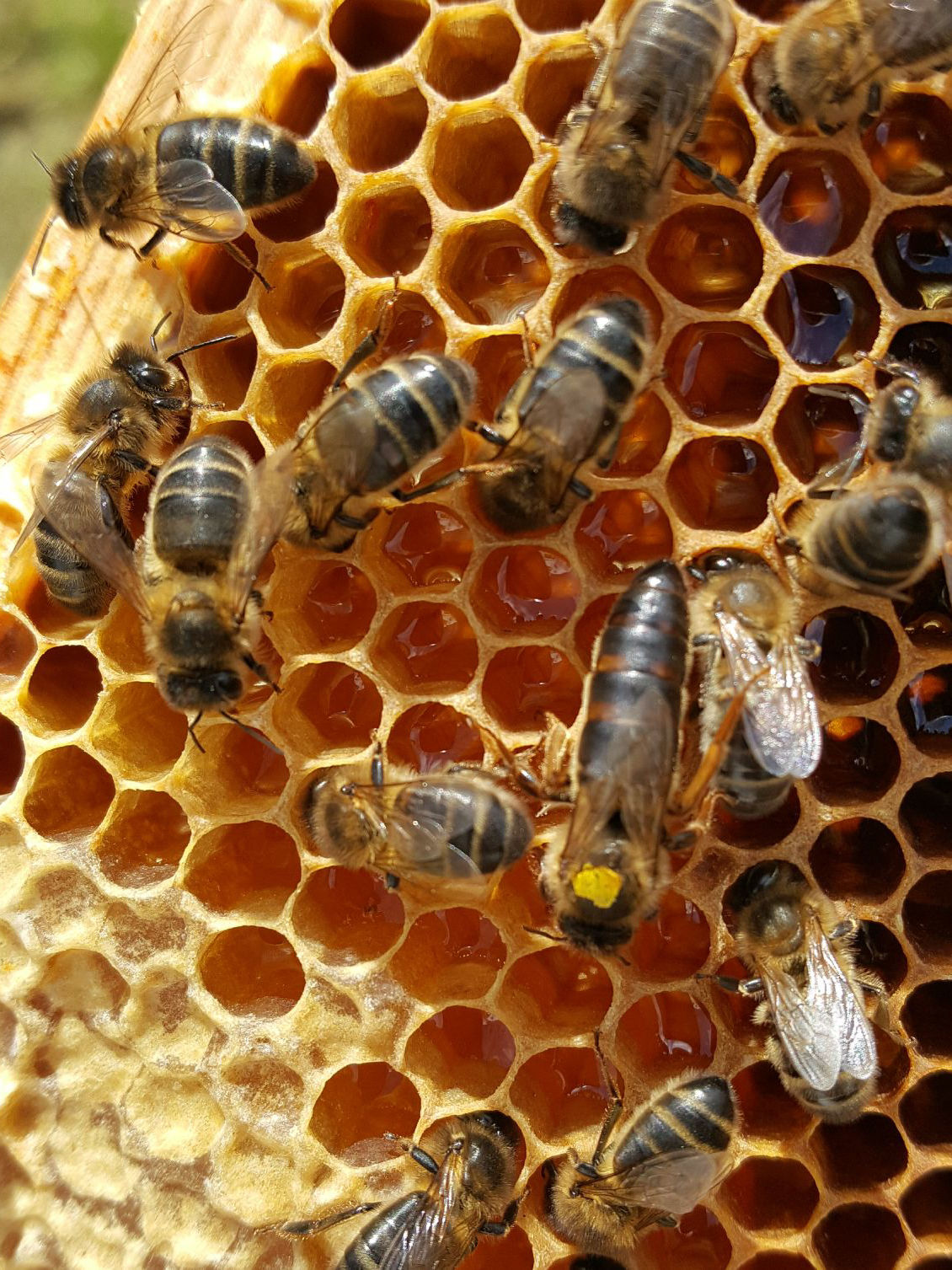
The native Irish bee is a subspecies of the Apis mellifera, the European honey bee. They are generally a passive bee and have adapted well to Irish weather over thousands of years and fare well in the harsh winters, cool springs and wet summers as opposed to their hybrid counterparts. It has evolved a larger body and has the longest dark abdominal hairs of all the European races, to help keep it warm, and with a shorter breeding season to reflect the Irish summer. Finbarr, along with many Irish beekeepers, is keen to protect them. A threat to bee populations globally is the varroa mite but Finbarr’s bees have become resistant to this parasite. Finbarr doesn’t use antibiotics but the mite has diminished anyway and he says that has come from the bees taking care of it themselves.
The best terrain for Irish bees
Ireland is known for its beautiful green fields and farming dairy, beef and growing vegetables like potatoes. They do well due to the nutrient-rich grass and high rainfall throughout the year. The Irish Black bee suits Irish weather having evolved to withstand mild rainfall and mist and is even able to gather nectar regardless of the damp conditions. Finbarr’s bees forage on plants like hawthorn, dandelions, bramble and wildflowers and deciduous trees like sycamore and chestnuts.
A taste of Irish honey
Dipping into a jar of Finbarr’s honey is like soaking in the rays of lime tree blossom, so sweet and delicious is the nectar. It is a little cloudy, which is no bad thing as it shows it is carrying the pollen and all the vitamins and minerals raw honey provides. It is a golden yellow liquid honey that Finbarr puts through a simple filtering process to remove the cappings and wax, purely for cosmetic reasons, keeping it pure and raw from the hive to the jar and the spoon.
Benefits of the Commercial hive
Finbarr uses Commercial hives with a larger brood box. He explained that leaving adequate honey stores helps his colonies through winter; 30–40 lb is approximately 14–18 kg.
The lifespan of bees
- 1-2 days old: they spend their time cleaning cells including where they were born as well as keeping the brood warm.
- 3-5 days: they feed older larvae
- 6-11 days old: they feed the youngest larvae
- 12-17 days old: they produce wax, build cells, carry food and perform undertaker duties
- 18-21 days old: they get guard duty, protecting the hive entrance
- 22 days until their death at around 40-45 days, they get to fly from the hive collecting pollen, nectar, water and pollinating plants.
The queen of bees
Finbarr marks his queens by year and watches their egg laying closely. Fertilised eggs develop into females: workers or queens, depending on how the larvae are raised. Unfertilised eggs develop into male drones. Workers forage, care for the brood and maintain the hive; drones mate with queens. Finbarr described how workers can rear a replacement queen when the colony needs one.
The challenges in beekeeping
Ireland has a relatively short honey season, and yields vary with weather and forage. For Finbarr, beekeeping is a labour of love: the hours spent tending his colonies matter as much as the jars they produce.
The pleasure of beekeeping
Beekeeping is a hobby, a passion and Finbarr gets a lot of pleasure as he sits, watches and nurtures the queens, manages the hives and mentors others. He is a member of the Fingal Beekeeper Association which offers support and encourages new beekeepers into the practice. “Some people like football, I like beekeeping” he says. Last year with 15 hives he produced 900 jars of honey and had no problem shifting them through family, friends and acquaintances. The word is out, the honey tastes great.
Other Honey Explorer posts you might like:
- A year in the life of a beekeeper in the Western Cape
- Fascinating facts about Apis Mellifera
- High Country Honey Only From New Zealand
Found this interesting? Never miss a post – sign up for our regular newsletter packed with exclusive offers, recipes, health news and much more.


