


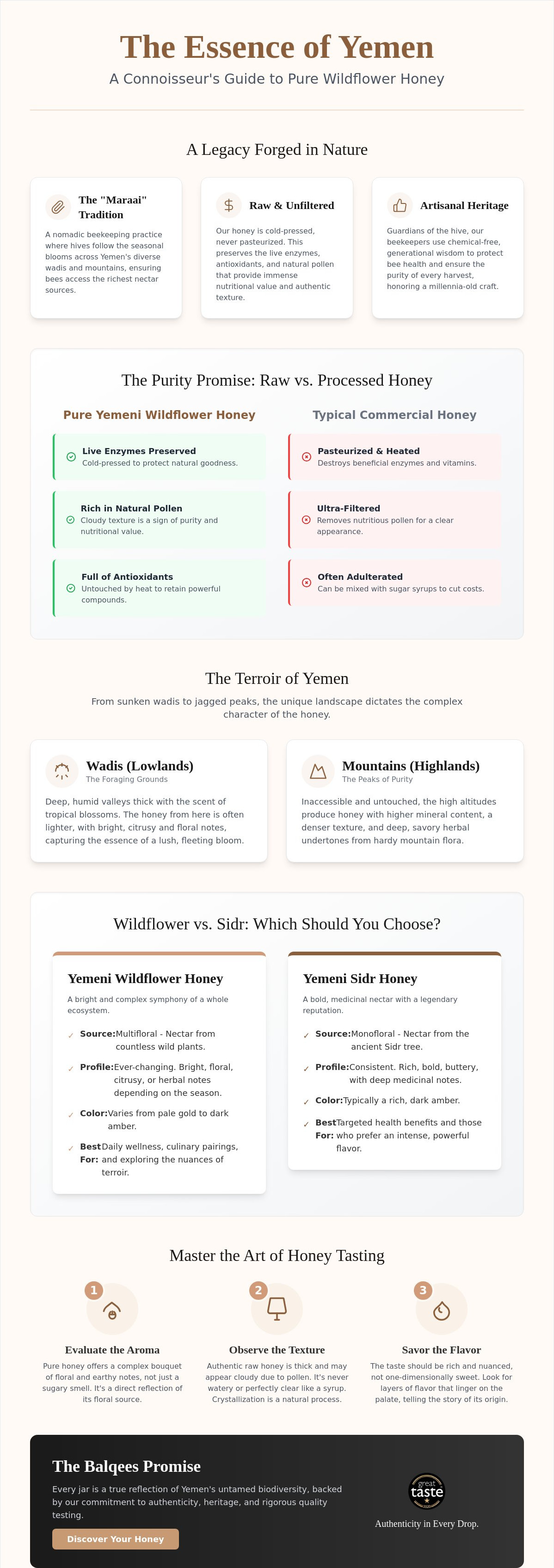
Yemeni wildflower honey brings together nectar from a range of flowers rather than being presented as one dominant floral variety. It offers a different way to explore Yemeni honey alongside Sidr.
What wildflower means
The name describes a multifloral honey; it does not identify every plant visited by the bees. The region, season and available flowers help explain why one harvest may differ from another. Avoid assuming that all wildflower honey has a fixed colour, thickness or flavour.
Taste before pairing
Try a small spoonful and notice the floral aromas, sweetness and finish. Then taste it with plain yoghurt, oats or toast. For tea, add a little at a time. Serving honey separately with cheese lets each person find their preferred balance.
Sidr and wildflower are choices of floral character, not a ranking of medical strength. If you enjoy variety, compare equal amounts beside the same food. Our Sidr-versus-wildflower guide explains the distinction without turning one into a lesser version of the other.
Choosing a jar
Look for Yemeni origin, the ingredients, weight and seller details. Ask for any more specific regional or harvest information you need. Neither a high price nor a home water test can establish authenticity. For available sizes and current information, see Yemeni Wild Flower.
Keep the lid closed and use a clean, dry spoon. Honey remains a source of sugar, so serve an amount suited to your meal. Do not give honey to infants under 12 months. For cooking ideas, explore our honey recipes rather than treating the jar as a remedy.


