


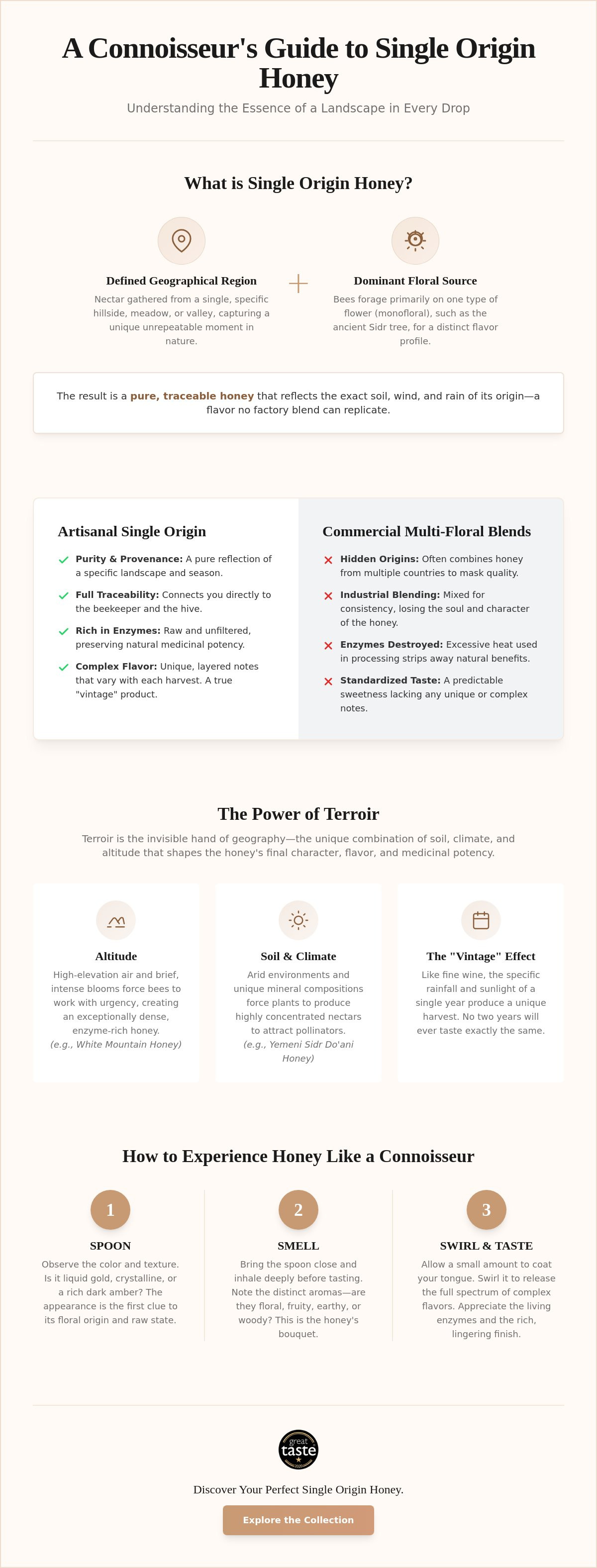
Single-origin honey describes a stated geographical source. The useful question is how specific that source is: a country, region, valley, apiary or identified harvest can each convey a different level of detail.
Geography and flowers are separate
A honey from one region may come from several flowers. Single-origin therefore does not automatically mean monofloral. Conversely, honey described by one floral source still needs a country or region to explain where it was produced.
Yemeni Sidr Do’ani combines a floral description with a regional name. White Mountain in our range comes from Kyrgyzstan. They are different origin stories; a jar sold in the UAE is not necessarily produced in the UAE.
Why seasons matter
Flowering conditions and the available forage can influence a harvest’s character. A useful tasting comparison keeps serving temperature and portion similar, then records aroma, texture and finish. Variation does not by itself prove adulteration, and identical colour cannot establish an identical origin.
Questions for the seller
Ask which place the label identifies, whether honey from different harvests is blended and how the batch can be traced. Check ingredients separately for added spices or seeds. If certification or laboratory testing is claimed, ask for the relevant evidence rather than assuming it follows from a named origin.
Choose a source you want to explore and a flavour you enjoy. Single-origin information can make a purchase more understandable, but it is not a guarantee of organic status, purity or therapeutic superiority.


