


Understanding a Sidr harvest means asking about flowers, colony care, extraction and storage. There is no single method or fixed flowering calendar that describes every beekeeper and every region.
Follow the floral source
Sidr is the floral association; the country and region describe where the honey was produced. Ask when and where the harvest took place and how the floral description was established. Weather and forage conditions can vary, so a universal harvest window is not a substitute for actual records.
Learn about the beekeeper’s method
Useful questions include how the beekeeper checks colonies, decides when to harvest and leaves adequate food for the bees. Hive designs and extraction equipment can differ. Traditional and modern equipment are not, by themselves, proof of either authenticity or poor quality.
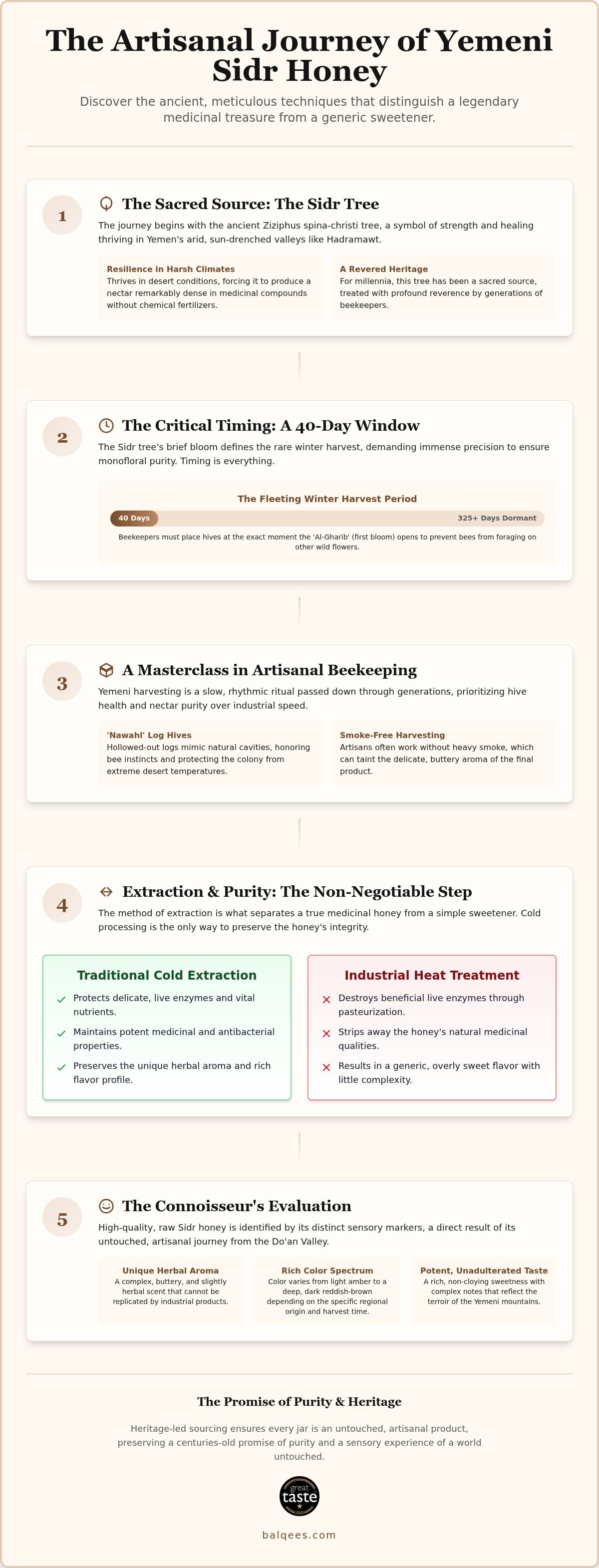
Balqees’ published sourcing stories offer context about individual beekeepers. They should not be read as a claim that all suppliers use identical tools, avoid all hive movement or follow one extraction technique.
Separate extraction from later handling
After honey is removed from the comb, ask how wax and debris are separated, whether heat is used, and how the honey is stored and packed. Terms such as raw or unfiltered need a practical explanation from the producer. Visible debris is not a required mark of authenticity.
Check the jar’s information
Origin, ingredients and batch identification connect the finished product with its sourcing story. Colour, thickness and a home water test cannot verify the entire journey. If laboratory testing is claimed, ask what sample and properties the report covers. Choose clear answers over a dramatic description of a supposedly untouched process.


