


Sidr and Manuka are different floral honeys. Compare their origin, flavour and label information before deciding which you want to eat; neither name makes an ordinary food jar a medical product.
Origin and flavour
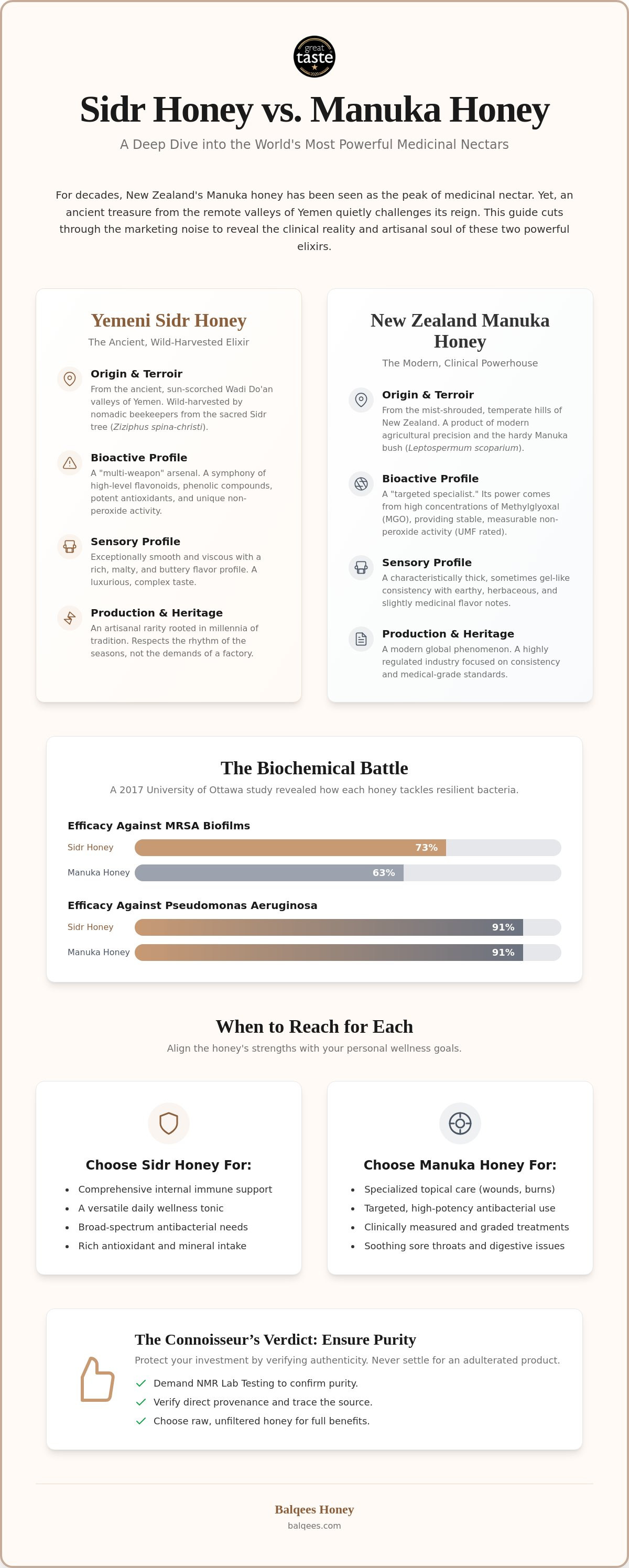
Sidr honey is associated with Sidr flowers and is produced in more than one country. Balqees Yemeni Sidr Do’ani comes from Wadi Doan and is described with rich caramel and butterscotch notes. Those notes should not be applied to all Sidr.
New Zealand Manuka is associated with mānuka flowers and can have a distinctive herbal, earthy character. Taste preferences vary, so compare small amounts beside the same plain food instead of assuming a stronger taste is better quality.
Understand the numbers
MGO refers to methylglyoxal content; it is not a measure of every property of honey. UMF is a separate certification and grading system. Check what the specific label states and verify a claimed certification with its issuer. Do not invent an equivalent MGO or UMF score for Sidr.
New Zealand’s Ministry for Primary Industries defines exported New Zealand mānuka using scientific identification criteria. That origin identification is different from proving that eating a jar treats a disease.
How to choose
For breakfast, cheese or tea, choose the flavour and price that suit you. Compare origin, jar weight, ingredients and the basis of any grade. Laboratory findings about honey or a specialised medical dressing cannot simply be transferred to a food product. Use either honey as a sweet food in appropriate portions, and never give it to infants under 12 months.


