


You might assume the most expensive jar on the shelf is the only one worth your investment. Yet, in the nuanced world of Yemeni apiculture, the debate of Sidr honey vs wildflower honey isn't about finding a singular winner. It's about matching a specific botanical soul to your personal ritual. We know it's confusing to see such vast price gaps or to worry if that golden liquid has been stripped of its life by industrial heat. You deserve clarity and purity. You want to know that what you're stirring into your tea or taking by the spoonful is as potent as nature intended.
In this guide, you'll discover the profound differences in heritage and healing potency between the legendary Raw Yemeni Sidr Do’ani Honey and the complex seasonal symphony of Yemeni Wild Flower Honey. We'll walk through the sensory markers of authenticity and provide practical ways to integrate both into a luxury wellness routine that honors ancient tradition. Whether you seek a targeted medicinal powerhouse or a broad-spectrum daily companion, understanding these nectars will change how you experience nature's liquid gold. Let's explore the secrets of the valleys and the blossoms.
Key Takeaways
- Distinguish between the rare, monofloral heritage of Raw Yemeni Sidr Do’ani Honey and the vibrant, multi-floral complexity of Yemeni Wild Flower Honey.
- Master the sensory cues of sidr honey vs wildflower honey; this allows you to identify authentic purity through color, viscosity, and aroma.
- Learn to match each nectar to your wellness goals, selecting Sidr for targeted medicinal support and wildflower for broad-spectrum daily vitality.
- Discover the essential standards of raw, unfiltered sourcing that preserve the living enzymes and potent healing properties of true Yemeni honey.
The Botanical Heritage: Monofloral Rarity vs. Multi-floral Complexity
The Yemeni landscape is a prehistoric masterpiece. Deep, sun-drenched wadis and rugged mountains create a terroir unlike any other on Earth. Here, the distinction between sidr honey vs wildflower honey begins with the very soil and the ancient trees that root within it. At Balqees, we view our honey as more than a simple sweetener. It's a living record of a specific time and place. Every jar captures the environmental conditions, the rainfall, and the botanical health of the region in a single, golden moment.
The Sacred Sidr Tree and the Art of Nomadic Beekeeping
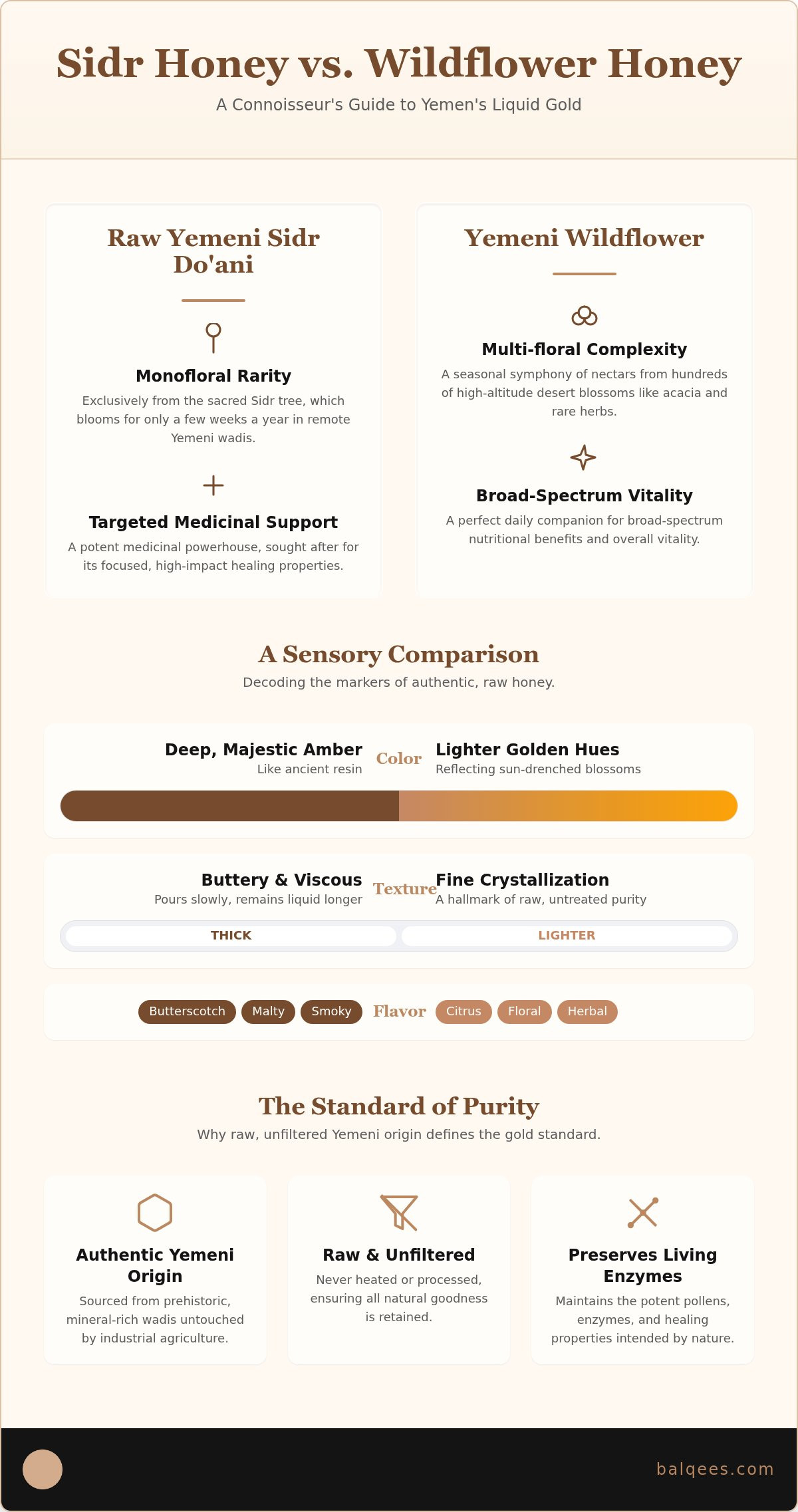
For over 3,000 years, the Sidr tree (Ziziphus spina-christi) has stood as a symbol of resilience and sacred healing. It thrives in the arid wadis of Hadramaut, pushing its roots deep into the mineral-rich earth. The prestige of Raw Yemeni Sidr Do’ani Honey stems from its monofloral rarity. The tree blooms for only a few weeks each year, typically following the winter rains. This brief, intense window requires the expertise of nomadic beekeepers who move their hives across remote valleys to ensure the bees forage exclusively on Sidr blossoms. This dedication preserves the purity of the nectar and dictates its immense value.
Wildflower Honey: A Multi-floral Tapestry
While Sidr honey offers a singular botanical focus, our Yemeni Wild Flower Honey is a celebration of mountain diversity. The high-altitude landscapes of Yemen are home to a staggering array of flora, ranging from hardy acacia trees to rare, fragrant desert herbs. Every batch of this honey tells a different story. It's a reflection of the specific blossoms that were most vibrant during the forage. Yemeni Wild Flower Honey is a seasonal symphony where the bees orchestrate a complex chorus of nectars from hundreds of high-altitude desert blossoms.
The nutrient density found in these nectars is a direct result of the prehistoric landscape. The soil in these remote wadis remains untouched by modern industrial agriculture or chemical fertilizers. It's naturally rich in minerals and ancient vitality. We believe this untouched environment creates a standard of purity that supermarket alternatives simply cannot replicate. Whether you choose the focused intensity of the Sidr bloom or the broad-spectrum energy of the mountain wildflowers, you're experiencing the essence of the land itself. It's a connection to a tradition that has remained unchanged for millennia.
A Sensory Comparison: Decoding Color, Texture, and Flavor Profiles
Choosing between sidr honey vs wildflower honey is a journey for the senses. It begins the moment you lift the lid. Visual aesthetics tell the first part of the story. Raw Yemeni Sidr Do’ani Honey presents a deep, majestic amber that catches the light like ancient resin. In contrast, Yemeni Wild Flower Honey often leans toward golden, lighter hues, reflecting the sun-drenched mountain blossoms of its origin. The aroma is equally telling. Authentic raw honey carries an earthy, slightly medicinal scent. It’s the fragrance of the wild Wadi, untouched and potent. You can almost smell the dry heat of the desert and the resilient life of the trees.
The Texture of Luxury
The tactile experience on the palate is where Sidr truly distinguishes itself. It's famously buttery and "stringy." This high viscosity means it pours with a slow, deliberate grace. Interestingly, Sidr honey remains liquid for much longer than most varieties. This isn't due to processing; it's a result of its unique natural sugar profile. On the other hand, you might notice your Yemeni Wild Flower Honey developing a fine, sugary grain over time. Don't mistake this for spoilage. Crystallization is a hallmark of raw, untreated purity. It indicates that the living enzymes and natural pollens are still very much intact and active within the jar.
Flavor Notes for the Connoisseur
The palate journey of Sidr is one of bold, malty intensity. You'll find notes of butterscotch and a hint of smoke, rounded out by a rich, persistent finish. It's a flavor that demands your full attention. The finish of Sidr honey is a long, warming resonance that lingers at the back of the throat with a velvety, medicinal weight. Wildflower honey offers a different rhythm. It’s bright and refreshing. You’ll detect subtle hints of citrus and wild mountain herbs, finishing with a clean sweetness that doesn't overwhelm. It’s the perfect companion for those who prefer a lighter, more floral experience. If you're looking for a way to experience these contrasts, our Honey Gifting Sets provide a curated introduction to these distinct profiles.
Understanding these sensory markers helps you identify true quality. A honey that is too thin or lacks a complex aroma has likely been heat-treated or diluted. Whether it's the thick, caramel-like embrace of Sidr or the dancing, herbaceous notes of Wildflower, the texture and taste are your best guides to authenticity. Each spoonful is a sensory bridge to the remote landscapes of Yemen.
The Wellness Spectrum: Therapeutic Potency and Nutritional Differences
Beyond the sensory delight of these nectars lies a profound medicinal depth. When comparing sidr honey vs wildflower honey, we must look past the sweetness to the microscopic compounds that define their character. Both are rich in antioxidants and enzymes; however, their therapeutic focus differs significantly. Raw, cold-pressed honey acts as a biological catalyst. It supports the immune system and aids digestion in ways that heat-treated supermarket alternatives cannot match. By maintaining the integrity of the nectar, we ensure that every jar remains a potent tool for wellness.
Sidr: The Medicinal Powerhouse
Raw Yemeni Sidr Do’ani Honey is frequently compared to medical-grade Manuka, and for good reason. Its effectiveness against bacteria is driven by high levels of non-peroxide activity. This unique chemical profile allows it to remain stable and active even when exposed to light or heat. Traditionally, families have turned to Sidr for generations to soothe persistent respiratory issues and balance digestive discomfort. The bioactive nature of raw Sidr honey creates a hostile environment for pathogens while simultaneously nourishing the body’s internal systems. Its antimicrobial power is a testament to the resilience of the Ziziphus tree, concentrated into a single, golden drop.
Wildflower: The Daily Immunity Companion
If Sidr is the targeted specialist, Yemeni Wild Flower Honey is the broad-spectrum guardian. Because it's harvested from a vast array of high-altitude flora, it contains a diverse spectrum of pollens and phytonutrients. This variety is essential for supporting a healthy, adaptable immune response. It acts as a natural prebiotic, feeding the beneficial bacteria in your gut and fostering a balanced internal ecosystem. To truly understand why this raw state is non-negotiable, you can explore the Raw Honey vs Commercial Honey: The Unfiltered Truth. This guide highlights how industrial processing strips away the very enzymes that make wildflower nectar so beneficial for daily vitality.
Both varieties excel at combating oxidative stress. The high antioxidant content helps neutralize free radicals, protecting your cells from the wear of modern life. Whether you reach for the surgical precision of Sidr or the holistic support of Wildflower, you're choosing a living product. This enzymatic activity is the heartbeat of the honey. It's the difference between a simple food and a functional medicine. By integrating these treasures into your routine, you're not just eating; you're healing.
The Connoisseur’s Choice: Matching Nectar to Your Daily Rituals
Living with honey is about intentionality. It isn't just a pantry staple; it's a sophisticated tool for living well. Integration into a luxury wellness routine requires more than just a spoon. It requires an understanding of how these nectars interact with your body's natural rhythms. The choice of sidr honey vs wildflower honey often comes down to the specific energy you wish to cultivate at different times of the day.
Morning and Evening Wellness
Start your day with Yemeni Wild Flower Honey. Its bright, citrus-toned sweetness is ideal for waking up the digestive system. Stirring a teaspoon into warm water acts as a gentle catalyst for metabolic activation. It provides a clean, energetic lift without the spike of refined sugars. Conversely, reserve your Raw Yemeni Sidr Do’ani Honey for the evening. Taking a spoonful before bed supports restful sleep and facilitates cellular repair during the body's deep recovery phase. This rhythmic approach ensures you benefit from both broad-spectrum vitality and targeted medicinal support. You can find more inspiration for these habits in our guide on Honey for Daily Wellness.
Tea and Coffee Pairings
The delicate profile of wildflower nectar makes it the best honey for tea. It enhances the floral notes of green or white teas without masking the leaves' subtle character. For those who prefer a robust morning coffee or a bold herbal infusion like ginger or cinnamon, Sidr is the superior choice. Its malty, butterscotch undertones stand up to strong flavors, adding a velvety depth that mimics the richness of caramel. For daily maintenance, a single teaspoon of wildflower honey suffices. During times of acute physical stress or recovery, increasing your intake of Sidr honey to two tablespoons daily provides the concentrated bioactive support your system requires.
Beyond the cup, consider the culinary synergy of these honeys. Wildflower honey pairs beautifully with fresh goat cheese or drizzled over warm, artisanal sourdough. Sidr honey, with its smoky finish, is a revelation when served alongside aged, salty cheeses like Manchego. When the occasion calls for a gesture of profound respect, Raw Yemeni Sidr Do’ani Honey remains the gold standard for heritage gifting. It’s a gift that speaks of history, purity, and a deep connection to the earth. To begin your own collection of these liquid treasures, explore our full range of Yemeni honey varieties.
Sourcing Integrity: Why Raw Yemeni Origin Defines the Standard
The journey from the remote, sun-baked wadis of Yemen to your table is a path of stewardship. At Balqees, we don't just sell honey; we protect a lineage. When evaluating sidr honey vs wildflower honey, the geographical origin is the most critical factor in determining medicinal value. The mineral-rich soils of the Hadramaut region produce nectars with enzymatic profiles that are simply impossible to replicate in other climates. We maintain a direct, transparent supply chain with nomadic beekeepers who treat their craft as a sacred trust. This ensures that every drop remains untouched by industrial shortcuts or chemical additives.
The Pitfalls of Processed Honey
Commercial honey is often a shadow of its natural self. Industrial pasteurization and ultra-filtration destroy the very enzymes and pollens that provide healing benefits. By heating the honey to high temperatures, manufacturers ensure a shelf-stable liquid, but they effectively kill the "living" nature of the product. This is why supporting sustainable beekeeping honey is so vital. Ethical apiculture prioritizes the health of the hive and the purity of the harvest over high-volume output. Transparency in origin isn't just a marketing claim; it's the only true guarantee of quality in a market often flooded with diluted or heat-treated alternatives.
A connoisseur identifies authentic raw Yemeni nectar through specific markers. Real honey smells of the wild landscape, carrying earthy and floral notes rather than just simple sugar. Raw honey will often show a fine, frothy layer of bubbles at the top, indicating active enzymes. Finally, look for verification of non-peroxide activity, especially for Sidr varieties, to ensure you're receiving the medicinal potency you expect.
A Legacy in Every Jar
Balqees was founded by Riath Hamed with a singular mission: to preserve Yemeni traditions and share their liquid gold with the world. Every jar of Raw Yemeni Sidr Do’ani Honey or Yemeni Wild Flower Honey is an investment in both your personal health and the preservation of a culture that dates back millennia. We aren't just a retailer. We're guardians of an ancient craft. Choosing premium, raw honey means you're participating in a story of resilience and artisanal excellence. Ready to experience the difference for yourself? Explore our collection of Yemeni Sidr and Wildflower honey at Balqees and bring the soul of the wadi into your home.
Embrace the Alchemy of the Yemeni Wadi
Choosing between sidr honey vs wildflower honey isn't about finding a superior nectar; it's about honoring the specific needs of your body and soul. You've seen how the monofloral rarity of Raw Yemeni Sidr Do’ani Honey serves as a targeted medicinal powerhouse. In contrast, the seasonal symphony of Yemeni Wild Flower Honey offers broad-spectrum daily vitality. Both represent a commitment to purity that stands in stark contrast to the heat-treated, ultra-filtered alternatives found in many supermarkets. Our honey remains living. It's enzymatic and deeply connected to the land.
Sourced directly from Yemeni valleys through an artisanal beekeeping heritage, every jar preserves the unfiltered, raw, and cold-pressed essence of the wild. Whether you seek the malty depths of Sidr for evening recovery or the bright energy of Wildflower to start your morning, you're investing in a legacy of wellness. Discover the rare nectars of Yemen at Balqees and begin your journey into a world of sensory excellence. Your ritual deserves nothing less than nature's most potent treasures. Nature provides the cure; we simply ensure it reaches you untouched.
Frequently Asked Questions
Is Sidr honey better than wildflower honey for my health?
The choice depends entirely on your specific wellness goal. Raw Yemeni Sidr Do’ani Honey is a medicinal powerhouse with high non-peroxide activity, making it ideal for acute recovery or targeted digestive support. Yemeni Wild Flower Honey provides broad-spectrum vitality through a diverse array of mountain pollens. Both are essential in a luxury wellness routine. The debate of sidr honey vs wildflower honey isn't about quality; it's about matching the nectar’s potency to your body's current needs.
Why is Yemeni Sidr honey so much more expensive?
The higher cost of Sidr honey reflects its extreme rarity and the labor-intensive nature of its harvest. The Sidr tree blooms for only a few weeks each year. Nomadic beekeepers must transport hives into remote, rugged valleys to ensure the bees forage exclusively on these sacred blossoms. This monofloral purity, combined with the low yield of the Wadi landscape, creates a limited supply that justifies its status as a premium heritage treasure.
Can I use wildflower honey for a sore throat?
Yes, you can certainly use wildflower honey to soothe a sore throat. Its natural antimicrobial properties and thick, coating texture provide immediate relief from irritation. While Sidr honey is often preferred for its intense antibacterial strength during acute illness, wildflower nectar offers a gentler alternative for daily maintenance. Stirring a teaspoon into warm water helps activate the throat's natural defenses while providing a boost of broad-spectrum mountain phytonutrients.
Does raw wildflower honey crystallize faster than Sidr honey?
Raw wildflower honey generally crystallizes faster than Sidr honey due to its higher glucose content and diverse pollen variety. This process is a natural sign of purity, indicating that the honey hasn't been heat-treated or ultra-filtered. Sidr honey has a unique sugar profile that allows it to remain liquid and viscous for much longer. If your wildflower honey becomes grainy, simply warm the jar gently in water below 40°C to restore its original flow.
How can I tell if my Yemeni honey is authentic?
Authenticity is found in the sensory details. Real Yemeni honey has a deep, complex aroma that smells of the desert and wild herbs; it's never just one-dimensionally sweet. Look for the "stringy" viscosity characteristic of Sidr or the fine enzymatic foam often found at the top of raw jars. Most importantly, ensure your supplier provides transparency regarding the specific Yemeni valley of origin and maintains a direct relationship with artisanal beekeepers who avoid industrial processing.
Which honey is best for daily immune support in the UAE?
Yemeni Wild Flower Honey is often the best choice for daily immune support. Because it's harvested from hundreds of different high-altitude blossoms, it provides a wide range of antioxidants and prebiotics. This multi-floral complexity helps the body maintain a balanced and resilient immune system over time. While Sidr is excellent for targeted healing, the wildflower variety serves as an accessible, nutrient-dense companion for your morning wellness ritual and long-term vitality.
What does "raw and unfiltered" actually mean for honey quality?
Raw and unfiltered means the honey has never been heated above the natural temperature of the hive. We avoid pasteurization and fine-mesh filtration to preserve the "living" components of the nectar. This ensures that the delicate enzymes, amino acids, and medicinal pollens remain intact. When honey is industrially processed, these heat-sensitive compounds are destroyed, leaving behind a simple syrup that lacks the therapeutic potency and rich flavor of our artisanal Yemeni offerings.
Can I give Sidr or wildflower honey to my children?
You can safely introduce both varieties to children over the age of twelve months. Honey is a wonderful natural energy source and a gentle way to support a growing immune system. However, it's vital to remember that honey should never be given to infants under one year old due to the risk of botulism. For older children, a daily spoonful of wildflower honey is a delicious way to integrate ancient wellness and pure nutrition into their modern diet.


