


What if the world's most revered medicinal nectar owes its remarkable potency not to modern refinement, but to centuries of untouched desert isolation? For connoisseurs, authentic raw Yemeni Doani honey represents the absolute pinnacle of artisanal apiculture, born from ancient Sidr trees flourishing in secluded arid valleys. Yet, with industrial syrups and heat-treated jars increasingly common on store shelves, finding genuine liquid gold poses a real challenge. What truly makes raw Yemeni Doani honey so exceptional, and how can you verify its authenticity with complete confidence?
If you've ever felt hesitant about ambiguous origins or questionable purity claims, your caution is entirely justified. You deserve absolute transparency regarding the harvests you bring into your home. In this guide, you'll discover the ancient heritage of this sacred nectar, explore the distinct biochemical properties that set it apart, and learn how to evaluate aroma, texture, and independent lab certifications. Consider this your definitive masterclass in identifying and appreciating single-origin Sidr harvests in their purest, unpasteurized form.
Key Takeaways
- Understand why authentic raw Yemeni Doani honey commands global reverence, shaped by secluded desert valley microclimates and ancient, unheated harvesting traditions.
- Explore the exceptional biochemical profile behind this nectar, where elevated phenolic compounds and living enzymes fuel extraordinary natural potency.
- Master the art of identifying genuine Sidr through distinct sensory markers, from slow-pouring viscosity and warm butterscotch notes to essential lab verifications.
- Discover the proper handling and storage techniques needed to shield fragile bioactive compounds from heat, light, and ambient humidity.
- Learn how transparent, direct beekeeper relationships protect generational nomadic heritage while guaranteeing pure, unadulterated harvests.
What Is Raw Yemeni Doani Honey and Why Is It Legendary?
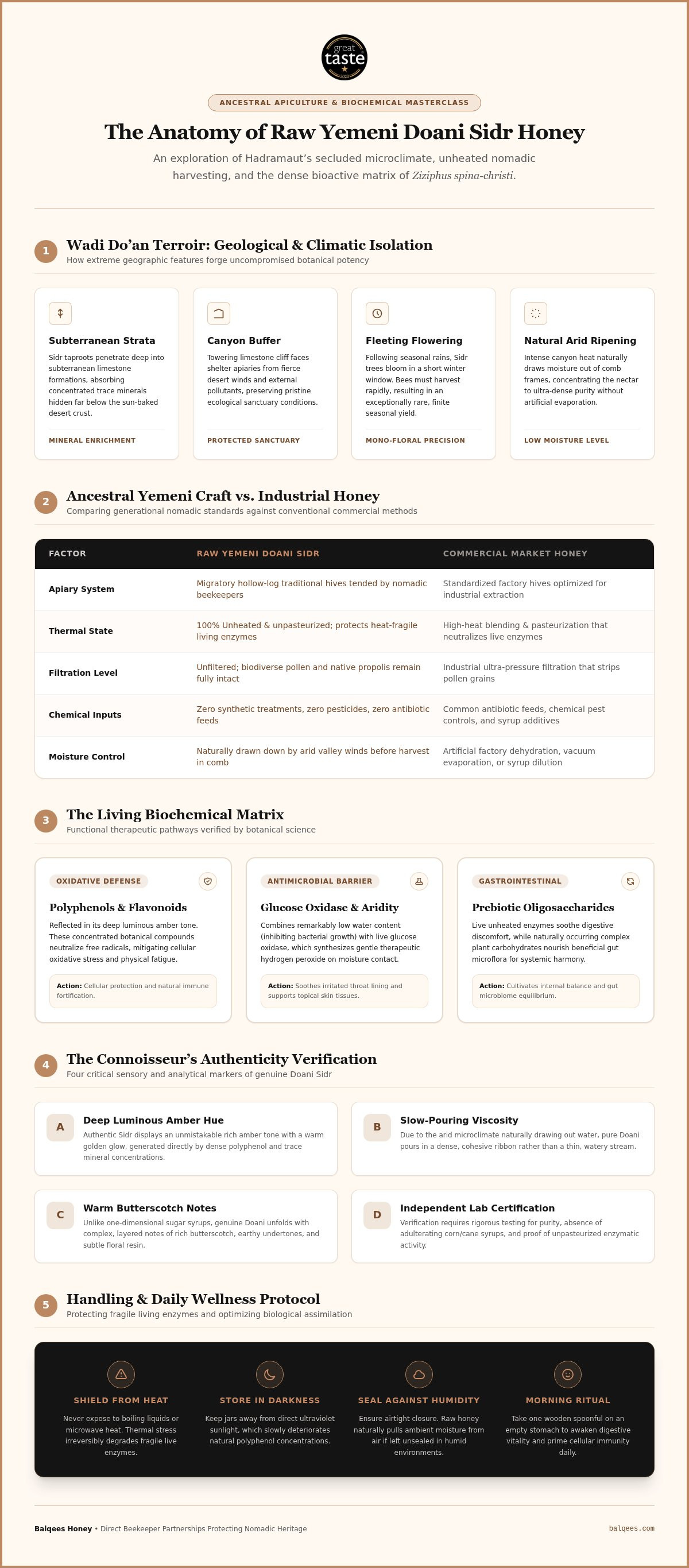
Deep within the arid valleys of Hadramaut, apiculture remains an art of patience and ancestral reverence. Authentic raw Yemeni Doani honey is a rare, mono-floral nectar harvested from remote desert ravines where natural ecosystems remain pristine. Unlike conventional supermarket honeys stripped of life through industrial heat and pressure filtration, genuine raw Doani honey remains completely unpasteurized. This deliberate restraint keeps fragile living enzymes, native propolis, and bio-diverse pollen intact, preserving the vitality of the hive exactly as nature intended.
Modern commercial honey relies on high-heat blending, fine filtration, and artificial adulteration to achieve cheap uniformity. Ancestral Yemeni apiculture rejects every part of that paradigm. It honors living biology over industrial convenience, allowing the integrity of the harvest to speak for itself.
The Sacred Botany of the Sidr Tree
Central to this legendary status is Ziziphus spina-christi, an ancient desert tree revered across centuries of regional literature and ancient scripture. The tree's botanical resilience is remarkable. Its extensive taproots drive deep into subterranean limestone strata, absorbing rich trace minerals hidden far beneath the sun-baked crust. Following seasonal rains, the Sidr blossoms in a brief, fleeting winter flowering window. Bees must harvest this pristine nectar rapidly, producing an exceptionally limited and precious yield that cannot be replicated anywhere else on earth.
Wadi Do'an: A Microclimate of Mineral-Rich Isolation
Terroir defines the final character of the honey. Wadi Do'an is a dramatic expanse of sheer limestone canyons that naturally insulate desert apiaries from pollutants and agricultural contamination. These towering cliff faces create an extraordinary microclimate; they buffer colonies from harsh desert winds while concentrating intense, dry heat across the valley floor. That arid atmosphere naturally draws moisture out of the comb, creating a dense, rich nectar without artificial evaporation. Within this protected sanctuary, generational nomadic beekeepers migrate with traditional hollow-log hives, refusing synthetic treatments, pesticides, or antibiotic feeds. Savoring true raw Yemeni Doani honey means experiencing this uncompromised geological isolation and living heritage in its purest state.
The Bioactive Properties and Health Benefits of Doani Honey
Beyond its rare sensory profile, raw Yemeni Doani honey operates as a living biochemical compound. Its therapeutic reputation is not folklore; it is grounded in a dense matrix of micronutrients, flavonoids, and active enzymes created by bees foraging on wild desert flora. When left unfiltered and unheated, this amber nectar delivers a spectrum of restorative properties that synthetic supplements simply cannot mirror.
Antioxidant Density and Immune Fortification
The deep, luminous amber tone of Doani nectar reflects an extraordinary concentration of polyphenols and flavonoids. These botanical compounds neutralize free radicals, protecting cells from everyday oxidative stress and physical fatigue. Connoisseurs often practice a quiet morning ritual: taking a single wooden spoonful on an empty stomach to awaken digestive vitality and bolster natural immune defenses for the day ahead.
Natural Antimicrobial Power and Tissue Support
What gives this honey its formidable protective strength? It comes down to internal biochemistry and natural arid physics. Because bees ripen the nectar until it reaches remarkably low moisture levels, harmful bacteria cannot survive within it. Simultaneously, active glucose oxidase synthesizes gentle, therapeutic hydrogen peroxide upon contact with moisture. This natural reaction makes it deeply soothing, whether consumed to coat an irritated throat or applied topically to nourish sensitive skin tissues.
Digestive Harmony and Prebiotic Balance
Within the gastrointestinal tract, live raw enzymes ease digestive discomfort while naturally occurring oligosaccharides nourish beneficial gut microflora. These plant-derived carbohydrates act as clean prebiotics, fostering harmony throughout the digestive ecosystem. Incorporating raw Yemeni Doani honey into your daily regimen aligns seamlessly with intentional restorative protocols, much like the morning habits explored in honey for daily wellness. If you appreciate functional nutrition in its most authentic state, discovering Balqees pure harvests offers a direct connection to these centuries-old restorative practices.
How to Identify Authentic Raw Yemeni Sidr Do'ani Honey
The global prestige of raw Yemeni Doani honey makes it a prime target for industrial imitation. Dilution with inexpensive corn syrups, covert cane sugar blending, and aggressive heat pasteurization strip away medicinal value, leaving behind hollow sweetness. Discerning authentic harvest from commercial illusion requires tuning into subtle sensory markers and demanding transparent laboratory proof.
| Evaluation Marker | Authentic Raw Doani Sidr | Adulterated Commercial Honey |
|---|---|---|
| Aroma & Palate | Warm butterscotch, desert resin, and lingering herbal depth | One-dimensional sweetness without botanical nuance |
| Texture & Flow | Dense, velvety viscosity; clings deliberately to the spoon | Thin, watery consistency that dissolves immediately |
| Enzyme Vitality | Unpasteurized with active diastase and living microflora | Deactivated by flash-heating to prevent crystallization |
Sensory Profiling: Color, Texture, and Fragrance
True honey connoisseurs evaluate purity through the senses first. Genuine Raw Yemeni Sidr Do'ani Honey ranges from warm liquid gold to rich, radiant amber, subtly deepening across seasons. Its movement is slow and deliberate. Thanks to dry valley winds, natural moisture remains exceptionally low, creating a dense, velvety consistency that pools gracefully. Scent the jar before tasting: an authentic harvest greets you with notes of warm wood, caramel, and dry desert earth. It doesn't overwhelm with cloying sugar. Instead, it reveals layered complexity, finishing with a delicate, herbal warmth at the back of the palate.
Laboratory Standards and Purity Biomarkers
Sensory intuition should always be corroborated by independent scientific testing. When investing in true raw Yemeni Doani honey, look for three essential laboratory verifications:
- Hydroxymethylfurfural (HMF): HMF accumulates when honey is artificially heated or excessively aged. Low HMF readings confirm the honey never encountered damaging pasteurization temperatures.
- Diastase Enzyme Activity: Diastase is an active enzyme introduced by honeybees. Elevated diastase numbers verify that the honey remains raw, bio-potent, and enzymatically intact.
- Pollen Melissopalynology: Microscopic analysis identifies indigenous botanical pollen grains, definitively tracing the nectar back to Hadramaut's desert valleys.
How to Store and Consume Raw Honey to Protect Its Potency
Securing an authentic jar is only the first step. Because raw Yemeni Doani honey is a living biological substance, preserving its therapeutic efficacy requires thoughtful daily handling. Delicate heat-sensitive enzymes like diastase and invertase unravel quickly when exposed to high temperatures, turning a rare medicinal treasure into simple table sweetener. Knowing how to preserve this fragile vitality ensures every spoonful delivers its intended restorative power.
Thermal Guidelines for Wellness Rituals
Heat remains the greatest threat to unpasteurized honey. Never stir raw Doani nectar directly into boiling water or freshly steeped teas. Instead, let your herbal infusions cool until the cup feels comfortably warm to the touch, ideally close to human body temperature, before blending. This mindful pause shields the honey's native enzymes and volatile floral aromatics from thermal destruction. To elevate your morning beverage without degrading active botanicals, explore thoughtful infusion pairings in our guide to the best honey for tea.
Preserving Live Enzymes in Daily Storage
Storage conditions dictate how gracefully your honey ages over time. Follow these essential guidelines to protect its delicate internal harmony:
- Keep jars sealed in a cool, dark cupboard: Ambient room temperature shields fragile micronutrients from photodegradation caused by direct sunlight.
- Avoid refrigeration: Chilling accelerates crystallization prematurely and alters the velvety, slow-pouring texture that defines pristine Sidr harvests.
- Use clean, dry utensils: Moisture introduced by wet metal spoons can trigger fermentation. Opt for untreated wooden dippers or ceramic spoons to prevent oxidation and protect purity.
Should your raw Yemeni Doani honey crystallize over several months, don't worry. Natural crystallization is definitive proof of an unheated, unfiltered harvest. To restore its original liquid silkiness, place the tightly sealed glass jar in a warm water bath below 40 degrees Celsius, gently stirring until the crystals soften. Ready to experience nature's uncompromised medicinal vitality? Explore our artisanal collection at Balqees Honey to bring authentic single-origin Sidr into your daily wellness rituals.
Where to Source Pure Raw Yemeni Sidr Do'ani Honey
Sourcing exceptional honey requires looking past mass commercial distributors. Most supermarket shelves stock honey funneled through opaque international supply chains, where harvests from multiple regions are pooled, micro-filtered, and subjected to high-heat blending. This industrial approach prioritizes uniform volume over botanical integrity. In stark contrast, true connoisseurs seek out direct relationships that respect the land, the apiarists, and the raw living character of each seasonal bloom.
The Balqees Commitment to Ethical Yemeni Beekeeping
Authentic apiculture cannot be rushed. Balqees Honey was founded to serve as an artisanal guardian of these ancient harvesting traditions. By collaborating directly with generational nomadic beekeepers across the valley floors of Hadramaut, we ensure every jar honors its historical origin. Our beekeepers work with traditional hollow-log hives, moving with the seasonal flowering cycles of the wilderness.
Purity demands patience. We never subject our harvests to chemical treatments, artificial feeding, pasteurization, or fine pressure filtration. Every harvest batch undergoes thorough third-party laboratory verification, ensuring you receive completely raw Yemeni Doani honey just as the bees sealed it within the comb. This direct partnership model does more than secure unadulterated quality; it provides fair, sustainable economic support to rural beekeeping families who keep this rare cultural heritage alive.
Selecting the Perfect Harvest for Your Collection
Curating your home apiculture cellar is a deeply personal journey. Whether you're seeking a restorative morning tonic or an unforgettable gift for someone special, selecting the right single-origin harvest makes all the difference:
- Raw Yemeni Sidr Do'ani Honey: The undisputed jewel of Hadramaut. Unfiltered, deeply fragrant, and rich in natural bioactive compounds, this classic jar represents artisanal monofloral honey at its finest.
- Functional Botanical Blends: Elevate your daily routine by pairing raw nectar with potent herbs in creations like Black Seed Fusion and Raw Honey & Ginseng Fusion.
- Artisanal Presentations: Celebrate special milestones or introduce someone you care about to rare apiculture traditions with curated premium honey gift sets.
True honey is an invitation to slow down and savor the earth's quiet wisdom. When you are ready to enrich your personal wellness ritual with authentic liquid gold, experience pure Raw Yemeni Sidr Do'ani Honey from Balqees Honey and taste centuries of untouched heritage in every single drop.
Savor the Living Heritage of Pure Wadi Do'an
True raw Yemeni Doani honey is far more than a rare delicacy; it's a direct connection to an ancient botanical tradition. From the sun-baked limestone canyons of Hadramaut straight to your table, its remarkable potency depends entirely on keeping the harvest unheated, unadulterated, and enzymatically alive.
When you seek out genuine single-origin jars, you aren't just nourishing your body with active antioxidants and protective enzymes. You're actively safeguarding a generational craft. Balqees provides 100% pure, raw, and unfiltered single-origin harvests gathered through artisanal nomadic beekeeping honoring traditional Yemeni heritage. Each jar is independently verified for authentic purity, active enzymes, and botanical origin, giving you complete certainty with every drop. It's time to transform your daily rituals with nectar of unmatched depth. Experience authentic Raw Yemeni Sidr Do'ani Honey from Balqees Honey and taste nature's most sacred gift as it was truly meant to be enjoyed.
Frequently Asked Questions
What makes Doani honey different from other varieties of Sidr honey?
Doani honey comes specifically from the isolated limestone valleys of Wadi Do'an in Hadramaut, giving it a distinctive terroir unmatched by other Sidr varieties. The canyon's intense arid heat naturally reduces moisture, creating a thicker consistency and higher concentration of minerals. Coupled with generational nomadic traditions that avoid all synthetic treatments, this unique microclimate produces a deeper flavor profile, warmer butterscotch undertones, and a remarkably potent biochemical composition compared to standard Sidr harvests.
Why is raw Yemeni Doani honey considered one of the rarest honeys globally?
Extreme environmental rarity makes raw Yemeni Doani honey exceptionally scarce. Sidr trees blossom only once or twice a year for a brief window following seasonal rains in remote desert ravines. Harvesting requires generational nomadic beekeepers to transport hollow-log hives across rugged mountain terrain entirely by hand. Unpredictable weather patterns and regional logistical hurdles further limit annual yields, making this unpasteurized desert nectar one of the most sought-after harvests in global apiculture.
Can boiling water or hot tea ruin the beneficial properties of raw honey?
Yes, high heat quickly destroys the beneficial living compounds found in raw honey. Temperatures above warm body heat permanently denature delicate therapeutic enzymes like diastase, invertase, and glucose oxidase, while degrading volatile floral antioxidants. To safeguard its restorative potency, brew your tea or infusion first and allow the cup to cool until comfortably warm to the touch before stirring in a spoonful. That gentle pause preserves the nectar's vital healing properties.
How can I tell if my raw Yemeni honey is pure without lab equipment?
You can evaluate purity through sensory assessment and simple physical checks. Authentic Sidr honey features a slow, dense flow that forms soft ribbons rather than splashing like syrup. In cold water, pure raw honey drops straight to the bottom without instantly dissolving. On the palate, expect layered notes of warm butterscotch, wild herbs, and wood resin that linger gently at the back of your throat, rather than an aggressive, one-dimensional sugar burst.
Does raw Yemeni Sidr Do'ani honey ever expire or spoil over time?
Properly stored raw Yemeni Sidr Do'ani Honey does not expire or spoil. Its natural chemistry; exceptionally low moisture content, gentle acidity, and active antimicrobial enzymes; creates an environment where bacteria and wild yeasts cannot survive. While the honey may gradually darken or develop soft natural crystallization after several months, these shifts are hallmarks of pure, living apiculture. Kept sealed away from humidity, your jar retains its restorative vitality for years.
Why should I avoid using metal spoons when scooping authentic raw honey?
Untreated raw honey maintains a naturally low, acidic pH that can react with certain reactive metals. Over time, scooping with metallic utensils can cause mild oxidation, subtly altering the nectar's nuanced aromatic bouquet and degrading sensitive active enzymes. Connoisseurs prefer using smooth olive wood drizzlers, ceramic spoons, or clean glass utensils instead. These inert materials protect the honey's pristine enzymatic balance and prevent accidental moisture contamination from entering the jar.
Is raw Yemeni Doani honey safe for young children and toddlers?
Raw Yemeni Doani honey is safe and nourishing for children over the age of one, but it should never be given to infants under twelve months. Like all unpasteurized honeys, raw nectar may naturally contain microscopic dormant spores of Clostridium botulinum. While an older child or adult digestive system easily neutralizes these spores, an infant's developing gastrointestinal tract cannot process them safely. After their first birthday, children can safely enjoy its gentle immune-supporting benefits.


