


Yemeni honey names can describe flowers, places or both. Separating those meanings makes it easier to compare jars and avoids counting the same honey as several unrelated types.
Sidr: a floral name
Sidr honey is associated with Sidr flowers. Yemen is one source of Sidr, but the floral name alone does not establish Yemeni origin. Read the country and any regional details on the product you are buying.
Do’ani: a regional name
Do’ani refers to Wadi Doan in Hadramaut. Sidr Do’ani combines that regional description with Sidr. It is a more specific origin description, not a separate plant species or a universal medical grade. Our Do’ani guide covers its flavour and serving ideas.
Wildflower: several floral sources
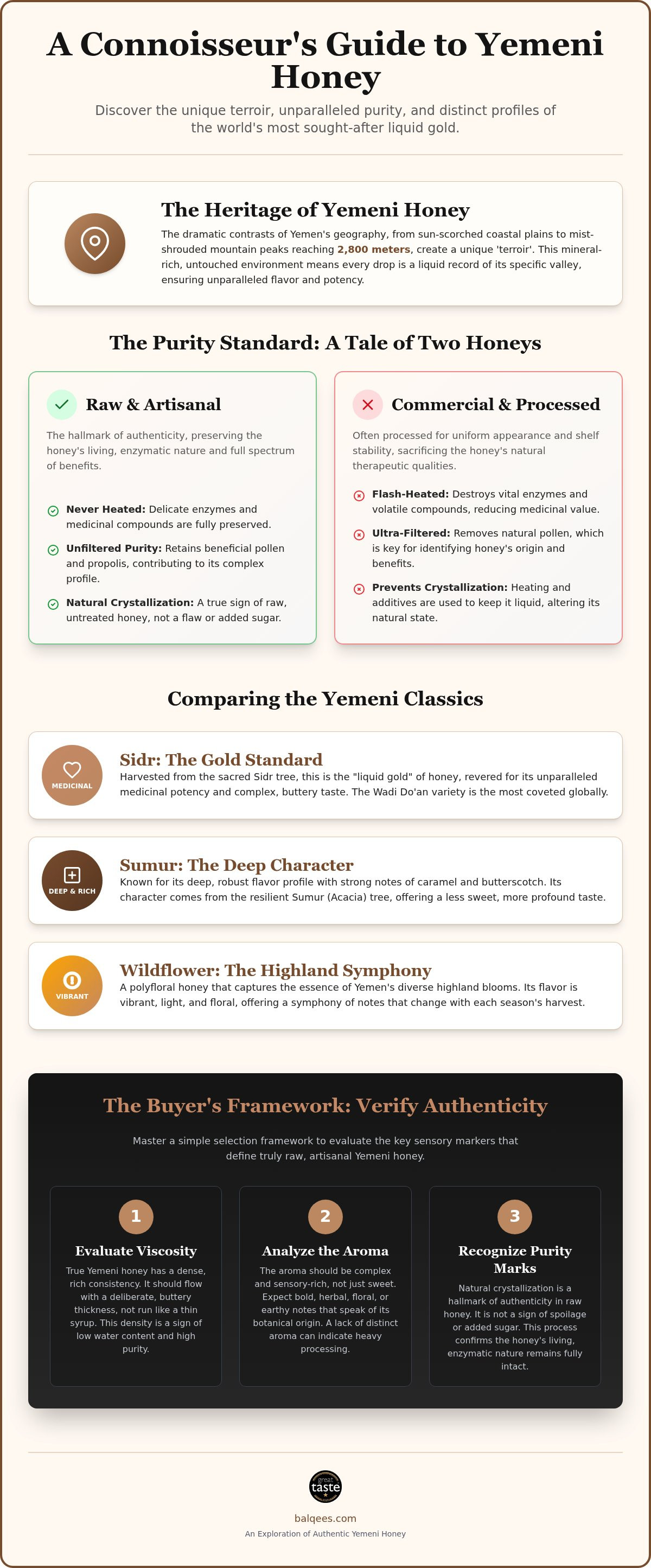
Yemeni wildflower honey reflects a range of flowers. Its character can vary with region and season. It is a useful choice for exploring a multifloral profile alongside Sidr, without assuming one category is always better.
Keep imported origins separate
Balqees also sells honeys from other countries. White Mountain is from Kyrgyzstan, and Emirati Sidr is from the UAE. Being sold by the same brand does not make these Yemeni honeys. Honey fusions are another distinction: they add declared ingredients such as seeds or spices to a honey base.
Build your comparison
Record the country, region, floral description and ingredients for each jar. Then compare aroma and texture with the same food. Ask for sourcing details where the label is unclear. Price, colour and regional reputation cannot authenticate a jar on their own. Current product pages show what is available; a general guide should not be read as a promise that every Yemeni variety is in stock.


