


The price of Yemeni honey reflects more than the liquid in the jar. Production, sourcing, transport, packaging and retail all contribute, while the region, floral description and harvest can influence what buyers are willing to pay.
Production and access
Beekeeping takes time and depends on suitable forage and colony care. A 2023 FAO account describes how conflict, difficult roads and poor rainfall complicate honey production in Yemen. Those are useful supply-chain context, not an itemised explanation of every current retail price.
Harvest conditions and availability can vary. A narrowly specified origin may have a smaller supply than a broadly sourced blend, but limited supply does not automatically establish higher quality or authenticity.
Compare like with like
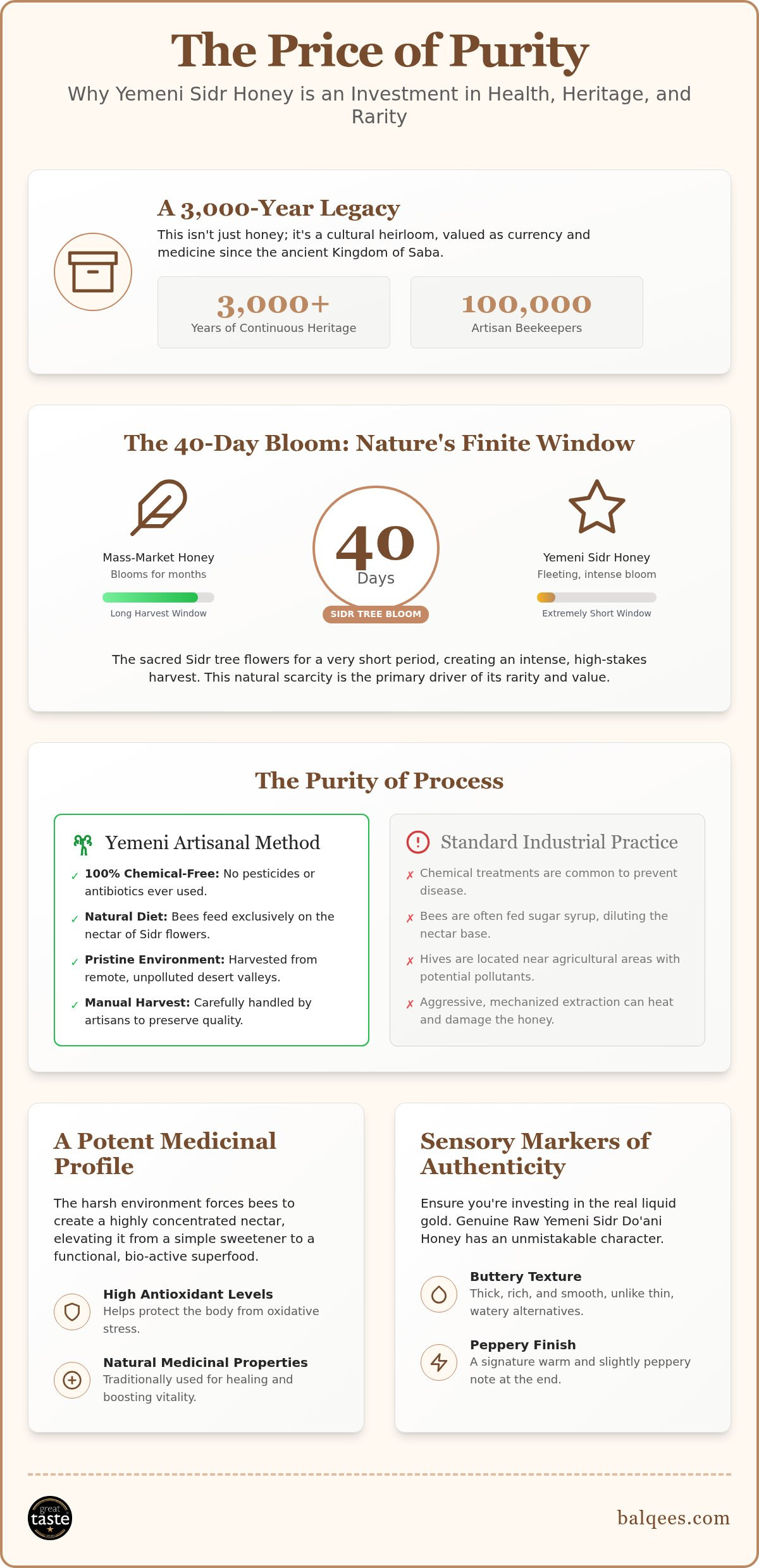
Start with the price per 100 g, then compare country, region, floral description and ingredients. Gift packaging and accessories should be considered separately from the honey. Different jar sizes can have different unit prices.
For example, divide a jar’s price by its weight in grams and multiply by 100 to find its price per 100 g. Use the current product price; a blog figure can become outdated.
What a premium should explain
Ask for specific origin and handling information, and for evidence behind any certification or testing claim. Taste can help you decide whether you enjoy a honey, but it cannot prove purity. Expensive honey is not automatically more nutritious or a stronger treatment.
Choose a size and variety that suit your budget and use. A smaller jar can let you explore a new flavour before buying more, without treating price as the only measure of value.


