


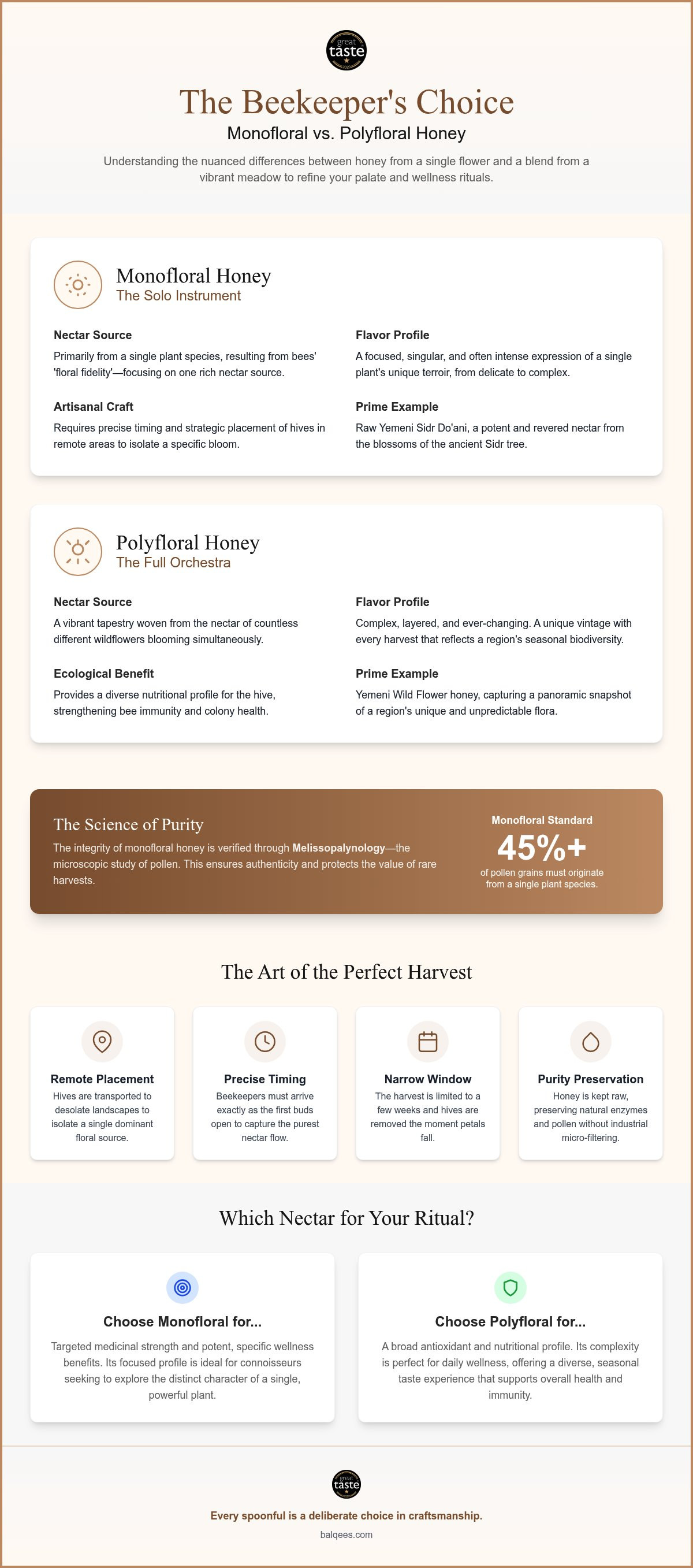
Monofloral honey is associated predominantly with one floral source; polyfloral or multifloral honey comes from a mixture of flowers. These terms describe floral origin, not a medical ranking or a guarantee that one category is purer.
What the names mean in practice
Bees forage freely, so monofloral should not be read as a claim that every drop came from exactly one plant species. The basis for a floral description can involve origin records and appropriate analysis. A wildflower label usually describes a mixed floral harvest rather than naming every flower present.
Single-origin answers a different question: where the honey came from. A multifloral honey can come from one geographical region. Likewise, a monofloral name needs separate geographical information.
Compare by tasting
Try a named floral honey such as Sidr beside Yemeni wildflower. Serve equal small portions at the same temperature and notice aroma, texture and finish. Repeat with yoghurt or bread. There is no rule that monofloral must taste stronger or that wildflower must always be lighter.
Season and handling also affect a jar’s character. Colour and crystallisation are observations to describe, not reliable tests of authenticity.
Choose for your kitchen
For a familiar flavour profile, explore a named variety; for a broader seasonal mix, try wildflower. Ask for origin and ingredient information in either case. A higher price, a rare name or a floral classification does not establish a treatment effect. Both are sweet foods to enjoy in suitable portions.


