


A jar of honey is more than just a sweetener; it is a liquid map of a single, unrepeatable moment in nature. When you choose a single origin honey, you aren't just buying a pantry staple. You are holding the distilled essence of a specific hillside, a particular season, and a unique floral bloom that will never exist in quite the same way again. It is the purest expression of terroir, where the soil, wind, and rain of a precise location converge to create a flavor profile that no factory blend could ever replicate.
It is natural to feel a sense of hesitation when faced with labels like "raw," "organic," or "pure," especially when the reality of "syrup-cut" adulteration is a growing concern for any discerning buyer. You likely wonder why one jar commands a premium while another is priced for the masses. We understand that search for integrity. In this guide, we will show you how to look beyond the marketing to find the unique essence of a landscape in every drop. You will learn to decode complex labels, understand the true value of artisanal craftsmanship, and gain the confidence to select a traceable honey that resonates with your own palate.
Key Insights for the Honey Connoisseur
- Define the essence of single origin honey as a pure reflection of a specific landscape and a single, dominant floral source.
- Explore how the terroir, the unique combination of soil, climate, and altitude, shapes the complex flavor profile and medicinal potency of the nectar.
- Compare the distinct, unrepeatable character of artisanal harvests against the standardized consistency found in commercial multi-floral blends.
- Use our selection framework to confidently choose between rare varieties like White Mountain Honey or Raw Yemeni Sidr Do'ani Honey based on your wellness goals.
- Learn the "Spoon, Smell, Swirl" tasting technique to fully appreciate the living enzymes and rich textures of a truly traceable product.
What is Single Origin Honey? Defining Purity and Provenance
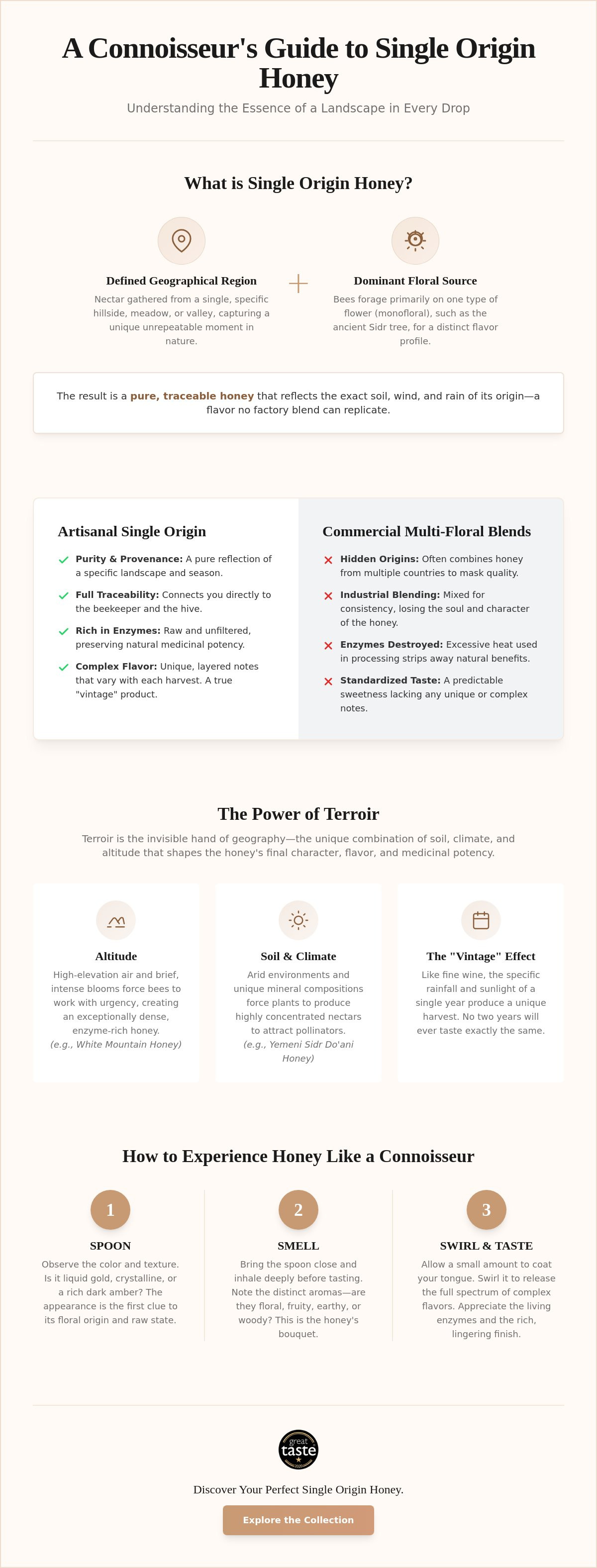
Single origin honey is the unfiltered biography of a specific place. It represents nectar gathered from a defined geographical region, often centered around a single, dominant floral source. Unlike mass-produced alternatives, this honey doesn't hide behind a generic label. It carries the signature of its home. It tells a story of a specific grove of trees or a high-altitude mountain range. When you taste it, you're experiencing the precise environmental conditions of that location.
Within this framework, we distinguish between varieties. Monofloral honey is the result of bees foraging primarily on one type of flower, such as the ancient Sidr tree. Polyfloral varieties, while drawing from various blossoms, remain rooted in one specific meadow or valley. Both offer a level of purity that's impossible to find in supermarket aisles where origin is often an afterthought.
Commercial blends are the antithesis of this artisanal approach. They often combine honeys from different countries and disparate hive types to achieve a uniform, predictable taste. In that process, the soul of the honey is lost. Traceability vanishes. Large-scale packers might mix high-quality nectar with cheaper, high-moisture syrups to lower costs. Choosing a traceable product ensures you avoid common industrial pitfalls:
- Industrial blending: Mixing multiple harvests to mask inferior quality or age.
- Hidden origins: Labels that list multiple countries of origin without specific percentages.
- Loss of enzymes: Excessive heat used to combine different honey types quickly, destroying natural benefits.
This artisanal approach restores the broken link between the consumer and the earth. It connects you directly to the beekeeper, the specific valley, and the precise season of the harvest.
The Coffee Parallel: Why Honey is the New Frontier
The "Third Wave" coffee movement taught us to ask where our beans were grown and who roasted them. It transformed a morning caffeine fix into a ritual of appreciation for altitude and soil. Honey is currently undergoing a similar renaissance. We're moving away from seeing it as a mere commodity. Instead, we treat it as a vintage product. Just like a fine wine, a harvest of single origin honey reflects the rainfall and sunlight of its specific year. A dry summer in the mountains produces a vastly different nectar than a lush, rainy spring. It's a snapshot of time captured in gold.
Traceability and the Balqees Standard
Integrity begins at the hive. At Balqees, we source directly from artisanal beekeepers in remote regions like the valleys of Yemen. These are places where tradition isn't a marketing slogan but a way of life. For a jar to meet the true single origin standard, it must remain raw and unfiltered. Any industrial processing or heavy heat treatment strips away the pollen and enzymes that hold the honey's identity. Our beekeepers act as guardians of these local ecosystems. They ensure that the nectar you taste is exactly as the bees intended. It's untouched by the shortcuts of modern industry, preserving the medicinal potency and the complex, layered flavors of the wild.
The Power of Terroir: How Geography Shapes Honey
Terroir is the invisible hand that guides the character of every single origin harvest. While the term is most famously associated with fine wine, it is equally vital in the world of honey. It represents the complex dialogue between the mineral composition of the soil, the humidity of the air, and the specific flora of a region. When bees forage, they don't just collect nectar. They gather a liquid record of the landscape's health and history. This environmental signature is what makes a harvest from one valley taste entirely different from a harvest just a few miles away.
Altitude plays a pivotal role in this natural alchemy. Take White Mountain Honey. At high elevations, the air is thinner and the blooming periods are brief but intense. This environmental pressure results in a honey with exceptional density and a high concentration of natural enzymes. The bees must work with urgency, and the nectar they collect is a potent distillation of that atmospheric struggle. Similarly, volcanic soils or the parched earth of the Do’an Valley offer a different kind of intensity. Arid environments force plants to produce highly concentrated nectars to attract pollinators. This isn't just about flavor; it's about survival.
The survival mechanisms of these plants, developed over millennia to withstand harsh sun and minimal water, are passed directly into the honey. This is why certain regions are synonymous with legendary healing properties. The plant’s resilience becomes your vitality. If you are looking to explore these potent landscapes, you might discover our range of raw harvests that capture these specific environmental signatures.
The Sidr Tree: A Masterclass in Single Origin Potency
The Sidr tree is a testament to the power of a specific landscape. Thriving in the rugged, sun-drenched terrain of the Yemeni desert, it produces a nectar so rich it is often referred to as liquid gold. This unique environment creates the Raw Yemeni Sidr Do’ani Honey, a variety that simply cannot be replicated elsewhere. The combination of ancient trees and the specific mineral profile of the valley creates a chemical fingerprint as unique as a human DNA strand. It's a heritage product that carries the weight of history in every spoonful.
Floral Diversity within a Single Landscape
Even within a single valley, the story of single origin honey shifts with the seasons. A spring harvest might yield the light, ethereal notes of Yemeni Wild Flower Honey, while a winter collection from the same hives reveals a deeper, more resinous earthiness. The blooming cycle is a moving target. As different blossoms peak and fade, the bees capture a sensory journey of the landscape’s changing moods. This seasonal variation is why a true connoisseur looks for the harvest date. It's the difference between a bright, floral morning and a dark, brooding evening in the same geographic home.
Single Origin vs. Multi-Floral Blends: A Comparison
Character is the hallmark of the wild. Commercial producers prioritize consistency above all else, creating a homogenized product that tastes identical whether it was bottled in January or June. This predictability comes at a steep price. To achieve it, packers blend honeys from various countries and floral sources, effectively erasing the unique biological blueprint of each harvest. They trade the soul of the landscape for a standardized flavor profile that appeals to the widest possible audience.
Blending is often a mask for mediocrity. It allows industrial operations to hide inferior batches or dilute honey with high moisture content that would otherwise ferment. When you choose a single origin jar, you're embracing the "vintage" nature of the product. It may vary slightly in color, aroma, or viscosity from year to year. This isn't a defect. It's a certificate of authenticity. It proves the honey hasn't been manipulated in a factory to meet a corporate requirement. Authentic honey reflects the rain, the sun, and the soil of its specific season.
The process of blending usually requires intense heat. Pasteurization is the industry standard for supermarket honey. It keeps the liquid clear on the shelf for longer periods by melting away natural crystals, but it also destroys the delicate enzyme profile. Heat-treated honey is a ghost of its former self. It's biologically static. In contrast, unadulterated honey remains a living food, teeming with the natural compounds that make it a true functional superfood. It's a raw, vibrant connection to the earth that remains intact from hive to jar.
The Nutritional Argument for Single Origin
Pure, raw honey acts as a carrier for the specific medicinal properties of its home landscape. By avoiding the heavy filtration common in commercial blends, single origin varieties retain their local pollen and propolis. These elements are vital for those seeking the specific benefits of raw honey vs commercial honey. Whether it's the high antibacterial activity of Sidr or the unique enzyme count of high-altitude mountain blooms, the health profile is directly linked to the plant's own resilience in its native environment.
Flavor Profiles: Complexity vs. Simplicity
Supermarket honey often provides a "flat" sweetness, a one-dimensional sugary hit that lacks depth. Artisanal harvests offer a symphony of tasting notes. Depending on the origin, you might detect hints of warm caramel, sharp citrus, or even a smoky, resinous finish. Even the texture tells a story. Crystallization is often misunderstood as a sign of spoilage or added sugar. In reality, it's a marker of high-quality, raw honey. It shows the nectar is packed with natural pollens and hasn't been stripped of its character by over-processing. It's the texture of truth.
Choosing Your Jar: A Guide to the Balqees Single Origin Collection
Choosing a jar of honey is an act of curation. At Balqees, we view our Single Origin Collection as a sensory world tour, a library of liquid gold gathered from the most remote corners of the earth. We don't believe in the standardized output of mass production. Instead, we offer limited harvests that reflect the true rhythm of the seasons. Nature doesn't produce on a corporate schedule. If a particular valley experiences a shorter bloom, we simply have less honey that year. This scarcity is your guarantee of authenticity. It means we haven't supplemented the harvest with inferior blends or industrial additives to meet a quota.
When you explore these offerings, look for the "Raw" and "Unfiltered" labels. These aren't just marketing buzzwords. They're a promise that the honey's structural integrity remains intact. We refuse to heat-treat or fine-filter our harvests, ensuring every jar contains the living enzymes and local pollens that define its origin. To find the perfect match for your lifestyle, consider your primary goal. Are you seeking a medicinal ritual, a creamy luxury, or a daily boost of energy?
For the Ultimate Healer: Raw Yemeni Sidr Do’ani Honey
This is the pinnacle of the single origin world. Sourced from the ancient trees of the Do’an Valley, Raw Yemeni Sidr Do’ani Honey is celebrated for its profound antibacterial potency. It's a honey for those who treat wellness as a sacred practice. The flavor is unmistakable: bold, buttery, and slightly medicinal with a finish that lingers on the palate. Use it in morning rituals or during times of health recovery when the body requires the most resilient defenses nature can provide.
For the Creamy Connoisseur: White Mountain Honey
If texture is your priority, White Mountain Honey offers an experience unlike any other. Harvested from the high-altitude meadows of the Kyrgyz mountains, its stark white color and fudge-like consistency are entirely natural. It's a luxury spread that feels more like a confection than a traditional syrup. The profile is mild and floral, making it the perfect companion for a delicate white tea or simply enjoyed by the spoonful. Altitude creates a unique density that's impossible to replicate in the lowlands.
For the Floral Adventurer: Yemeni Wild Flower Honey
For those who appreciate a dynamic, ever-changing profile, Yemeni Wild Flower Honey is a revelation. It captures the diverse flora of the Yemeni highlands, offering a bright and multi-layered sweetness. It's a versatile pantry staple, perfect for daily wellness or experimenting in the kitchen. Because the bees forage on a wide array of high-altitude blossoms, the flavor is vibrant and citrus-forward. It's a bright, energetic harvest for the modern palate.
Ready to begin your exploration? You can explore our complete collection and find the harvest that resonates with your journey.
How to Experience Single Origin Honey Like a Connoisseur
Engaging with a rare harvest is a meditative practice. To truly appreciate the nuances of single origin honey, you must move beyond the simple act of eating. We recommend the "Spoon, Smell, Swirl" method to unlock the hidden layers of the landscape. First, select a spoon made of wood, glass, or ceramic. Avoid metal. High-activity honeys, particularly those with potent enzyme profiles, can react with metallic surfaces. This reaction subtly alters the flavor and can compromise the honey’s delicate chemistry. It’s a small detail that makes a profound difference in the sensory experience.
Begin by bringing the spoon to your nose. Inhale deeply. You aren't just smelling sweetness; you're detecting the specific flora of a distant valley. Next, take a small amount and let it rest on your tongue. Don't swallow immediately. Swirl the honey around your mouth, allowing the warmth of your palate to release notes of spice, earth, or citrus. This intentional pace allows you to identify the terroir we explored in previous sections. To preserve these qualities, store your jar in a cool, dark place away from direct sunlight. There's no need for refrigeration. Keeping the lid tightly sealed ensures the honey doesn't absorb moisture or stray scents from your kitchen.
Pairing Honey with Your Lifestyle
A connoisseur understands that honey is a versatile companion. For a sophisticated evening, try pairing a bold Sidr variety with aged, salty cheeses like Pecorino or a sharp Manchego. The contrast between the savory fats and the deep, buttery sweetness is exquisite. If you prefer a lighter touch, drizzle White Mountain Honey over toasted walnuts and artisanal sourdough. Beyond the plate, honey serves as a functional tool. Use it as a clean, pre-workout energy source or whisk a teaspoon into warm water before bed to support a restful sleep. It’s a natural bridge between culinary pleasure and daily well-being.
The Ethical Choice: Supporting Artisanal Beekeeping
Your choice of single origin honey has an impact that reaches far beyond your pantry. By prioritizing traceable, small-batch harvests, you're directly supporting artisanal beekeepers who maintain the health of local bee populations. These craftsmen are the stewards of the land. At Balqees, we take our role as guardians of Yemeni beekeeping heritage seriously. We work closely with families who have passed down these traditions for generations, ensuring their ancient methods remain viable. This partnership protects the environment and guarantees the continued purity of the nectar. We invite you to explore the full Single Origin Collection today and become a part of this enduring story.
Embracing the Soul of the Landscape
Your journey into the world of honey is an exploration of the earth's most hidden corners. We've seen how the concept of terroir transforms a simple sweetener into a complex vintage, where altitude and soil dictate both flavor and healing power. By choosing single origin honey, you're rejecting the standardized, flat sweetness of industrial blends in favor of a traceable, living food. It's a choice that prioritizes character over consistency and well-being over convenience.
Every jar in our collection is directly sourced from artisanal beekeepers who act as guardians of their local ecosystems. These harvests remain raw, unfiltered, and enzyme-rich; they're preserved exactly as they were gathered in the specific valley of their birth. Whether you're seeking the medicinal intensity of Sidr or the creamy luxury of the high mountains, you now have the framework to choose with confidence. Integrity isn't just a label. It's the sensory experience of a landscape captured in gold. We invite you to Browse the Balqees Single Origin Collection and find the harvest that speaks to your palate. Step into a tradition of purity and let every spoonful transport you to the wild.
Frequently Asked Questions
Is single origin honey the same as organic honey?
Not necessarily. While "organic" refers to the specific certification of beekeeping practices and the absence of synthetic chemicals, single origin denotes the geographical provenance and specific floral source of the nectar. You can have organic honey that is a blend from multiple countries. Conversely, a single origin harvest focuses on the unadulterated character of a specific valley or hillside, highlighting the unique essence of that landscape.
Why does my single origin honey look different from the last jar I bought?
Variation is a hallmark of authenticity. Because the bees forage in the wild, each harvest is subject to the unique weather patterns, rainfall, and blooming cycles of that specific season. A dry summer might produce a darker, more concentrated nectar, while a rainy spring results in a lighter hue. These subtle shifts in color and texture prove that your honey hasn't been standardized in a factory to meet a corporate color code.
Does the origin of the honey really change its health benefits?
Absolutely. The medicinal potency of honey is a direct reflection of the plant's own survival mechanisms within its native environment. A tree growing in a harsh, arid desert produces nectar with different antibacterial properties than a flower in a lush meadow. The specific mineral content of the soil and the altitude of the hives influence the enzyme counts and antioxidant levels found in every jar.
How can I tell if a honey is truly single origin and not a blend?
Transparency is your best guide. A true single origin product will specify the exact region, valley, or even the specific beekeeper on the label. Avoid jars that use vague descriptions like "a blend of non-EU honeys" or those that lack a harvest date. Authentic producers are proud of their provenance and will provide clear traceability back to the specific landscape where the bees foraged.
Why is single origin honey more expensive than commercial honey?
The price reflects the complexity of the harvest. Unlike commercial operations that buy bulk honey from global markets to blend and dilute, artisanal honey is collected in small, limited batches from remote and often difficult to reach terrain. You're paying for the purity of the nectar, the fair wages of traditional beekeepers, and the fact that the honey hasn't been "cut" with cheap sugar syrups or heat treated to strip its nutrients.
Does single origin honey expire or go bad?
Honey is one of the few foods that naturally lasts forever. Its high sugar concentration and low moisture content create an environment where bacteria cannot survive. While it might crystallize or change texture over time, this isn't a sign of spoilage. Simply keep the jar sealed in a cool, dry place to maintain its aromatic profile for years to come. It remains a living, stable food indefinitely.
Can I use single origin honey for cooking and baking?
You can, but we recommend using it as a finishing touch. High heat during baking or boiling destroys the delicate living enzymes and complex aromatic compounds that make these harvests so special. To truly appreciate the terroir, drizzle it over warm bread, stir it into tea after it has cooled slightly, or use it in raw dressings where its unique flavor profile can shine without being compromised by heat.


