


The clearest, most convenient squeeze bottle on the grocery shelf is often the furthest thing from living, whole honey. If you have ever weighed Capilano pure honey vs raw unpasteurized honey standards, you have encountered the profound gap between industrial shelf stability and authentic hive vitality. Commercial pure honey satisfies statutory definitions by excluding extraneous syrups, yet it routinely undergoes thermal processing and micro-filtration that quiet delicate bio-enzymes and strip native floral pollen.
It's easy to feel misled when a golden jar promises purity but delivers a flat sweetness without the rich, nuanced aroma of untouched nectar. You deserve complete clarity about what enters your daily wellness rituals. In this guide, you will discover the critical differences between commercial pure honey and raw unpasteurized standards to make an informed, health-conscious choice. We examine industrial processing benchmarks, decode supermarket label ambiguities, and show you how to verify biologically active, unheated honey for your table.
Key Takeaways
- Understand why evaluating Capilano pure honey vs raw unpasteurized honey standards requires looking past supermarket purity claims to see how industrial handling alters living nectar.
- Learn how commercial flash heating and ultrafiltration strip beneficial floral pollen, quiet delicate enzymes, and sacrifice therapeutic value for shelf stability.
- Uncover the biological vitality of cold-extracted honey, from potent phenolic compounds to the natural enzymatic cascade that produces organic antimicrobial protection.
- Master sensory tasting techniques to verify authentic raw honey at home using natural crystallization patterns, rich botanical aromas, and complex flavor finishes.
- Discover why pristine, unpasteurized honey demands protective glass packaging and traceable apiary sourcing rather than anonymous commercial blends in plastic squeeze bottles.
Decoding Honey Labels: 'Pure Honey' vs. 'Raw Unpasteurized Honey' Explained
Walk down any supermarket aisle, and golden jars proclaim their contents to be "100% Pure." It sounds wholesome. It sounds complete. Yet when evaluating Capilano pure honey vs raw unpasteurized honey standards, that single word conceals a fundamental divergence in biological vitality. Commercial marketing relies on consumer trust, allowing shoppers to assume that "pure" equates to living, unadulterated nourishment straight from the comb.
There is a vast difference between synthetic adulteration and thermal degradation. A jar of commercial honey may be chemically authentic bee nectar without corn syrup or cane sugar, yet still be biologically dormant. Industrial processing routinely subjects honey to extreme heat and fine filtration to maintain shelf clarity, trading the rich, living complexity of the hive for commercial predictability.
The Legal Definition of Pure Commercial Honey
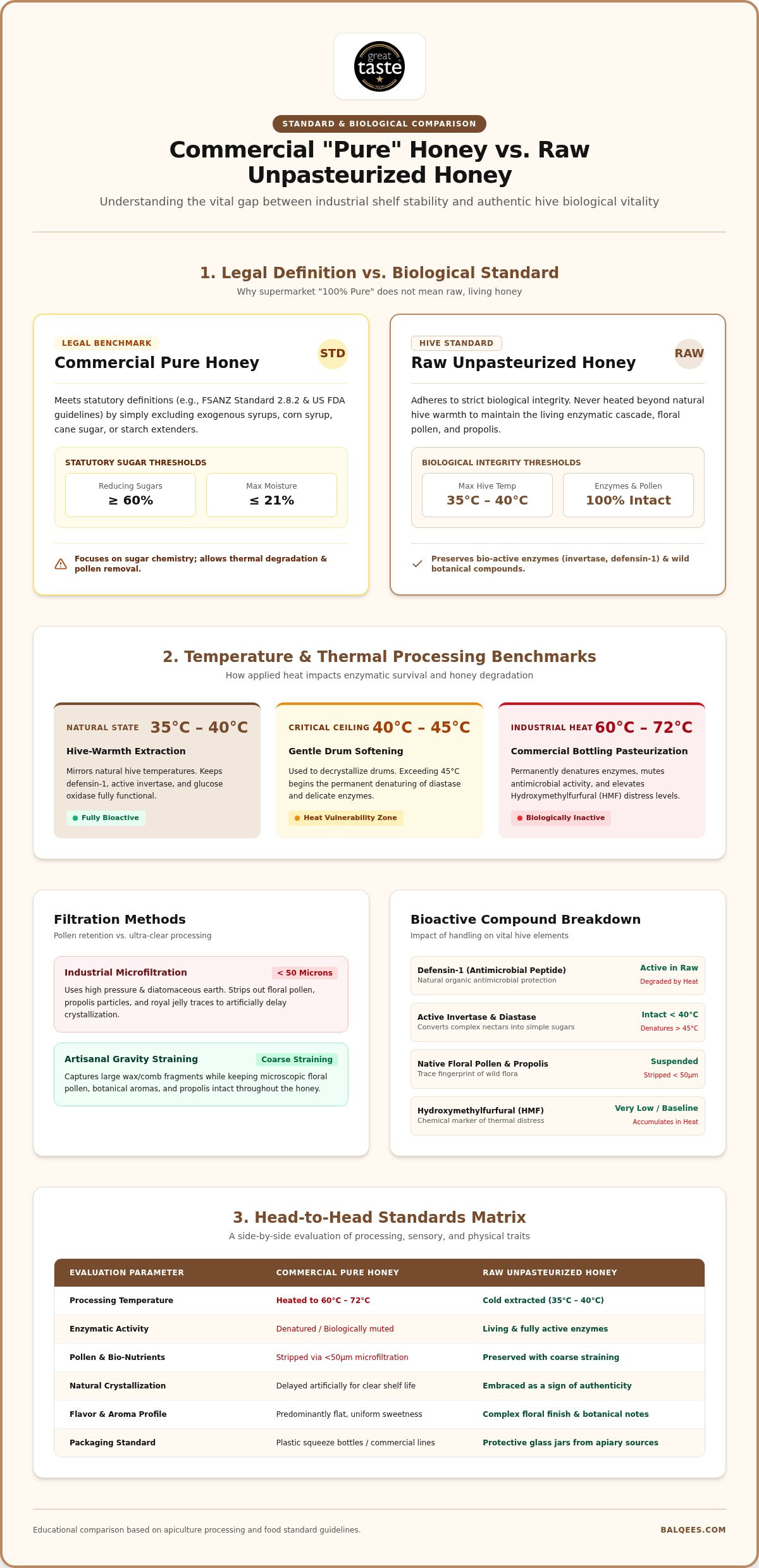
Under food regulatory codes like FSANZ Standard 2.8.2 and US FDA guidelines, "pure" carries a strictly legal meaning. It merely certifies that no exogenous syrups, starch sugars, or chemical extenders have been added. To understand broader honey composition and processing standards, one must recognize that statutory rules focus primarily on sugar ratios rather than enzymatic survival. A product meets legal benchmarks if it contains at least 60% reducing sugars and no more than 21% moisture, regardless of whether flash heat has degraded its delicate volatile compounds.
The Biological Standard of Raw Unpasteurized Honey
True raw honey adheres to a biological standard rather than a purely commercial one. It honors a strict temperature ceiling of 35°C to 40°C, which mirrors the natural warmth of an active hive. Honey handled this gently protects vulnerable proteins, including the antimicrobial peptide defensin-1 and active invertase, which breaks complex nectars into nourishing simple sugars.
Real unpasteurized honey remains alive. It reflects the ancient practices of sustainable beekeeping honey traditions, where cold extraction preserves the intricate fingerprint of wild flora. Comparing Capilano pure honey vs raw unpasteurized honey standards reveals that while commercial lines prioritize long liquid stability, raw nectar embraces its natural state, complete with microscopic traces of pollen, propolis, and living enzymes.
Industrial Processing vs. Artisanal Harvesting: Temperature and Filtration Benchmarks
Behind the glossy exterior of commercial honey packaging lies an engineering marvel designed for speed, clarity, and endless shelf life. Industrial packers process millions of kilograms each season. To move viscous nectar through factory pipes and automated bottling lines, heat is indispensable. This mechanical necessity creates the starkest boundary when comparing Capilano pure honey vs raw unpasteurized honey standards.
Commercial processing prioritizes uniformity. Artisanal apiculture honors biological wholeness. Where factory equipment applies rapid thermal shifts and microscopic sieving to preserve clarity, traditional beekeepers rely on patient gravity straining to capture raw comb fragments while leaving beneficial pollen suspended in the harvest.
Thermal Pasteurization: The Hidden Destroyer of Enzymes
Heat alters honey at a molecular level. While gentle warmers run around 40°C to 45°C to soften crystallizing drums, conventional industrial bottling routinely reaches 60°C to 72°C. Temperatures exceeding 45°C denature heat-sensitive enzymes like diastase and glucose oxidase, permanently muting their biological function. As natural sugars break down under sustained heat, Hydroxymethylfurfural (HMF) accumulates, serving as an unambiguous chemical marker of thermal distress under international Codex standards.
Microfiltration vs. Coarse Straining: The Pollen Factor
Factory clarity requires removing anything that might trigger natural granulation. Commercial lines push heated honey under high pressure through fine diatomaceous earth or micro-mesh filters below 50 microns. This aggressive step strips out every floral pollen spore, royal jelly trace, and particle of propolis. As noted in the official FDA honey labeling guidance, pure honey remains legally compliant even without its native botanical identity, allowing packers to obscure geographic origins.
Artisanal standards follow an entirely different path:
- Coarse Mesh Sieves: Ranging from 200 to 600 microns, coarse straining separates stray comb wax without disturbing native pollen.
- Intact Melissopalynology: Preserving 5,000 or more pollen grains per gram maintains true varietal authenticity and trace phytonutrients.
- Bioactive Protection: Propolis elements and living enzymes remain active rather than scorched away.
Appreciating Capilano pure honey vs raw unpasteurized honey standards means recognizing that cloudiness and natural crystallization are marks of integrity, not defects. For those seeking living vitality preserved through heritage care, exploring raw monofloral honey selections offers a true return to unheated, unfiltered botanical purity.
Nutritional Vitality: Comparing Bioactive Compounds and Health Benefits
Nectar is not merely sugar and water. Inside the hive, honeybees transform plant fluids into a living, medicinal matrix teeming with protective proteins and botanical antioxidants. Yet this biological richness is intensely vulnerable to heat. Examining Capilano pure honey vs raw unpasteurized honey standards highlights how processing shifts a substance from functional nourishment into a simple, shelf-stable carbohydrate sweetener.
Authentic raw nectar acts as a self-preserving apothecary. When unheated honey meets moisture, an enzymatic cascade awakens, steadily synthesizing micro-doses of organic hydrogen peroxide to neutralize pathogens. Commercial pasteurization extinguishes this natural defense mechanism. As detailed in a peer-reviewed comparative study on raw versus pasteurized honey, thermal treatment significantly reduces total phenolic content and halts enzymatic reactions, leaving store-bought table syrups stripped of their therapeutic potential.
Enzymatic Integrity: Glucose Oxidase and Invertase
Two master catalysts define genuine raw nectar. Glucose oxidase creates organic antimicrobial action when honey touches skin or bodily tissues. Invertase splits complex disaccharides into balanced, easily absorbed simple sugars, easing metabolic digestion for sensitive individuals. Pasteurized commercial brands register negligible enzyme survival, effectively blunting the dynamic physiological support that conscious eaters seek when choosing honey for daily wellness routines.
Antioxidant Density and Floral Polyphenols
Beyond active enzymes, unheated nectar harbors an intricate spectrum of plant-derived protective molecules:
- Heat-Fragile Flavonoids: Delicate compounds like pinocembrin, chrysin, and caffeic acid phenethyl ester fracture under industrial bottling temperatures.
- Aromatic Volatiles: Fragrant terpenes and esters vanish into factory vents, muting the distinctive, pungent bouquet of raw flora.
- Botanical Origin: Deep, unheated harvests such as Raw Yemeni Sidr Do'ani Honey concentrate exceptional levels of polyphenolic defenses that standardized supermarket blends simply cannot replicate.
Understanding Capilano pure honey vs raw unpasteurized honey standards clarifies what you invite into your body. Standardized blends offer everyday sweetness. Raw, bio-diverse harvests provide holistic nourishment rooted in centuries of therapeutic tradition.
The Connoisseur’s Evaluation: How to Test and Verify Real Raw Honey at Home
Supermarket aisles have conditioned shoppers to expect perpetual clarity. A golden liquid that never clouds or thickens is often praised for convenience, yet it signals severe thermal tampering. Viral kitchen tricks like lighting honey-soaked matches or swirling droplets in water are unproven parlor games governed by surface tension rather than purity. To truly judge Capilano pure honey vs raw unpasteurized honey standards, you must look to genuine physical benchmarks and your own senses.
Sensory Diagnostics: Visuals, Aromatics, and Texture
Untouched nectar speaks through its visual character. Hold a jar to the morning sun; real raw honey exhibits a cloudy turbidity, subtle internal marbling, and often a delicate white foam on top formed by air bubbles and trapped floral dust. Breathe in its bouquet. Commercial pasteurized jars offer a flat, one-dimensional sugary aroma. Raw honey releases distinct herbal, woody, or botanical notes tied to its wild foraging terrain. Rare high-altitude varieties like White Mountain Honey illustrate this, carrying a dense, velvety, naturally whipped texture that dissolves silkily on the palate.
The Crystallization Test: Why True Honey Solidifies
Granulation is nature's unmistakable seal of unpasteurized authenticity. Naturally occurring glucose inevitably precipitates out of solution, anchoring onto intact pollen grains to form creamy crystals. Comparing Capilano pure honey vs raw unpasteurized honey standards reveals that factory lines deliberately melt and filter out these crystal seeds to keep squeeze bottles flowing indefinitely.
When an artisanal jar crystallizes, celebrate it. It proves the presence of microscopic floral pollen and unheated enzymes. If you prefer a softer consistency, simply place your jar in a bowl of warm water below 40°C to soften it gently. Never microwave living honey, as harsh heat destroys its active therapeutic matrix.
Ready to experience the nuanced depth of living nectar? Order authentic raw honey directly from heritage apiaries to transform your daily culinary rituals.
Beyond the Squeeze Bottle: Selecting Pristine Artisanal Honey for Your Lifestyle
Modern convenience often comes at the expense of botanical integrity. The yellow plastic squeeze bottle dominates supermarket shelves because it is cheap, unbreakable, and easy to dispense over morning porridge. Yet the vessel holding your food shapes its living character. Moving past Capilano pure honey vs raw unpasteurized honey standards requires re-evaluating not just how nectar is extracted, but how it is preserved and welcomed into your home.
Authentic raw honey refuses to behave like factory syrup. It resists high-velocity packaging nozzles, and its thick, living matrix demands respectful handling. Choosing unpasteurized honey means leaving behind anonymous factory blends and embracing single-origin harvests that carry the soil, air, and ancient flora of their specific geographic landscapes.
Packaging Integrity: Glass Jars vs. Plastic Squeeze Dispensers
Living honey is chemically dynamic and naturally acidic, typically falling between pH 3.2 and 4.5. Storing biologically active nectar in plastic squeeze bottles risks chemical leaching and allows subtle oxygen migration over time. Thick, raw unpasteurized honey naturally thickens, which quickly clogs narrow silicone squeeze valves unless it has been ultra-filtered and overheated.
Heavy glass jars offer absolute stability. Solid glass prevents chemical leaching, shields delicate volatile aromas, and protects active enzymes from ambient oxidation. Reusable glass containers also support sustainable, zero-waste pantry storage while honoring the pristine, untouched nature of the comb.
Curating a Living Honey Pantry: From Sidr to Wild Flower
A refined honey pantry celebrates regional biodiversity. Standardized table honey offers a predictable sweetness, but raw monofloral and polyfloral varietals express layered sensory terroir:
- Raw Yemeni Sidr Do'ani Honey: Harvested from the sacred Sidr tree, this amber nectar carries warm butterscotch notes and exceptional antioxidant density.
- White Mountain Honey: Sourced from untouched alpine blooms, this rare pale honey yields a velvety, delicate sweetness ideal for morning infusions.
- Yemeni Wild Flower Honey: A multi-floral expression of remote desert blossoms, offering a bold aromatic punch that enlivens afternoon tea rituals.
- Functional Botanical Blends: Infusions like Black Seed Fusion or Raw Honey & Ginseng Fusion combine unheated nectar with therapeutic herbs for targeted daily wellness.
When you contrast Capilano pure honey vs raw unpasteurized honey standards, the winner is clear for those who value authentic nutrition. Moving away from commercial factory lines connects your body directly to ancient beekeeping traditions and the untouched vitality of the natural world.
Embracing True Hive Vitality for Your Daily Wellness
Weighing Capilano pure honey vs raw unpasteurized honey standards isn't just about texture; it's about deciding what enters your body. Industrial processing creates predictable sweetness, but it silences delicate enzymes, floral bouquets, and intact pollen. True raw nectar remains alive, offering functional nourishment shaped directly by untouched botanical landscapes.
Your daily rituals deserve genuine apicultural craft. Pure cold-extracted nectars sourced from legendary traditional apiaries protect the comb's natural matrix without heat treatment or microfiltration. By choosing unheated, unfiltered varieties, you preserve complete enzymatic and pollen profiles that support holistic well-being. Celebrate the natural crystals, savor the rich herbal aromas, and let ancient traditions enrich your modern table. Experience the living purity of authentic raw honey with Balqees through curated glass-jarred selections celebrating authentic apicultural heritage.
Frequently Asked Questions
Is Capilano honey 100% real bee honey?
Yes, Capilano honey is authentic bee honey that meets statutory purity regulations. Hive & Wellness Australia packs 100% Australian honey sourced from native eucalypt and ground flora without exogenous sugar syrups. However, standard supermarket bottles undergo thermal warming and mechanical filtration to ensure crystal-free flow through squeeze dispensers, which alters the honey's natural biological state.
What is the difference between pure honey and raw unpasteurized honey?
The term "pure honey" guarantees freedom from synthetic syrups, while "raw unpasteurized honey" preserves the living state of unheated nectar. In comparing Capilano pure honey vs raw unpasteurized honey standards, pure commercial honey legally allows high heat pasteurization and ultrafiltration. Authentic raw honey remains strictly below 40°C, keeping active bio-enzymes, natural floral pollen, and restorative propolis intact.
Does commercial pasteurized honey lose its health and medicinal benefits?
Commercial pasteurization significantly diminishes the therapeutic properties of natural honey. Heat levels exceeding 45°C permanently denature vital enzymes like glucose oxidase and invertase, preventing the synthesis of natural antimicrobial compounds. While pasteurized honey still provides everyday sweetness and simple carbohydrates, it lacks the heat-sensitive polyphenols, aromatic terpenes, and living catalysts that support daily wellness rituals.
Why does raw unpasteurized honey crystallize while supermarket honey stays liquid?
Raw unpasteurized honey crystallizes naturally because it contains microscopic pollen grains that serve as seed crystals for glucose molecules. Industrial packers deliberately flash-heat nectar and pump it through fine micro-filters to remove all pollen seeds, preventing crystallization for supermarket convenience. Natural crystallization isn't a defect; it's tangible physical proof of unheated, living apicultural integrity.
How can I tell if my honey has been heated or ultra-filtered?
Look for subtle turbidity, natural granulation, and aromatic complexity rather than relying on unproven kitchen parlor tricks. Authentic unheated honey often displays a cloudy texture, delicate marbling, or a fine foam ring of suspended pollen at the neck of the jar. If honey remains transparent indefinitely and smells exclusively of neutral table sugar, it has undergone industrial thermal processing.
Can you cook or bake with raw unpasteurized honey without destroying nutrients?
Baking, boiling, or microwaving raw honey degrades its delicate enzymatic matrix and heat-fragile antioxidants. Cooking with raw honey still imparts an exquisite botanical sweetness, but heat beyond 40°C halts its living enzymatic action. Connoisseurs reserve pristine varieties, such as Raw Yemeni Sidr Do'ani Honey, for room-temperature uses, post-brew tea additions, or morning wellness elixirs.
Why is raw unpasteurized honey more expensive than commercial table honey?
Artisanal raw honey requires labor-intensive apicultural traditions, remote floral foraging, and patient gravity extraction rather than factory automation. Industrial processors blend bulk nectar into standardized batches for rapid machine bottling. Authentic raw honey honors natural bee forage cycles, small-batch cold straining, and protective glass bottling, resulting in finite seasonal yields that reflect true floral craftsmanship.


